 Anacortes Exterior
 Why Decks in West Anacortes Take a Different Kind of Build
A deck built to a generic national spec doesn't hold up the same way on Fidalgo Island as it does inland. West Anacortes sits close to open water, which means salt-laden air moves across yards and decks year-round, not just during storms. That salt air is slow and quiet about the damage it does — it works into metal fasteners, connector plates, and hinges long before anyone notices a problem on the surface.
Add to that the driving rain that comes through with winter and fall storms off the Strait, and you've got a second problem: water that doesn't just fall straight down but gets pushed sideways into ledger boards, railing posts, and any seam that isn't properly flashed or sealed. Then there's the long moss season that Skagit County is known for — shaded yards, tree cover, and persistent damp conditions that let moss and algae take hold on horizontal wood surfaces for months at a time.
None of these are dramatic, one-time events. They're slow, cumulative conditions that punish shortcuts. A deck that's framed, fastened, and finished with those three factors in mind will outlast one that wasn't — often by a decade or more.
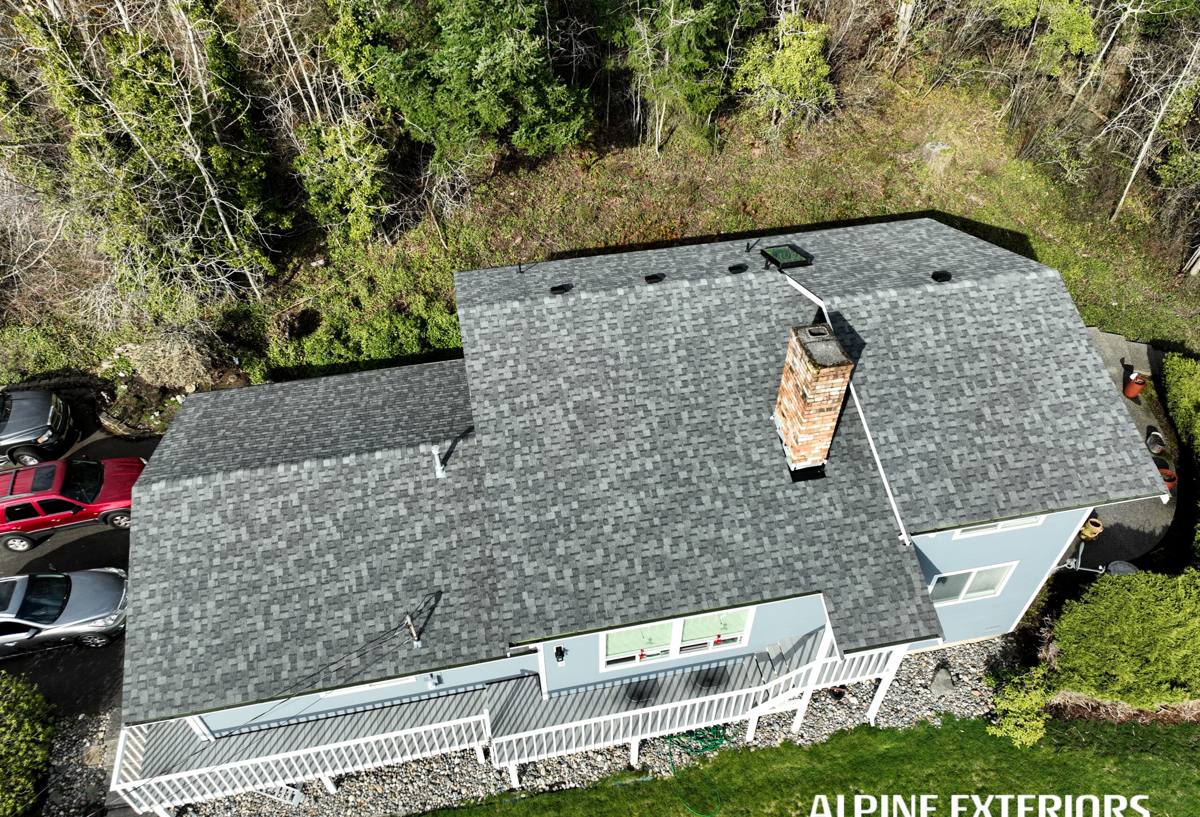
What Goes Into a Deck Built to Last Here
Footings That Match the Ground, Not a Generic Chart
Footing depth and sizing need to account for the soil conditions on the specific lot, not just a one-size chart pulled from a supplier catalog. West Anacortes properties can vary block to block in drainage and soil composition, so we dig and size footings based on what's actually there, not what's assumed.
Ledger Attachment and Flashing
The ledger board — where the deck attaches to the house — is the single most common failure point on any deck, anywhere. In a climate with driving rain, a ledger that isn't properly flashed will let water track behind the siding and into the rim joist, causing rot that's invisible until the deck is already unstable. Correct flashing (not just caulk) and proper standoff or drainage gap behind the ledger are non-negotiable on every deck we build here.
Fasteners and Hardware
Standard zinc-coated screws and brackets corrode faster near salt air than most homeowners expect. We use stainless steel or high-grade hot-dip galvanized fasteners and connectors rated for coastal exposure, not the cheapest box on the shelf. This one choice affects how long a deck's structural connections stay tight and rust-free.
Joist Spacing and Framing
Joist spacing depends on the decking material you choose — composite and PVC boards often require tighter spacing than solid wood to prevent flex and long-term sagging. We frame to the decking manufacturer's actual spec, not a generic 16-inch assumption, so the surface stays flat over time.
Decking Material Choices for a Marine, Moss-Prone Climate
There's no single "best" decking material — every option is a trade-off between upfront cost, maintenance, and how it behaves in damp, shaded, salt-air conditions. Here's how the common choices compare for a West Anacortes yard:
| Material | Moss/Algae Resistance | Maintenance | Typical Lifespan | Relative Cost |
|---|---|---|---|---|
| Pressure-treated wood | Low — needs regular cleaning and sealing | Annual cleaning, periodic sealing/staining | 10-15 years | Lowest upfront |
| Cedar | Moderate — naturally more rot-resistant but still surface-hosts moss | Regular cleaning, periodic finish | 15-20 years | Mid-range |
| Composite decking | Better, but not immune — still needs periodic washing in shaded spots | Occasional washing, no sealing/staining | 25-30 years | Higher upfront |
| PVC/capped polymer | Best surface resistance to moisture and staining | Occasional washing | 25-30+ years | Highest upfront |
We don't push any one product line as the automatic answer. Solid wood costs less to start but demands consistent upkeep to fight moss and moisture in this climate — skip a season of cleaning and sealing, and it shows. Composite and PVC cost more initially but shift the burden away from annual maintenance, which matters most in yards that stay shaded and damp for much of the year. The right call depends on your budget, how much upkeep you actually want to do, and how exposed or shaded the deck site is.
Our Deck Building Process
- Site visit and design. We look at sun/shade exposure, drainage, existing structure, and how the deck will be used before recommending a layout or material.
- Permit and code review. We handle the permit application and confirm setback, height, and guardrail requirements before any digging starts.
- Footings and framing. Footings sized to the soil, ledger properly flashed, framing spaced to match the decking material.
- Decking installation. Boards installed with manufacturer-specified gapping to allow for expansion, drainage, and airflow underneath.
- Railings and stairs. Built to current guardrail height and baluster spacing requirements, with corrosion-resistant hardware throughout.
- Final walk-through. We go over the finished deck with you, including what maintenance it will need and when.
Permits, Setbacks, and Code Basics
Most new decks and many significant deck rebuilds require a building permit, and the requirement often hinges on the deck's height above grade and its size. Setback distances from property lines also apply, and those can vary by lot and zoning. Because requirements are specific to the property and jurisdiction, we confirm what applies to your project before work starts rather than assuming.
A few code basics apply broadly to residential decks under the codes commonly adopted in Washington State: guardrails are generally required once a deck's walking surface is a certain height above grade, guardrail height and baluster spacing have to meet minimum standards to prevent falls, and stair rise and run have to stay within a consistent range for safety. We build to these standards as a matter of course — not just because an inspector will check, but because they're there for a reason.
Living with Moss and Salt Air: Maintenance That Actually Matters
Even a well-built deck needs some ongoing attention in this climate. The good news is that the maintenance that actually matters is simple and doesn't take much time if you stay ahead of it:
- Sweep or blow off leaves and debris regularly, especially in fall — trapped organic matter is what feeds moss growth on decking.
- Wash the deck surface at least once a year (more often in shaded areas) to remove algae and moss film before it gets slick and established.
- Check fastener heads and connector hardware periodically for rust staining, which can signal the wrong hardware was used or a coating is failing.
- Reseal or restain wood decking on the schedule the product actually needs — skipping a cycle in a wet climate accelerates gray, checking, and rot far faster than in a dry one.
- Keep gutters and downspouts near the deck clear so runoff isn't dumping extra water onto or under the structure.
- Look underneath the deck once a year for standing water, soft framing, or rust on hardware — problems here are much cheaper to catch early.
Repair, Refinish, or Rebuild?
Not every aging deck needs to be torn out. The right call depends on what's actually failing — surface wear is a different problem than structural rot, and treating one like the other wastes money either way.
| Factor | Repair/Refinish Usually Works | Rebuild Is Usually Needed |
|---|---|---|
| Framing condition | Solid, no soft spots or rot at connections | Soft or rotted joists, ledger, or posts |
| Surface condition | Graying, minor cracking, moss film | Widespread cupping, splintering, or board failure |
| Hardware condition | Tight, minimal rust | Heavily corroded or failing connectors |
| Age relative to material lifespan | Within expected service life | At or past expected lifespan for the material |
| Code compliance | Meets current guardrail/attachment standards | Built to outdated or non-compliant standards |
We'll always tell you honestly which category your deck falls into. If a refinish and some hardware upgrades will get you another decade, that's what we'll recommend — a full rebuild isn't the answer just because a deck looks tired on the surface.
Why Hire a Crew That Already Works West Anacortes
A deck built by a crew unfamiliar with this specific stretch of coastline is more likely to make assumptions that don't hold up — using standard-grade fasteners because "that's what's normally used," skipping extra flashing detail because it wasn't needed on their last job inland, or not accounting for how shaded, moss-prone yards behave differently than open, sunny ones.
Working regularly in West Anacortes and across Skagit County means we've seen how salt air, driving rain, and moss actually affect decks here over years, not just on paper. That translates into material and hardware choices, flashing details, and maintenance guidance that match the conditions your deck will actually face — not a generic build that happens to be installed on Fidalgo Island.
Get a Straight Answer Before You Commit
If you're planning a new deck, replacing an aging one, or just not sure whether yours needs repair or a full rebuild, we're happy to take a look and give you an honest read — no pressure, no upsell. Fill out the form below for a free estimate, and we'll walk the site with your specific yard, exposure, and budget in mind.