 Anacortes Exterior
 Asphalt Shingle Roofing Built for West Anacortes Conditions
West Anacortes sits close enough to the water that salt air is part of daily life on a roof, not just an occasional nuisance. Add in the driving rain that comes sideways off Rosario Strait and Guemes Channel during winter storms, plus a moss season that can run eight or nine months out of the year in shaded, north-facing yards, and you have a set of conditions that will find every weak point in a roofing system. Asphalt shingle roofing remains one of the most practical, cost-effective choices for homes in this neighborhood, but only when it is specified and installed with these specific stressors in mind. A shingle roof designed for a dry inland climate simply does not hold up the same way here.
This page focuses specifically on asphalt shingle roofing for homes in West Anacortes and the surrounding Skagit County area. It is not a general overview of every roofing material — it is what we look at, what we install, and why, when the job is a shingle roof on a house that has to survive salt, wind, and moisture year after year.
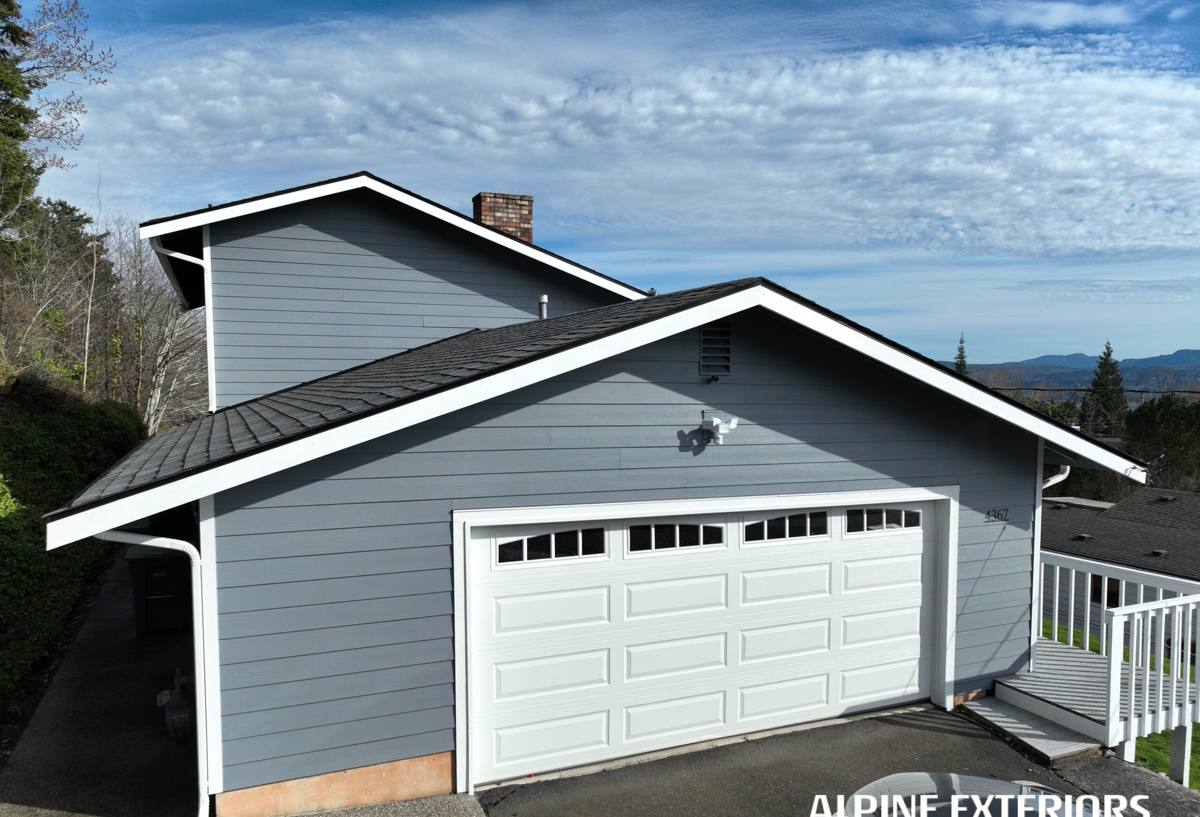
What Salt Air, Rain, and Moss Actually Do to a Shingle Roof
Salt Air and Metal Components
Asphalt shingles themselves are fairly resistant to salt, but the metal components around them are not. Nail heads, flashing, drip edge, and any exposed fasteners are the first things to show corrosion in a salt-influenced environment. Once a fastener starts to rust, it loses holding strength and can allow water to track underneath the shingle it's supposed to secure. This is why fastener and flashing material selection matters more here than it would fifteen or twenty miles inland.
Wind-Driven Rain
Anacortes gets rain that doesn't fall straight down — it gets pushed sideways and upward under eaves, into valleys, and around any penetration in the roof plane (vents, chimneys, skylights). A shingle roof that only relies on the shingles themselves to shed water will eventually leak. The underlayment, the flashing details, and the ice-and-water membrane at vulnerable points are what actually keep the house dry when wind is involved, and those details are frequently where older or lower-budget roofs fail first.
Moss and Algae
Anacortes' mild, damp climate is close to ideal for moss growth, especially on north-facing slopes and roof sections shaded by mature trees, which are common in West Anacortes' more established residential streets. Moss holds moisture against the shingle surface far longer than open air would, which accelerates granule loss and can lift shingle edges enough for wind and rain to get underneath. Left unaddressed for several seasons, moss growth shortens the usable life of an otherwise sound roof.
What a Correctly Installed Shingle Roof Includes Here
A shingle roof that's going to perform well in this specific environment isn't just shingles nailed to plywood. The details below are what separate a roof that lasts its full rated life from one that needs premature repair.
- Synthetic or high-quality felt underlayment across the full deck, not just at the edges — this is the roof's real waterproofing layer
- Ice-and-water shield membrane at eaves, valleys, and around penetrations, where wind-driven rain and moss-related moisture concentrate
- Corrosion-resistant fasteners and flashing rated for coastal or near-coastal exposure
- Proper drip edge at all eaves and rakes to direct water away from the fascia and into gutters
- Balanced attic ventilation (intake at the eaves, exhaust at the ridge) to prevent condensation and control moss-friendly moisture buildup from the underside
- Algae-resistant shingle products where the roof has shaded, moisture-prone sections
- Sealed and properly step-flashed transitions at chimneys, skylights, and sidewalls
Skipping any one of these to save money on the front end usually costs more later, either in repairs or in reduced shingle lifespan.
Shingle Selection for a Marine Climate
Not every asphalt shingle product is a good fit for a roof that sits near salt water and under shade for part of the day. We generally steer homeowners toward heavier-weight architectural shingles with algae-resistant granule treatments over standard three-tab products, for a few honest reasons: they hold up better to wind uplift, their thicker profile resists granule loss from constant moisture exposure, and the algae-resistant coating slows the black streaking and biological growth that shaded West Anacortes roofs are prone to. Lighter three-tab shingles aren't a bad product, but on a home with significant tree cover or north-facing exposure, they tend to show moss and algae staining sooner and can be more sensitive to wind in exposed areas near the water.
Manufacturer warranties also matter here. Most major shingle manufacturers require proper ventilation and underlayment installation for their warranty to remain valid — a roof installed without attention to those details can end up with a warranty that doesn't actually apply if a claim comes up.
Signs a West Anacortes Roof Needs Attention
Because moss and salt-driven wear happen gradually, many homeowners don't realize a shingle roof has a problem until there's an active leak. Some earlier warning signs to watch for:
- Visible moss growth or dark streaking, especially on shaded or north-facing slopes
- Granules collecting in gutters or at downspout outlets
- Shingle edges that look curled, lifted, or cupped
- Rust staining around flashing, vents, or exposed nail heads
- Soft spots or discoloration on interior ceilings near exterior walls
- Daylight visible through the roof deck from inside the attic
Catching these early is almost always cheaper than waiting for a leak to show up inside the house, where it can also mean drywall, insulation, and framing repairs on top of the roofing work.
Repair or Full Replacement?
Not every roofing problem in West Anacortes calls for a full tear-off. We evaluate the roof's age, the extent of moss or wind damage, the condition of the underlayment where it's accessible, and how much useful life is left in the existing shingles before recommending a direction. A roof with isolated wind damage or a single failed flashing detail is often a legitimate repair. A roof with widespread granule loss, multiple past patch repairs, or shingles past their rated service life is usually better served by full replacement, since patching an aging roof repeatedly tends to become more expensive over time than doing the job once, correctly.
General Cost Factors
| Factor | Why It Affects Cost |
|---|---|
| Roof size and pitch | Steeper or larger roofs take longer and require more material and safety setup |
| Number of layers to remove | Tear-off of existing layers adds labor and disposal cost |
| Deck condition | Rotted or soft sheathing found during tear-off needs replacement before new shingles go on |
| Shingle grade selected | Standard three-tab vs. heavier architectural/algae-resistant products |
| Flashing and penetration count | Chimneys, skylights, and multiple vents each add flashing work |
| Ventilation upgrades | Adding proper intake/exhaust ventilation where none currently exists |
We provide a written estimate that breaks these factors down for your specific roof rather than a flat per-square number that ignores the details that actually drive cost.
Our Process for a West Anacortes Roofing Project
We start with an on-site inspection, not just a drive-by estimate, so we can see the actual condition of the shingles, flashing, and — where accessible — the deck and ventilation. From there we walk the homeowner through what we're seeing, what's actually necessary versus optional, and what a correct installation looks like for that specific roof. During the install, we protect landscaping and gutters, remove and dispose of old roofing material, address any deck repairs before new underlayment goes down, and follow manufacturer specifications for underlayment, fastening, and ventilation so the warranty stays valid. We do a final walkthrough with the homeowner before considering the job complete.
Why It Matters to Hire a Crew That Already Works in West Anacortes
A roofing crew that regularly works in this specific area already understands which streets have heavier tree cover and moss pressure, which sections of the neighborhood take the brunt of wind off the water, and what the local building department expects for permits and inspections on a re-roof. That familiarity shows up in fewer surprises during the job and a roof that's specified correctly the first time, rather than a generic installation that has to be adjusted after the fact. Skagit County's coastal microclimates vary block to block, and a roof built for the wrong set of conditions will show it within a few seasons.
Maintaining Your Roof After Installation
A well-installed shingle roof still benefits from basic upkeep, especially in a moss-prone area like West Anacortes.
- Have moss growth treated or removed before it spreads across a full slope
- Keep gutters and downspouts clear so water isn't backing up under the eaves
- Trim back tree limbs that shade the roof and drop debris
- Schedule a visual inspection after major windstorms
- Address small flashing or sealant issues before they become active leaks
None of this needs to be elaborate, but a roof that's checked once or twice a year tends to reach its full service life, while one that's ignored often doesn't.
If you'd like an honest look at what your West Anacortes roof actually needs — repair, partial work, or full replacement — we're happy to come take a look and put together a free, no-pressure estimate using the form below.