 Anacortes Exterior
 Board & Batten Siding Built for West Anacortes' Marine Climate
West Anacortes sits close enough to the water that homes here take a different kind of weather beating than houses a few miles inland. Salt-laden air off Rosario Strait and Guemes Channel works on anything metal or organic. Driving rain comes in sideways during winter storms instead of falling straight down. And the long, damp shoulder seasons that Skagit County is known for give moss and algae months at a time to take hold on north- and west-facing walls. Board and batten siding — with its strong vertical lines and fewer horizontal laps — can be a genuinely good fit for this kind of exposure, but only when it's built from a material that can actually take the punishment and installed by someone who understands what that punishment looks like up close.
This page is about that one service, in that one part of town: board and batten siding, done in James Hardie fiber cement, for homes in West Anacortes.
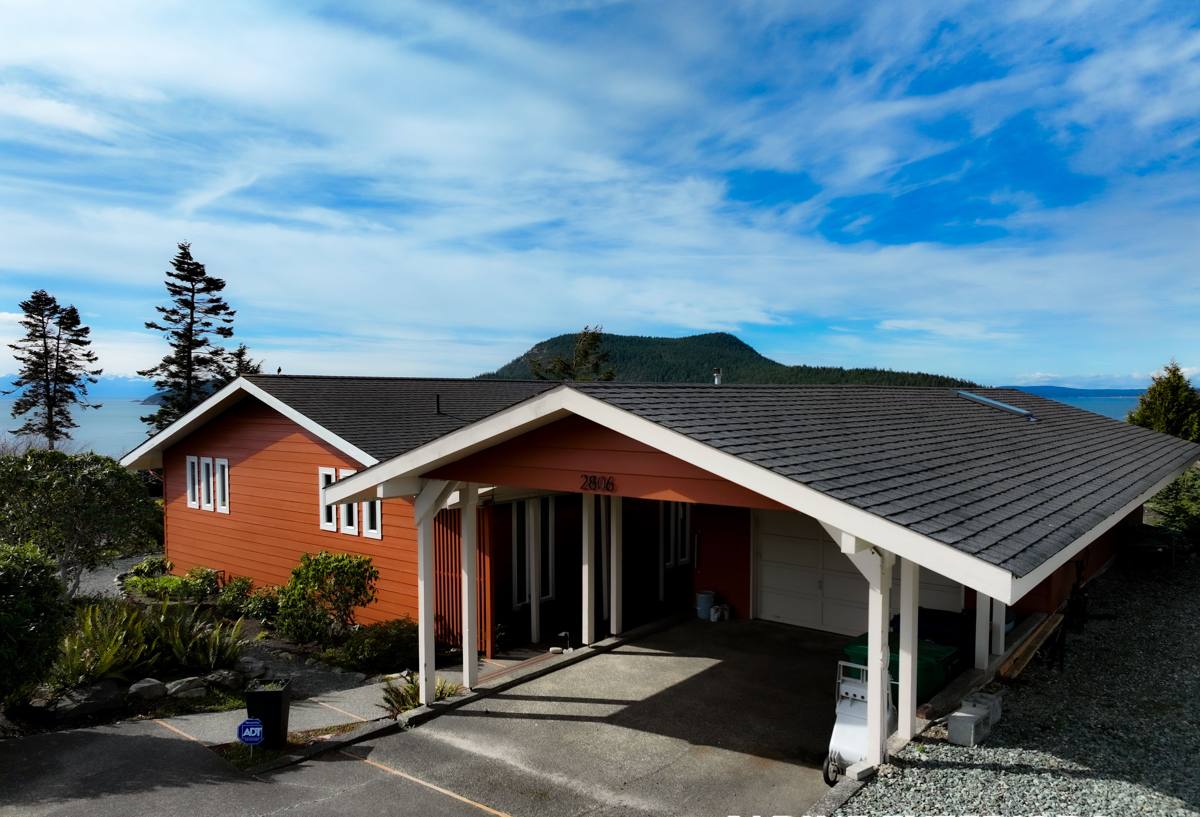
What Board & Batten Siding Actually Is
Board and batten is a siding pattern, not a material. Traditionally it's built from wide vertical boards with narrower strips — battens — covering the seams between them. The look reads as clean, linear, and slightly more modern or farmhouse-style than horizontal lap siding, which is why it's become a popular choice for accent walls, gables, and full elevations on newer builds and remodels around Anacortes.
What matters more than the look, though, is what's happening behind it. Every seam under a batten is a place where water can find its way toward the wall if the assembly isn't detailed correctly. A board and batten system is only as good as its drainage plane, its flashing, and the fastening pattern holding it in place — none of which are visible once the job is finished. That's the part homeowners can't inspect by eye, and it's the part that separates a board and batten wall that looks good for two years from one that performs for decades.
Why the Pattern Suits Coastal Exposure
Vertical board and batten sheds wind-driven rain differently than horizontal lap siding does. There are no upward-facing laps for wind to force water into, and water traveling down a vertical board has a shorter, more direct path off the wall. That's part of why the style shows up so often on coastal and rural buildings historically — it's a practical response to weather, not just an aesthetic choice.
Why We Only Install It in James Hardie Fiber Cement
Board and batten can be built from several materials — cedar, engineered wood, vinyl, or fiber cement — and each one changes how the system behaves over time. We install James Hardie exclusively, and for board and batten specifically, the reasoning is even more direct than it is for standard lap siding.
Vertical siding traps more standing moisture at the base of each board and along every batten seam than horizontal siding does, simply because water runs down and collects at the bottom edge. Wood-based boards and battens — cedar or engineered wood — depend on paint film and caulk staying intact at every one of those seams to keep moisture out of the substrate. In a climate with this much sustained damp weather and salt air accelerating coating breakdown, that's a maintenance commitment most homeowners don't want to sign up for indefinitely. Vinyl board and batten avoids rot but is a thin, flexible material that can show waviness on long vertical runs and doesn't hold paint if a homeowner ever wants to change the color.
James Hardie fiber cement doesn't rot, doesn't feed moss and algae growth the way wood fiber can, and holds its factory-applied ColorPlus finish through the kind of weather cycling West Anacortes sees every winter. It's also non-combustible, which matters given how much wildfire smoke has become a seasonal reality across Washington in recent years, even on the coast. That combination — moisture resistance, finish durability, and fire performance — is why it's the only material we put on a home, board and batten or otherwise.
What a Correct Board & Batten Installation Involves
Because board and batten has more vertical seams than a lap profile, the margin for error in the installation is smaller. A crew that treats it like "siding is siding" will produce a wall that looks right at handoff and fails quietly over the following years. A correct installation involves several things working together:
Drainage and the Rainscreen Gap
Fiber cement board and batten should be installed over a drainage plane that lets any moisture that gets behind the panels find its way back out, rather than sitting against the wall sheathing. This usually means a weather-resistive barrier plus furring strips or a purpose-built rainscreen product that creates a small air gap behind the siding. In a high-rain, high-humidity environment like ours, skipping this step is one of the most common shortcuts that shows up as trouble years later.
Fastening Pattern and Batten Spacing
Hardie's engineering specifies fastener type, spacing, and edge distance for board and batten assemblies, and it varies depending on wind exposure. West Anacortes properties that sit more open to the water typically fall into a higher wind-exposure category than sheltered inland lots, which changes how tight the fastening schedule needs to be. Battens themselves need to be fastened independently into framing where possible, not just nailed through the board beneath them.
Flashing at Every Penetration
Windows, doors, hose bibs, light fixtures, and vents all interrupt a board and batten wall, and each interruption needs proper flashing integrated with the drainage plane — not caulk alone. Caulk is a maintenance item with a service life; flashing is permanent. A wall that relies on sealant to keep water out at penetrations is a wall that will eventually leak.
Factory-Finished Edges
Where boards are field-cut, cut edges need to be primed or sealed per manufacturer specification before installation, especially on a project this close to salt air. An unsealed cut edge is a slow-moisture entry point that undermines an otherwise correct installation.
Local Conditions That Shape the Job in West Anacortes
A few things about this part of Anacortes specifically inform how we approach a board and batten project here:
- Salt air and hardware: Fasteners, flashing, and trim hardware need to be corrosion-resistant, not just standard-grade. Salt exposure accelerates corrosion on lower-grade metal faster than most homeowners expect.
- Wind-driven rain on exposed elevations: Walls facing open water or prevailing weather need tighter attention to flashing and drainage detailing than more sheltered elevations on the same house.
- Moss and algae on shaded faces: North-facing and tree-shaded walls stay damp longer through the year, which is exactly the environment moss and algae favor. Factory-applied finishes resist this better than field-applied paint, but siting, gutter performance, and vegetation clearance around the home still matter.
- Freeze-thaw at the margins: Winters here aren't severe, but they're not mild enough to ignore either. Trapped moisture that freezes even a handful of nights a year can still stress a poorly detailed assembly over time.
Our Process for a Board & Batten Project
The steps don't change much project to project, but the details we're checking for at each one are shaped by everything above.
- On-site assessment: We look at wind exposure, shade patterns, existing moisture damage, and the condition of the wall assembly underneath any existing siding.
- Tear-off and substrate check: Removing old siding is when hidden rot, prior water damage, or missing weather barrier gets found — and fixed — before anything new goes up.
- Drainage plane and flashing: Weather-resistive barrier, rainscreen furring, and flashing at every window, door, and penetration go in before a single board is hung.
- Board and batten installation: Panels and battens are installed to Hardie's fastening and spacing specifications for the wind-exposure category of that elevation.
- Finish and detail work: Trim, caulking where appropriate, and touch-up of any field-cut edges.
- Final walkthrough: We go over the finished work with the homeowner before calling the job done.
Comparing Board & Batten Materials
| Material | Salt Air / Moisture Resistance | Maintenance | Fire Rating | Typical Warranty |
|---|---|---|---|---|
| James Hardie fiber cement | Strong — engineered for wet, coastal climates | Low — factory finish, occasional wash | Non-combustible | Long transferable limited warranty |
| Cedar board and batten | Moderate — depends entirely on coating upkeep | High — repaint/reseal on a recurring cycle | Combustible | Varies by installer, not the material |
| Engineered wood (LP-type) | Moderate — resin-treated but still wood-based | Moderate — edge and seam sealing matters | Combustible | Manufacturer warranty, moisture-sensitive terms |
| Vinyl board and batten | Good against rot, poor dimensional stability | Low, but can't be repainted | Melts/deforms under heat | Limited, prorated over time |
What Board & Batten Siding Typically Costs
Pricing depends on wall area, tear-off needs, trim complexity, and how much of the drainage and flashing system needs to be built from scratch versus reused. Rather than quote a number that won't hold up house to house, here's what actually moves the cost:
| Factor | Why It Matters |
|---|---|
| Existing siding removal | Tear-off, disposal, and substrate repair add labor before installation even starts |
| Wall complexity | Gables, dormers, and multiple elevations mean more cuts, more trim, more flashing points |
| Wind exposure category | More exposed elevations require a tighter fastening schedule and heavier-duty hardware |
| Trim and batten detail | Wider batten spacing or accent trim adds material and labor over a basic pattern |
| Full house vs. accent area | A single accent wall or gable costs far less than re-siding an entire elevation or home |
Maintaining Board & Batten Hardie Siding
James Hardie board and batten is genuinely low-maintenance compared to wood alternatives, but "low-maintenance" isn't "no-maintenance," especially this close to the water. A simple annual routine keeps it performing:
- Rinse the siding down once or twice a year to clear salt residue and organic buildup before it becomes established growth
- Keep gutters clear so overflow doesn't run down the wall face and stay wet longer than it should
- Trim back vegetation and tree cover that keeps any wall shaded and damp for extended periods
- Check caulking at trim and penetrations annually and re-caulk if it's cracked or pulled away
- Look at the base of the wall near grade for any signs of splashback staining or standing moisture
Why Hire a Crew That Already Works West Anacortes
Board and batten rewards correct detailing and punishes shortcuts more visibly than lap siding does, because every seam is exposed to view and to weather. A crew that's already worked on this side of Anacortes has a working sense of which elevations on a given lot take the worst of the weather, what wind exposure category actually applies here versus a more sheltered inland property, and how the local moss and algae cycle behaves through a typical Skagit County year. That local pattern recognition doesn't replace following the manufacturer's installation specification — it's what makes sure that specification gets applied correctly to the conditions your specific home is facing.
If you're weighing board and batten siding for a home in West Anacortes, we're happy to walk the property, talk through what your walls are actually up against, and put together a straightforward, no-pressure estimate. There's no obligation — just an honest look at what the job would involve.