 Anacortes Exterior
 Edison's Climate Is Harder on Siding Than Most People Realize
Edison sits out in the Skagit County flats, close enough to Samish Bay and Padilla Bay that salt-laden air is a daily fact of life, not an occasional weather event. Add in the long wet stretches that define a Skagit County winter and the shaded, slow-drying conditions that farmland and tree-lined properties create, and you get a climate that is genuinely tough on exterior building materials. Siding here doesn't just need to look good on install day — it needs to hold up through decades of salt exposure, wind-driven rain, and a moss season that can run from October through April.
We install fiber cement siding on homes throughout the Anacortes and greater Skagit County area, and Edison properties come with their own specific set of demands. This page walks through what that means in practice: what the climate does to siding over time, what a correct fiber cement install looks like for a home in this area, how our process handles it, and why it matters that the crew doing the work already understands Edison's conditions.
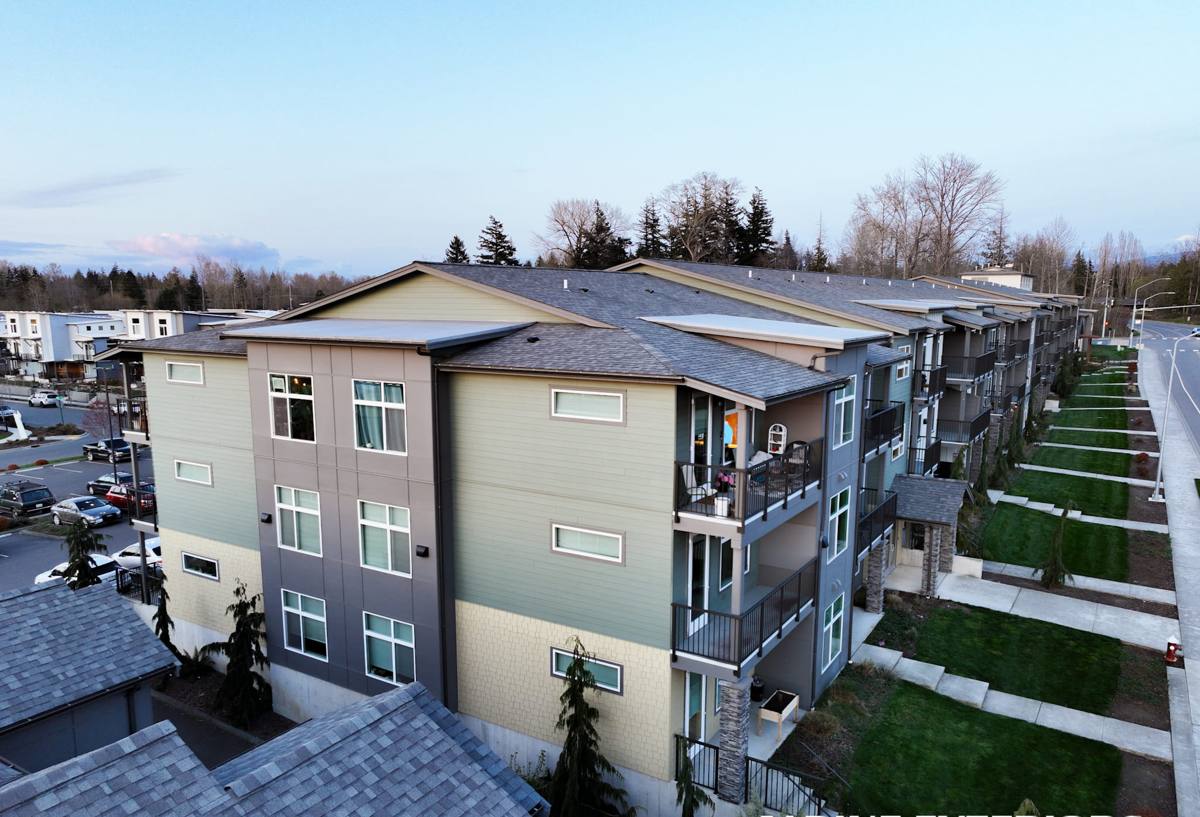
What Salt Air, Driving Rain, and Moss Actually Do to a Home's Exterior
Salt Air
Salt-laden air off the bay accelerates corrosion on fasteners, flashing, and any exposed metal trim. It also breaks down cheaper paint films faster than inland conditions would, leading to chalking, fading, and early peeling on siding that isn't built or finished to handle it. Over years, salt exposure can quietly compromise the weak points of a siding system long before the field of the siding itself shows any wear.
Driving Rain
Edison's exposure to weather moving in off the water means rain often arrives at an angle, not straight down. That matters because horizontal siding laps, butt joints, and trim intersections are far more vulnerable to wind-driven rain than to vertical rainfall. A siding system that isn't detailed for driving rain will eventually let moisture track behind the cladding, even if it looks fine from the curb.
Moss and Prolonged Dampness
Shaded exposures, high humidity, and long stretches without a full drying period create ideal conditions for moss and algae growth on siding, trim, and fascia. Beyond the cosmetic issue, sustained dampness against a wall assembly is what causes rot, fastener corrosion, and paint failure. Siding that can't shed water quickly or that traps moisture against the substrate will show problems years before a properly detailed system would.
Why We Only Install James Hardie Fiber Cement
We've standardized on James Hardie fiber cement siding for every home we side, including in Edison, and we don't install vinyl, LP SmartSide, or other fiber cement brands. That's not a marketing position — it's a professional judgment based on how these products actually perform in this specific climate over the long run.
Hardie's fiber cement is non-combustible, dimensionally stable in wet climates, and finished with the ColorPlus factory finish system, which is baked on and far more resistant to fading and chipping than field-applied paint. For a climate with this much salt exposure and moisture, that factory finish matters more than it would somewhere drier. Hardie also engineers specific product lines (their HZ5 line, for example) for wetter, harsher climates like ours, which is a meaningful difference from generic fiber cement or vinyl products that are built to one national spec regardless of region.
We're not going to tell homeowners that other products are junk — vinyl is affordable and low-maintenance in the right setting, and other fiber cement brands have their own merits. But when we weigh moisture behavior, fastener and joint durability under driving rain, finish longevity in salt air, and the strength of the transferable warranty, Hardie is what we're willing to put our name behind on an Edison job.
What a Correct Fiber Cement Install Involves Here
Fiber cement siding is only as good as its installation. A huge share of the siding failures we see on older homes in this area trace back to installation shortcuts, not the product itself. For Edison conditions specifically, the details below aren't optional extras — they're what keeps the system performing for its full service life.
- Correct starter strip, clearance, and grade gap so siding never sits in standing water or direct soil contact
- A drainage plane and weather-resistive barrier installed to shed bulk water even when wind-driven rain pushes moisture toward the wall
- Proper flashing at every window, door, and penetration, lapped correctly with the water-resistive barrier
- Corrosion-resistant fasteners driven to Hardie's specified pattern and depth — under-driven or over-driven nails are a common cause of early failure
- Correct joint treatment and caulking at butt joints and trim, using sealants rated for the exposure
- Field-cut edges properly sealed, since an unsealed cut edge is a common entry point for moisture
- Adequate ventilation behind the cladding so the wall assembly can dry between wet stretches
Skip any one of these steps and the siding may look correct for a season or two before problems start showing up at the joints, corners, and fastener points — exactly where Edison's climate applies the most pressure.
Our Process for an Edison Siding Job
1. On-Site Assessment
We start with a walk-around of the home, looking at current siding condition, existing moisture damage, trim and flashing details, and how the property is exposed to prevailing wind and rain. Shaded, moss-prone sides of the house get flagged for extra attention during install.
2. Tear-Off and Substrate Check
Old siding comes off and we inspect the sheathing underneath for rot or hidden moisture damage before anything new goes up. Any compromised sheathing gets addressed before the weather barrier goes on — covering up a wet or damaged substrate is how small problems become expensive ones.
3. Weather Barrier and Flashing
We install the drainage plane, weather-resistive barrier, and flashing system with the driving-rain exposure in mind, paying particular attention to window and door openings, which are the most common leak points on any home.
4. Hardie Installation to Spec
Siding, trim, and fastening go in following James Hardie's published installation requirements for our climate zone, not a shortcut version. That includes correct fastener spacing, clearances, and joint treatment throughout.
5. Final Walk-Through
We review the finished work with the homeowner, checking clearances, caulking, and finish quality before calling the job complete.
Cost and Maintenance Factors Homeowners Should Weigh
| Factor | James Hardie Fiber Cement | Vinyl Siding |
|---|---|---|
| Upfront cost | Higher material and labor cost | Lower upfront cost |
| Finish durability in salt air | Factory-baked ColorPlus finish resists fading and chalking | Color can fade and become brittle over time in UV and salt exposure |
| Moisture and rot resistance | Non-combustible, dimensionally stable, engineered for wet climates | Resists rot itself, but can trap moisture behind panels if not detailed well |
| Moss and algae cleanup | Hard, stable surface holds up to regular cleaning | Can degrade or discolor with repeated pressure washing over years |
| Warranty | Strong transferable manufacturer warranty when installed to spec | Varies widely by manufacturer and grade |
| Long-term value | Higher upfront investment, lower lifecycle cost in this climate | Lower upfront investment, more frequent replacement in harsh exposure |
None of this means vinyl is a bad product everywhere — it simply isn't what we recommend for the exposure levels common around Edison and the rest of coastal Skagit County.
Maintenance Checklist for Edison Homeowners
- Rinse siding at least once or twice a year to remove salt residue and organic buildup before it becomes established moss or algae
- Inspect caulking at trim, joints, and penetrations annually and re-caulk any cracked or separated seams
- Keep gutters clear so water isn't overflowing directly onto siding runs
- Trim back vegetation and tree cover where practical to improve airflow and sun exposure on shaded wall sections
- Watch for chalking, color change, or soft spots at butt joints and corners, and address them early rather than waiting
Why It Matters That We Already Work in Edison
A crew that mainly works drier, inland projects can install fiber cement siding perfectly well by the book and still miss the details that matter most in a place like Edison — the extra attention to flashing at driving-rain exposures, the fastener choices that resist salt-air corrosion, and the awareness of which sides of a house need extra drying help. We work across Anacortes and the surrounding Skagit County communities, including Edison, so these aren't theoretical concerns for us — they're the conditions we plan for on every job in this area.
That local familiarity also shows up in smaller ways: knowing how a property's orientation to the water affects wind-driven rain, recognizing early moss growth patterns before they become a maintenance headache, and understanding which detailing decisions actually hold up here versus what a generic installation guide assumes about a milder climate.
Ready to Talk About Your Home's Siding?
If you're weighing a siding replacement or repair for a home in Edison, we're glad to come take a look, walk you through what we're seeing, and put together a straightforward estimate — no pressure, no sales script. Use the form below to request a free estimate and we'll get in touch to schedule a time that works for you.