 Anacortes Exterior
 Siding Repair Built for West Anacortes Conditions
West Anacortes sits close enough to the water that homes here take a different kind of beating than siding a few miles inland in Skagit County. Salt-laden air off Rosario Strait and Guemes Channel works on fasteners, trim, and paint film year-round, while long stretches of driving rain push moisture into every seam, lap, and penetration a siding system has. Add in the shaded, damp pockets common in this part of town where moss and algae take hold on north-facing walls, and you've got a climate that finds every weak point in a siding job faster than almost anywhere else in the county.
That combination is exactly why siding repair here isn't a cosmetic job. When we get called out to West Anacortes, we're usually looking at problems that started small — a cracked caulk joint, a loose piece of trim, a shadow of moss creeping along a lap edge — and grew into something that's now letting water behind the cladding. Catching and fixing that correctly, in a way that actually holds up to another wet Skagit County winter, is the whole point of this page.
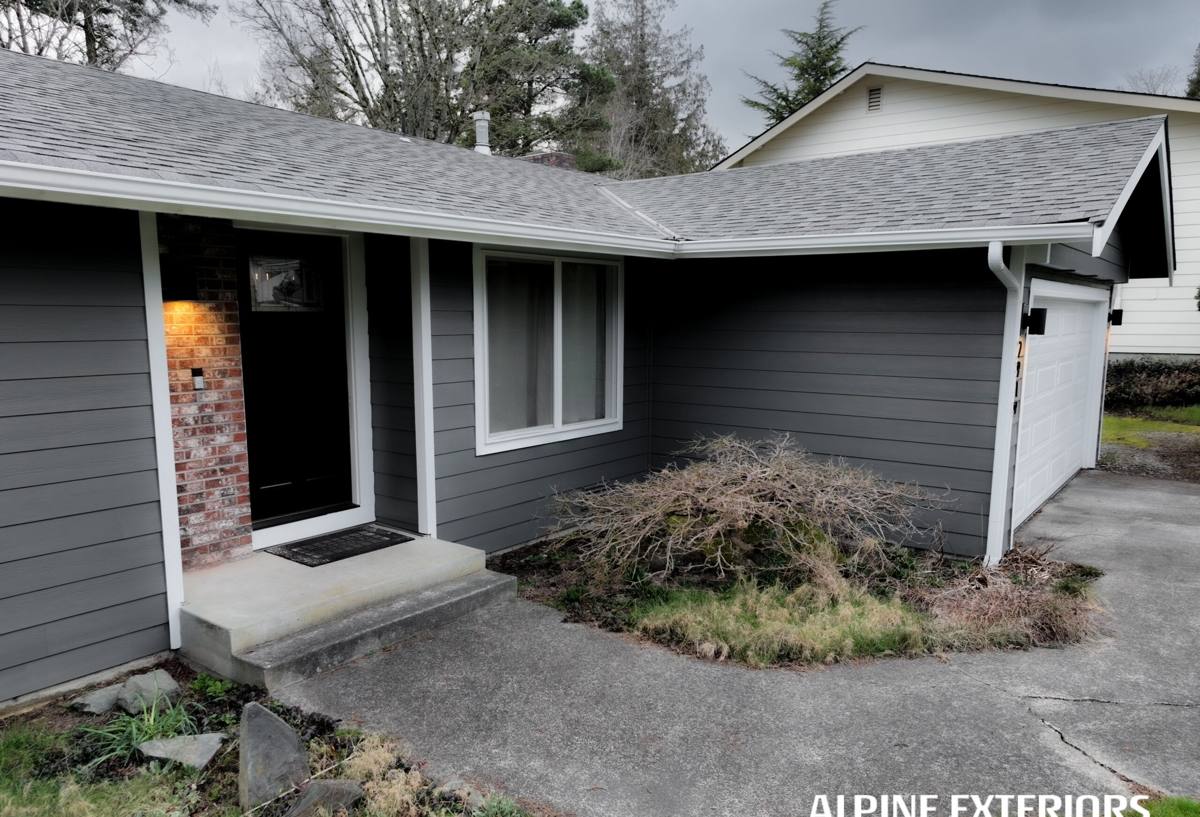
Why Siding Fails Faster in This Part of Anacortes
Salt Air and Metal Fasteners
Homes closer to the water deal with airborne salt that accelerates corrosion on nails, screws, and any exposed metal flashing. Once a fastener starts to corrode, it loses holding power, and that's when you start seeing boards that have worked loose, popped nail heads, or trim that's pulled slightly away from the wall. It's a slow process, which is exactly why it's easy to miss until a board is already loose enough to flex in the wind.
Driving Rain and Wind-Driven Moisture
West Anacortes gets its share of storms coming off the Strait, and wind-driven rain doesn't behave like a straight-down shower. It gets pushed sideways into laps, around window and door trim, and up under the bottom edge of siding courses. Any gap in caulking or flashing becomes an entry point, and once water gets behind siding, it can sit there for weeks before it shows up as a stain, a soft spot, or a musty smell inside.
The Moss and Algae Season
Anacortes has a long moss season — longer than most of Skagit County away from the water — thanks to the marine layer, tree cover, and shaded exposures common on West Anacortes lots. Moss and algae growth isn't just an appearance issue. It holds moisture directly against the siding surface for extended periods, which is hard on any material and can quietly break down paint film, caulking, and the substrate underneath over several seasons.
What a Correct Siding Repair Actually Involves
A repair that just patches the visible problem tends to fail again within a year or two out here. A repair that's done right addresses what let the damage happen in the first place. Here's what we check on every West Anacortes repair call:
- Whether the damage is isolated or a symptom of a larger moisture intrusion problem behind the wall
- Condition of the water-resistive barrier and flashing at windows, doors, and penetrations near the repair area
- Fastener condition — corroded or backed-out fasteners get replaced, not just re-driven
- Caulk and sealant joints at laps, trim, and transitions, which degrade faster in salt air and UV exposure
- Whether moss or algae staining indicates a drainage or shading issue that will keep causing the same problem
- Color and profile match if any siding sections need full replacement rather than a repair
Skipping any of these steps is how a homeowner ends up paying for the same repair twice. We'd rather spend the extra twenty minutes on the initial assessment than come back out next winter for the same wall.
Repair vs. Replacement: How We Make the Call
Not every siding problem in West Anacortes needs a full re-side, and we'll tell you plainly when a targeted repair is the right call. But there's a point where patching stops making financial sense, and it's worth understanding where that line is before you commit to either path.
| Factor | Favors Repair | Favors Replacement |
|---|---|---|
| Extent of damage | Isolated to one or two areas | Spread across multiple walls or elevations |
| Underlying moisture | No sign of trapped water behind cladding | Evidence of rot, soft sheathing, or long-term intrusion |
| Siding material | Still structurally sound, matchable | Discontinued product, mismatched patches likely |
| Age of existing siding | Under 10-15 years, good overall condition | Nearing or past expected service life |
| Moss/algae pattern | Surface growth only, cleanable | Recurring growth tied to a chronic drainage issue |
When replacement is the better long-term move, we install James Hardie fiber cement exclusively. We won't put vinyl, LP SmartSide, primed spruce, cedar, or other fiber cement brands like Allura or Cemplank on a home we're repairing — that's a standard we hold across every job, not just this one. In a climate like Anacortes throws at West Anacortes homes, the material matters as much as the workmanship.
Why James Hardie Holds Up Better Here
Fiber cement from James Hardie is non-combustible and engineered specifically for the moisture and climate demands of the Pacific Northwest through its HZ5 product line, which is built for regions that see the kind of sustained wet weather Skagit County gets. Where wood-based products like primed spruce or cedar are vulnerable to swelling, rot, and repeated repainting in salt air and driving rain, and vinyl can warp or crack under UV and temperature swings, Hardie's fiber cement composition resists moisture absorption and holds its shape and finish far longer when installed correctly.
The ColorPlus factory-applied finish is also a real advantage in a moss-prone environment — it's baked on under controlled conditions rather than field-painted, which gives it better adhesion and color retention, so surface cleaning doesn't strip or dull the finish the way it can with field paint. Combined with a strong transferable warranty, it's a system we're comfortable standing behind on homes that take the kind of weathering West Anacortes properties see every year.
Our Repair Process
- On-site assessment — we inspect the damaged area and check surrounding sections, flashing, and trim for related issues, not just the obvious spot
- Honest diagnosis — you get a clear explanation of what's causing the problem, whether it's isolated, and what the realistic repair vs. replacement options are
- Moisture and substrate check — where damage suggests water intrusion, we check the sheathing and barrier behind the siding before closing anything back up
- Repair or targeted replacement — matched materials, corrected fastening, and properly sealed transitions so the fix addresses the cause, not just the symptom
- Final walk-through — we point out what we did, why, and what to watch for going forward
Why a Local Anacortes Crew Matters for This Job
Siding repair isn't a job you want handled by a crew driving in from another county who's never dealt with what salt air and a Skagit County moss season do to a wall. We work in Anacortes regularly, which means we already know what a West Anacortes home closer to the water tends to need versus a home further inland, and we can usually spot the difference between a cosmetic issue and a moisture problem faster because we've seen the pattern before on similar homes nearby.
It also means we're not disappearing after the invoice clears. If a repair doesn't hold up the way it should, or you notice something new develop nearby, you're calling a crew that's still working in your neighborhood, not chasing down a company that did one job in the area and moved on.
Maintaining Your Siding Between Repairs
A few habits go a long way toward stretching the life of a repair or a full Hardie installation in this climate:
- Rinse siding annually to remove salt residue and slow moss/algae buildup, especially on shaded or north-facing walls
- Keep gutters clear so overflow isn't running down the siding face during heavy rain
- Trim back vegetation and tree cover that keeps walls shaded and damp longer than necessary
- Walk the exterior once or twice a year looking for cracked caulk, loose trim, or soft spots — small issues are cheap to fix, ignored ones aren't
- Address moss growth early rather than letting it establish, since it's far easier to remove when it's a light film than a thick mat
If you're seeing loose boards, cracked caulking, moss buildup, or a spot that just doesn't look right on your West Anacortes home, we're happy to come take an honest look. Request a free, no-pressure estimate through the form below and we'll tell you straight whether you're looking at a simple repair or something more.