 Anacortes Exterior
 Metal Roofing Built for Burlington's Climate, Not Just Any Climate
Burlington sits in the part of Skagit County where marine air off Puget Sound, heavy seasonal rain, and shaded, moisture-holding tree cover all combine to work against a roof year-round. A metal roof can handle that combination better than almost any other roofing material available — but only if it's specified, fastened, and flashed for these specific conditions. A metal roof installed the same way you'd install one in a dry inland climate will not perform the same way here, and the difference shows up within a few years, not decades.
This page covers what actually matters for a metal roof on a Burlington-area home: what the local climate does to roofing materials over time, what a correct installation looks like, what it costs to do it right, and why working with a crew that's already familiar with this area's weather and building conditions is worth something real.
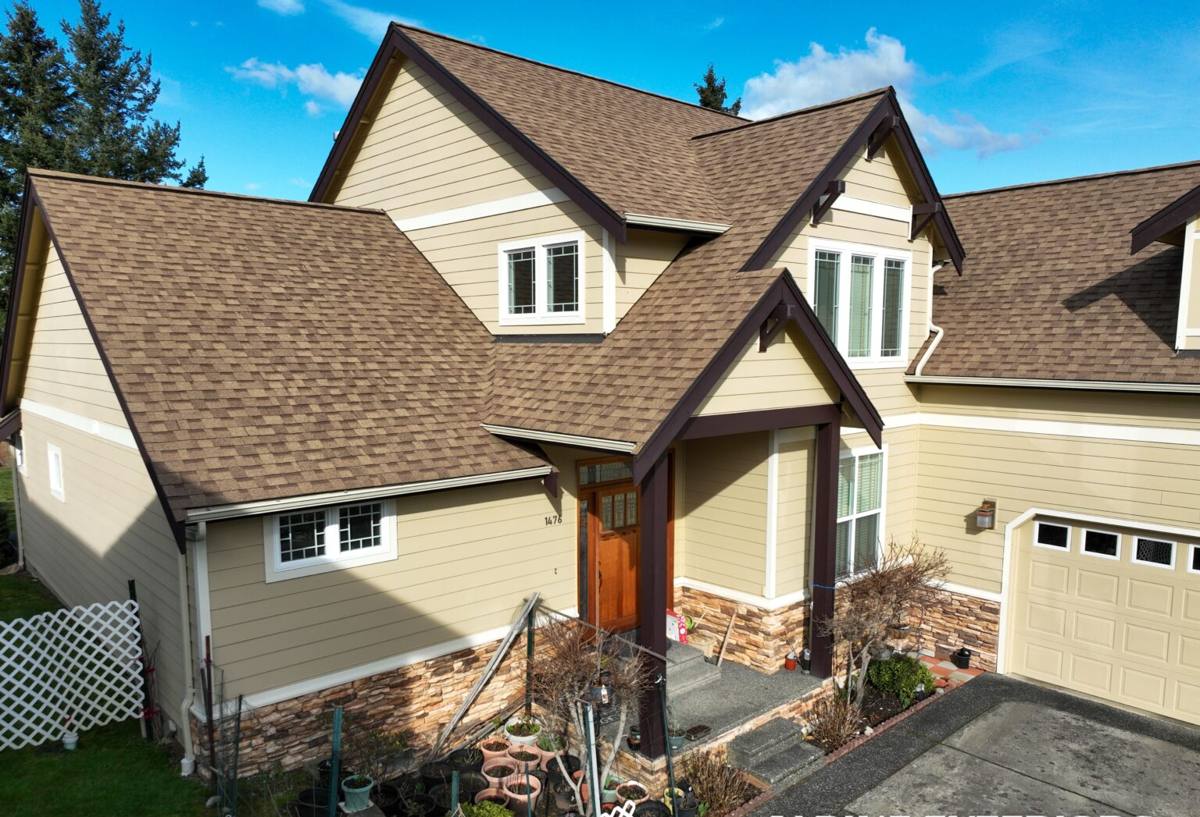
What Skagit County Weather Does to a Roof Over Time
Three things drive most of the roofing problems we see in this part of Washington: salt-laden marine air, wind-driven rain, and a long moss season caused by shade and near-constant moisture. Each one attacks a roof differently, and each one requires a specific response in how the roof is built.
Salt Air and Corrosion
Homes anywhere near Puget Sound and the surrounding waterways are exposed to airborne salt, even when they're not directly on the water. Salt accelerates corrosion on any exposed metal — fasteners, flashing, gutters, and unprotected panel edges are usually the first places it shows up. This is why the coating system and fastener grade matter as much as the panel material itself. A metal roof with the wrong coating or bare steel fasteners can start showing rust streaks in a fraction of its expected lifespan.
Wind-Driven Rain
Rain here rarely just falls straight down. Storms off the Sound push rain sideways and upward under eaves, around penetrations, and into any gap in flashing that would be a non-issue in a calmer climate. Roofs that look fine on a dry day fail during exactly the kind of sideways, sustained storm this region gets several times a winter. Flashing laps, underlayment coverage, and fastener sealing all have to account for wind-driven water, not just gravity-fed water.
Moss and Trapped Moisture
Tree cover and consistently damp conditions make moss and organic growth a near-constant issue on shaded roof sections. Moss itself doesn't damage metal panels the way it damages shingles, but moss and debris buildup in valleys, at panel laps, and around penetrations traps moisture against the roof surface and its fasteners for extended periods. That trapped moisture is what actually causes long-term problems — not the moss growing on top, but what's happening underneath it.
What a Properly Installed Metal Roof Requires Here
A correct metal roof installation for this climate comes down to four things done right: underlayment, fastening, flashing, and ventilation. Skipping or shortcutting any one of these is where most premature failures start.
Underlayment and Water Management
Given how often wind-driven rain gets pushed under roof edges and around penetrations, a synthetic or self-adhered underlayment with real water resistance underneath the panels is not optional here — it's the roof's second line of defense when wind pushes water past the panel seams. Ice and water shield at eaves, valleys, and penetrations adds a layer of protection specifically against the kind of driving rain this area sees.
Fastening and Panel Seams
Fastener spacing, type, and coating all need to match both the wind exposure of the specific roof and the corrosive marine air. Exposed-fastener panels rely on gaskets and washers that degrade over time and need occasional attention; concealed-fastener standing seam systems avoid that maintenance point entirely by keeping fasteners out of direct weather exposure.
Flashing Details
Most metal roof leaks trace back to flashing, not the panels themselves. Valleys, chimneys, skylights, wall transitions, and vent penetrations all need flashing sized and lapped for sideways-driven rain, not just vertical runoff. This is also where experience with this specific climate pays off — a flashing detail that's adequate in a drier region can be marginal here.
Ventilation
A well-ventilated attic keeps moisture from condensing against the underside of the roof deck, which matters even more under a metal roof in a damp climate. Poor ventilation traps humidity that can cause deck rot and fastener corrosion from the inside, independent of anything happening on the roof's outer surface.
Choosing a Metal Roofing System for a Burlington Home
The two most common metal roofing approaches are standing seam panels and exposed-fastener panels. Both can be built correctly, but they trade off differently on cost, maintenance, and long-term performance in this climate.
| Factor | Standing Seam | Exposed Fastener |
|---|---|---|
| Fastener exposure | Concealed, protected from weather | Exposed, gaskets wear over time |
| Corrosion resistance in salt air | Higher — fewer exposed metal points | Lower — fastener heads are exposed to marine air |
| Maintenance | Minimal once installed correctly | Periodic gasket and fastener checks |
| Upfront cost | Higher | Lower |
| Typical lifespan with proper install | Longer end of the range | Shorter end of the range |
For homes with heavier wind and rain exposure, or for owners who want to minimize future maintenance, standing seam is usually the better long-term fit. Exposed-fastener systems can still be a sound, budget-conscious choice on the right project when installed and maintained correctly — it comes down to the specific roof, the budget, and how much upkeep the owner wants to take on.
Our Process, Start to Finish
- On-site inspection. We look at the existing roof structure, decking condition, ventilation, and any problem areas before recommending a system.
- Written estimate. A clear scope of work and pricing based on your roof's actual size, complexity, and condition — no guesswork.
- Tear-off and deck prep. Old roofing is removed and the deck is inspected for rot or soft spots, which get repaired before anything new goes on.
- Underlayment and flashing installation. Water management goes in first, sized for wind-driven rain, before a single panel is set.
- Panel installation. Panels are set, seamed or fastened per the system's specifications, with attention to alignment and consistent fastening.
- Final walkthrough. We go over the finished roof with you, including what maintenance, if any, it will need going forward.
Keeping Moss and Debris From Shortening Roof Life
A metal roof needs far less maintenance than shingles, but "far less" doesn't mean "none." In a climate like Skagit County's, a small amount of seasonal attention goes a long way toward protecting the investment.
- Clear leaves and needles out of valleys and around penetrations before they compact and hold moisture.
- Keep gutters and downspouts flowing freely so water isn't backing up against roof edges.
- Trim back overhanging branches to reduce shade and debris buildup on affected sections.
- Watch for moss forming in shaded valleys or against panel laps and remove it before it spreads.
- Have flashing and sealant points checked periodically, especially after a hard windstorm.
- Avoid pressure washing metal panels directly — it can drive water under laps and damage coatings.
Why Hiring a Crew That Already Works in Burlington Matters
Metal roofing done wrong doesn't usually fail on day one — it fails three, five, or ten years in, once corrosion, trapped moisture, or a marginal flashing detail catches up with it. A crew that already works throughout Skagit County has already seen how local wind exposure, moss buildup, and marine air affect roofs in this specific area, and builds around those conditions from the start rather than treating this as a generic install. That includes knowing which details need extra attention on a coastal-influenced roof, being familiar with local permitting expectations, and standing behind the work with someone local you can actually reach if a question comes up down the road.
What Metal Roofing Costs in the Burlington Area
Metal roofing costs more upfront than asphalt shingles, but it also lasts substantially longer and requires less ongoing maintenance. Exact pricing depends on your specific roof, but the factors below are what typically move the number up or down.
| Cost Factor | Why It Matters |
|---|---|
| Panel system (standing seam vs. exposed fastener) | Standing seam costs more upfront but needs less long-term maintenance |
| Roof complexity (valleys, dormers, penetrations) | More cuts and flashing details mean more labor and material |
| Tear-off vs. overlay | Removing old roofing and repairing the deck adds cost but is often necessary for a correct install |
| Coating and fastener grade | Higher-grade coatings and fasteners cost more but resist corrosion far longer in marine air |
| Roof pitch and accessibility | Steeper or harder-to-access roofs take more time and equipment |
Homeowners considering metal roofing in this area are generally looking at a wide range depending on these factors — anywhere from a moderate premium over shingles on a simple roof to a significantly larger investment on a complex, steep, or fully torn-off roof. The only way to get an accurate number is to have the actual roof measured and inspected.
If you're weighing metal roofing for a home in the Burlington area, we're happy to take a look and walk you through what your specific roof needs — no pressure, no pushy sales pitch. Fill out the form below for a free estimate.