 Anacortes Exterior
 Why Burlington Homes Need Windows Built for This Climate
Burlington sits in the Skagit Valley, close enough to the Salish Sea that salt-tinged air, long stretches of driving rain, and a moss season that seems to run most of the year all show up on local homes. Windows here don't just need to look good — they need to hold a seal against wind-driven rain, resist the slow damage that moisture and salt air cause to frames and hardware, and keep heating costs down through a winter that's more damp-cold than deep-cold. A window that performs fine in a dry inland climate can still fail early here if it wasn't built, or installed, with this weather in mind.
Energy efficiency and moisture management aren't separate issues in Skagit County — they're the same problem. A window that leaks air around the frame is very often the same window that's letting moisture in, and that moisture is what feeds the mold, wood rot, and failed seals we get called out to look at. When we talk about "energy-efficient windows" for a Burlington home, we're talking about a package: glass, frame, and installation, all working together to keep the weather out and the conditioned air in.
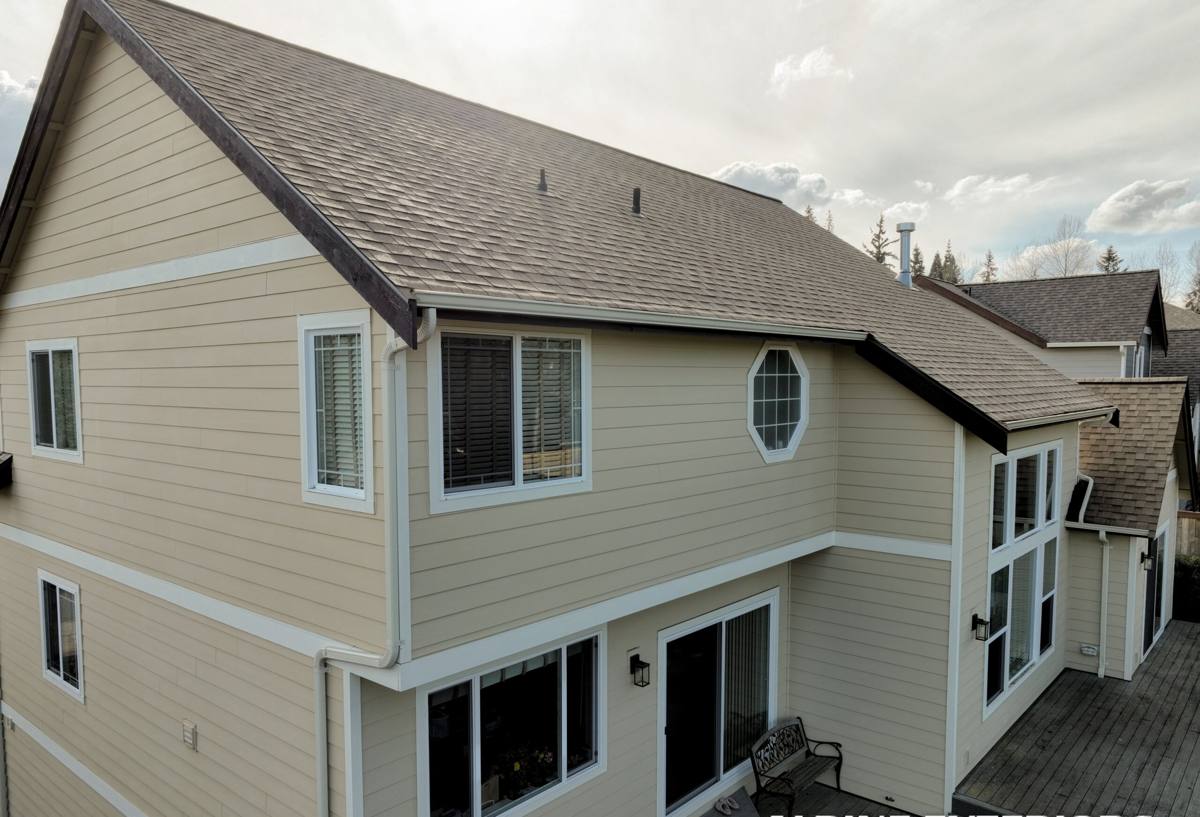
What Actually Makes a Window Energy-Efficient
"Energy-efficient" gets used loosely in this industry. It has a specific meaning, and it comes down to a handful of factors that determine how much heat, cold, and moisture pass through the unit.
Glazing and Gas Fill
Most homes in our area are well served by dual-pane glass with a low-E (low-emissivity) coating and an argon gas fill between the panes. The coating reflects heat back into the room in winter and blocks solar heat gain in summer, while the argon fill slows heat transfer compared to plain air. Triple-pane glass exists and does perform better on paper, but for our mild-winter, wet-summer climate it's rarely worth the added cost and weight — that's a trade-off we're upfront about rather than upselling.
Frame Material and Construction
The frame is where a lot of the real-world performance difference shows up, especially in a climate with this much sustained moisture. A well-built frame with tight corner welds and a proper drainage path keeps water from pooling where it can work its way into the wall assembly. We'll go into frame material options below, since this is one of the bigger decisions homeowners make.
Performance Ratings Worth Checking
Every legitimate window carries an NFRC (National Fenestration Rating Council) label with a few numbers worth understanding:
- U-Factor — measures heat loss; lower is better. This is the number that matters most for winter heating bills.
- SHGC (Solar Heat Gain Coefficient) — measures how much solar heat passes through; matters more on south- and west-facing walls.
- Air Leakage — measures drafts through the assembled unit, not just the glass. Lower is better.
- ENERGY STAR certification — confirms the window meets Pacific Northwest climate-zone requirements, not a national average.
Signs Your Current Windows Are Working Against You
Homeowners usually call us for one of a few reasons, and most of them trace back to the same root causes:
- Visible condensation or fogging between the panes — the seal has failed and the gas fill is gone.
- A cold draft you can feel standing near the window even when it's latched shut.
- Difficulty opening, closing, or locking — often swollen wood or corroded hardware from years of damp exposure.
- Visible gaps, cracked caulking, or soft wood at the sill or frame corners.
- A noticeable jump in heating costs without any other explanation.
- Moss or dark staining building up on the sill or exterior trim — a sign that water is sitting where it shouldn't.
None of these are cosmetic issues. Each one is energy loss, and several of them are early warnings of moisture getting into the wall framing behind the window — a much more expensive repair than the window itself.
What a Correct Installation Actually Involves
The window unit itself is maybe half the job. The other half — the part that's invisible once the trim goes back on — is what determines whether that window performs for twenty-plus years or starts leaking within a few winters. In a climate that gets as much driving rain as ours, installation quality matters more than it does in drier regions.
A correct installation includes:
- Removing the old unit and inspecting the rough opening and sill for hidden rot or moisture damage before anything new goes in.
- Repairing or replacing any compromised framing — never installing a new window over a damaged opening.
- Installing flashing and a water-resistive barrier in the correct shingle-lap sequence, so water is directed out and down, not trapped behind the siding.
- Shimming the unit level, plumb, and square, then fastening according to the manufacturer's specifications to keep the warranty valid.
- Sealing with the right sealant for the substrate — and only where the window design calls for it, since sealing the wrong spots can trap moisture instead of shedding it.
- Insulating the gap between the frame and rough opening without overpacking it, which can bow the frame and affect operation.
This is the part of the job that separates a window that performs for decades from one that needs attention again in five years. It's also the part a homeowner can't easily inspect after the trim is reinstalled, which is why the crew doing the work matters as much as the window brand on the label.
Choosing a Frame Material for Skagit County Weather
There's no single "best" frame material — each has real trade-offs, and the right choice depends on your home's exposure, your budget, and how much upkeep you want to take on.
| Frame Material | How It Handles Our Climate | Upkeep |
|---|---|---|
| Vinyl | Won't rot, resists salt air well, good insulator; can expand/contract with temperature swings | Low — occasional cleaning |
| Fiberglass | Very stable in temperature swings, strong moisture resistance, holds paint well | Low |
| Wood (clad exterior) | Warm interior look; exterior cladding protects against rain, but any breach in the cladding invites rot | Moderate — watch cladding seams |
| Aluminum | Strong and slim sightlines, but conducts heat and cold readily unless thermally broken | Low, but energy performance suffers without a thermal break |
For most Burlington homes, vinyl or fiberglass frames offer the best balance of energy performance, moisture resistance, and long-term maintenance given the amount of rain and humidity we deal with. Wood-clad frames can still be the right call for homes where the interior look matters most, as long as the cladding and flashing details are done correctly — which comes back to installation quality.
Our Process, Start to Finish
- On-site assessment. We look at your existing windows, the condition of the framing around them, and how each elevation of your home is exposed to weather and sun.
- Honest recommendation. We'll tell you which windows need replacing now, which can wait, and which frame and glass package fits your budget and your home — no pressure toward the most expensive option.
- Accurate measurement and ordering. Every opening gets measured individually; older homes especially can have openings that aren't perfectly square or uniform.
- Installation. Old units come out, openings get inspected and repaired as needed, and new windows go in with proper flashing, sealing, and fastening.
- Cleanup and walkthrough. We clear debris, clean the new glass, and walk the job with you so you know how to operate and maintain the new hardware.
What Affects the Cost
We don't publish flat pricing because every home and every opening is different, but these are the main variables that move the number up or down:
| Factor | Why It Matters |
|---|---|
| Number and size of openings | More or larger windows means more material and labor |
| Frame material | Vinyl, fiberglass, and wood-clad carry different material costs |
| Glass package | Standard dual-pane low-E versus upgraded coatings or triple-pane |
| Condition of existing framing | Rot or water damage found during removal adds repair time |
| Access and site conditions | Second-story or hard-to-reach openings take longer to work safely |
| Trim and finish work | Matching existing interior trim or exterior siding detail adds labor |
The only way to get a real number is a walkthrough of your specific home — broad online estimates rarely hold up once someone's actually looked at your openings and framing.
Why a Crew That Already Works in Burlington Matters
Skagit County's mix of rain exposure, humidity, and salt-influenced air means the same window model can perform differently depending on which side of the house it's on and how it's installed. A crew that works this area regularly has already seen how moisture moves through local wall assemblies, which sill details tend to hold up, and which shortcuts show up as callbacks two or three winters later. That experience shows up in the small decisions during install — how flashing gets lapped, where sealant is and isn't used, how much clearance is left for drainage — that a homeowner can't easily verify after the fact but absolutely feels in the years that follow.
It also means fewer surprises around permitting and local building requirements, and a crew that's set up to come back if anything needs adjustment — not a traveling install team that's moved on to another region by the time a seal needs a second look.
Before You Sign: A Quick Checklist
- Get the U-Factor and Air Leakage numbers in writing, not just "energy-efficient" as a label.
- Ask what happens if rot or damage is found in the framing once old windows come out.
- Confirm who handles flashing and moisture barrier work — and how.
- Ask about the manufacturer's warranty terms and what installation practices are required to keep it valid.
- Get a clear, itemized estimate that lists frame material, glass package, and labor separately.
- Ask how long the crew has been doing this type of work in your specific area.
If you're weighing whether it's time to replace windows on your Burlington home, we're happy to take a look and give you a straight answer — no pressure, no inflated urgency. Reach out below for a free estimate.