 Anacortes Exterior
 Why Burlington's Weather Wears Out Siding Faster Than It Should
Burlington sits inland from Anacortes but still gets the full package of Skagit County weather: salt-laden air pushing off the Salish Sea, long stretches of driving rain from fall through spring, and the shaded, damp conditions that let moss and algae take hold on north-facing walls almost year-round. Because Burlington sits low in the Skagit Valley, morning fog and standing dampness can linger longer here than on breezier stretches closer to the water, which only adds to the number of wet-dry cycles a wall goes through each year. None of that is unusual for western Washington, but it adds up differently than it does in drier climates. Siding here doesn't just get wet — it stays wet, cycles between damp and dry dozens of times a season, and picks up a fine layer of salt residue that vinyl and untreated wood-based products handle poorly over time.
Homes in this part of the county also see wide temperature swings between summer afternoons and cool, wet nights, which stresses any siding material that expands and contracts a lot. Add wind-driven rain off open fields and tree cover that keeps some walls shaded and slow to dry, and you have a climate that rewards a cladding system engineered for moisture — not one that merely tolerates it.
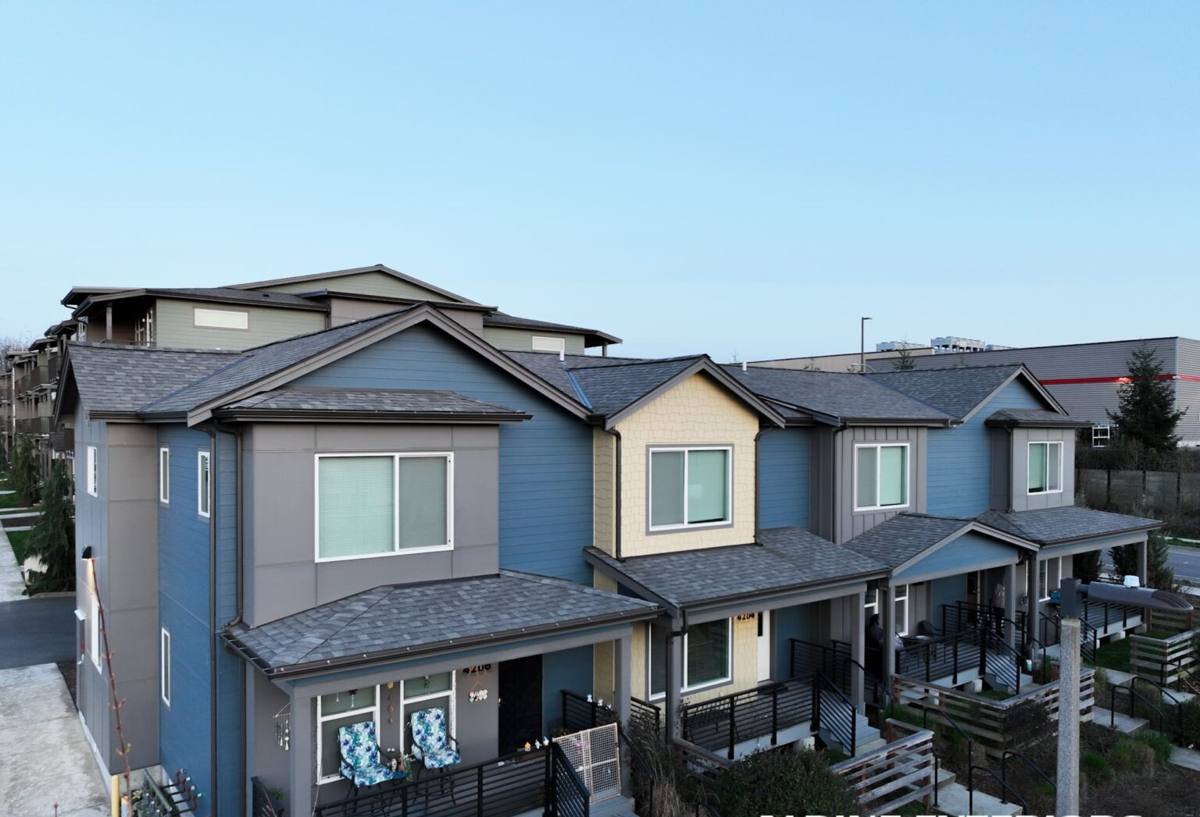
What a Correct Fiber Cement Siding Job Actually Involves
Fiber cement siding is only as good as the assembly behind it. A huge share of the siding failures we get called out to inspect in this area trace back to installation shortcuts, not the material itself. Doing it right means paying attention to the parts nobody sees once the job is finished.
Water Management Comes First
Before a single plank goes up, the wall needs a continuous weather-resistive barrier, properly lapped and taped at every seam, with flashing integrated at every window, door, and roof-to-wall transition. In a climate that gets driving rain from multiple directions across a season, any gap in that barrier eventually becomes an interior problem — usually discovered years later as rot in the sheathing.
Clearances and Fastening
James Hardie's own installation instructions specify minimum clearances from grade, roof lines, decks, and horizontal surfaces, along with specific fastener patterns and gaps between boards for expansion. Skipping these clearances is one of the most common shortcuts we see on older installs in Skagit County, and it's usually what lets moisture wick into the bottom of the boards first.
Caulking and Sealant Placement
Fiber cement is dimensionally stable, but the joints, trim, and penetrations around it still need the right sealants in the right places — and just as important, the right places to be left open so the wall can drain and dry. Over-caulking a wall is nearly as damaging as under-caulking it in a climate this wet.
Ventilation Behind the Cladding
In a climate that stays damp this long, giving the wall a way to vent and dry matters as much as keeping water out in the first place. A rainscreen gap or drainage plane behind the siding lets any moisture that does get past the outer layer evaporate instead of sitting against the sheathing. It's an extra step that doesn't show in the finished look of the house, but it's often the difference between a wall that shrugs off a wet winter and one that's hiding a problem behind the drywall.
Why We Install Only James Hardie in This Climate
We made the decision years ago to standardize on James Hardie fiber cement and stop installing LP SmartSide, vinyl, Cemplank, Allura, or primed wood siding. That's not a marketing position — it's a response to what we consistently see happen to those materials in Puget Sound weather.
Vinyl siding is affordable and low-maintenance in the sense that it doesn't need painting, but it's also a thin plastic product that becomes brittle in cold snaps, distorts in direct summer sun, and provides essentially no impact resistance. It's not fire-resistant, and its seams and J-channels give wind-driven rain plenty of places to get behind the cladding.
Engineered wood products like LP SmartSide use real wood strand technology with a resin binder, which performs well in many climates, but wood-based composites are still vulnerable at cut edges and fastener penetrations if field-treatment isn't done perfectly and maintained over the life of the siding. In an area with this much sustained moisture and moss growth, that ongoing maintenance burden is real, and we've seen it become a source of frustration for homeowners who assumed "engineered" meant "maintenance-free."
James Hardie fiber cement is non-combustible, doesn't rot, and holds its factory-applied ColorPlus finish far longer than field-painted siding — which matters in a climate where damp walls make repainting a bigger job than it looks. Hardie's HZ5 product line is specifically engineered for climates like ours, with moisture and freeze-thaw performance tuned for the Pacific Northwest rather than a one-size-fits-all national spec.
Color, Finish, and Warranty
ColorPlus finish is baked on in a factory-controlled process before the boards ever leave the plant, which gives more consistent, fade-resistant color than field-applied paint that has to cure in whatever weather shows up on installation day — not ideal in a region where a dry week to paint isn't guaranteed. Hardie backs its siding with a long, transferable limited warranty on the substrate itself, plus a separate warranty specifically covering the ColorPlus finish, so you're not relying on whatever paint warranty a local supplier happens to offer. For a homeowner comparing products, that's a meaningfully different position than a primed board that still needs a full paint job and a separate paint warranty stitched together after installation.
Our Process for a Burlington Siding Project
- Inspection and moisture check: We look at the existing wall assembly, check for hidden rot around windows, decks, and roof transitions, and test moisture levels rather than just eyeballing the surface.
- Scope and product selection: We walk through Hardie's plank profiles, panel options, and trim lines with you, and match the HZ5 configuration to your home's exposure — south and west walls that take direct driving rain get treated differently than sheltered, shaded elevations.
- Tear-off and sheathing repair: Old siding comes off, and any water-damaged sheathing or framing gets replaced before anything new goes on — covering up rotten sheathing is the single most common shortcut in this trade.
- Weather barrier and flashing: A new, continuous weather-resistive barrier goes on with correctly lapped seams and integrated flashing at every penetration.
- Installation to spec: Boards go up with the manufacturer's specified clearances, fastener patterns, and expansion gaps — not shortcuts to save a day of labor.
- Trim, caulking, and paint touch-up: Factory-finished ColorPlus edges get field-touched where cut, and sealant goes only where it should, leaving the assembly able to drain and dry.
- Final walk-through: We go over the finished job with you before calling it done, including care and maintenance specific to your home's exposure.
Cost Factors for Fiber Cement Siding in Burlington
Every home is different, and the honest answer to "what will this cost" depends on the factors below more than on a flat per-square-foot number. This table covers what actually moves the price on a Skagit County job:
| Factor | Why It Matters Here |
|---|---|
| Tear-off condition | Hidden rot from years of driving rain adds sheathing and framing repair before new siding can go up |
| Wall exposure | South- and west-facing walls exposed to salt-laden wind and rain may call for different detailing than sheltered elevations |
| Home height and access | Two-story and steep-site homes need more scaffolding and staging time |
| Trim and architectural detail | Dormers, bay windows, and multiple roof lines multiply the flashing and cutting work |
| Product line and profile | HZ5 panel and plank options vary in price; ColorPlus factory finishes cost more upfront but avoid repainting |
| Moss and algae remediation | Long-shaded walls sometimes need extra prep or ventilation consideration before installation |
Signs Your Current Siding Is Losing the Fight
A lot of Burlington homeowners call us not because they've decided to replace their siding, but because something looks off and they want an honest opinion. These are the signs worth taking seriously in this climate:
- Soft or spongy spots when you press on the siding near the bottom edges or below windows
- Persistent moss or dark streaking that comes right back after cleaning
- Paint that's peeling, bubbling, or chalking heavily on wood or older composite siding
- Visible gaps, warping, or buckling at seams and corners
- Rising utility bills alongside drafts near exterior walls
- Rot or staining discovered during unrelated work like window or gutter replacement
Any one of these can be minor. Several together, especially on a home more than 15 to 20 years old, usually means the wall assembly is due for a real look, not just a patch.
Maintaining Hardie Siding in Skagit County
James Hardie siding is genuinely low-maintenance compared to wood or engineered wood, but "low-maintenance" isn't "no-maintenance," especially with the moss and salt exposure this area gets. A simple annual routine keeps a correctly installed job performing for decades:
- Rinse the exterior once or twice a year with a garden hose to clear salt residue and organic buildup before it takes hold
- Keep gutters clear so overflow doesn't run down the wall face and feed moss growth
- Trim back vegetation and tree cover that keeps walls shaded and slow to dry
- Check caulking at trim and penetrations every few years and re-seal where it's cracked or pulled away
- Address any moss or algae promptly with a gentle wash rather than pressure-washing directly into seams
Why Hiring a Crew That Already Works Burlington Matters
Siding installation is detail work, and the details that matter shift by region. A crew that mostly works in a dry climate can install fiber cement to the letter of the manufacturer's instructions and still miss the judgment calls that matter here — how much clearance to leave on a wall that gets standing water in a wet December, which elevations need extra attention because of prevailing wind direction, or how local permitting and inspection expectations run in Skagit County.
Working Burlington and the surrounding Anacortes area regularly also means knowing what actually goes wrong on homes here, not in theory but from having opened up enough walls to see it. That's the difference between a crew that follows a spec sheet and one that understands why the spec sheet says what it does for this exact climate.
It also means fewer surprises with permitting and inspection. Skagit County and local jurisdictions have their own permitting expectations for exterior work, and a crew that pulls permits here regularly moves through that process without the delays that come from unfamiliarity. That's a small thing until it's the reason your project sits idle for an extra week.
Ready for a Straight Answer on Your Siding
If your Burlington home's siding is showing its age, or you're planning ahead before it becomes a bigger problem, we're happy to take a look and give you a straightforward, no-pressure assessment. Fill out the form below for a free estimate — no obligation, just an honest read on where your home stands.