 Anacortes Exterior
 Roof Repair Built for Burlington's Weather
Burlington sits inland from Anacortes but still gets the full Skagit County weather pattern: long wet winters, driving rain off the Sound, and enough marine moisture in the air to keep moss and algae growing on roofs almost year-round. Add in the salt-laden air that drifts inland from the coast and you have a climate that is genuinely harder on a roof than what most manufacturers assume when they write their warranty language. A roof repair here has to account for all of that, not just patch the spot that's leaking.
We work on roofs throughout the Anacortes and Burlington area regularly, which means we're not guessing at how local weather behaves on a given roof pitch, underlayment type, or flashing detail. We've seen how moss builds up in the shaded, north-facing slopes of Burlington homes tucked under fir and cedar trees, and how driving rain finds its way through flashing that looked fine from the ground.
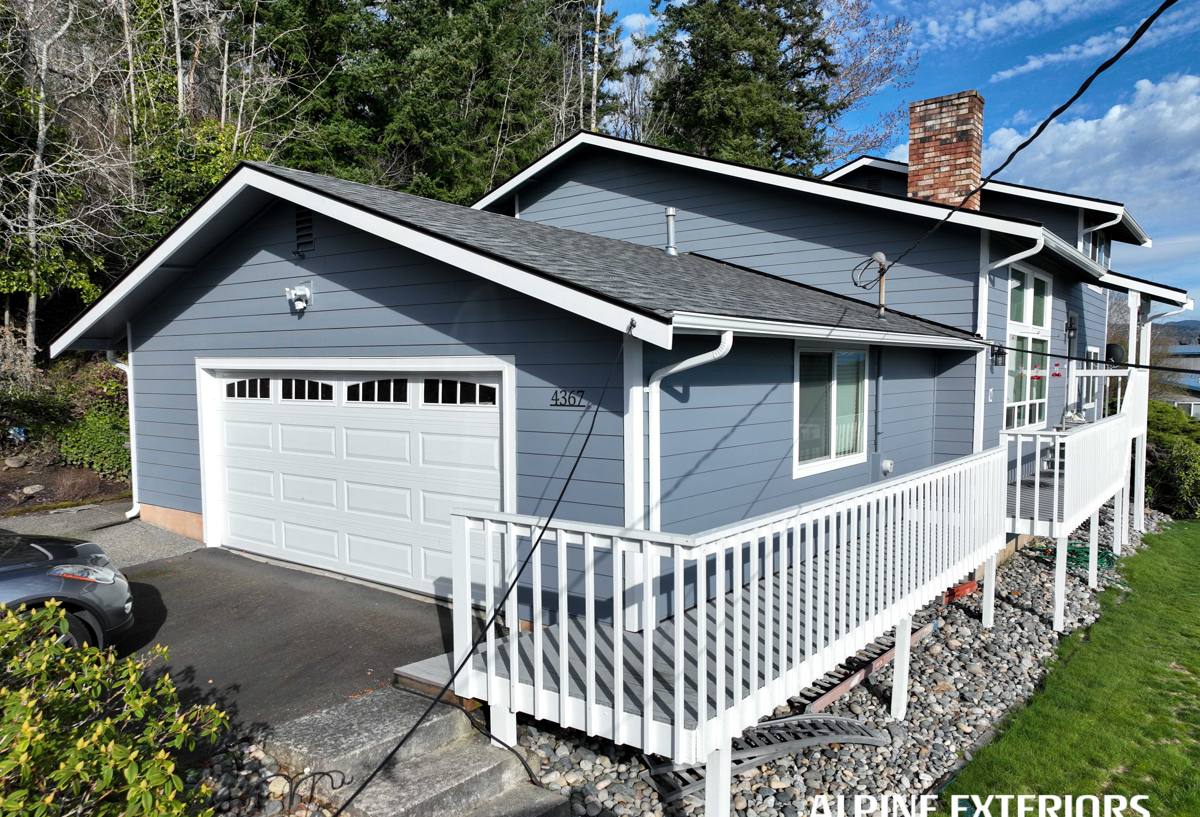
What Burlington's Climate Does to a Roof
Moss and Organic Growth
Skagit County's damp, mild winters create a long moss season — often eight months or more of conditions moist enough for moss, lichen, and algae to take hold. Moss isn't just cosmetic. It holds moisture against the roofing material, works its way under shingle tabs and into seams, and accelerates granule loss on asphalt shingles. On wood or composite products, trapped moisture speeds rot. A repair that removes moss without addressing why it's growing there (poor airflow, overhanging branches, north-facing shade) tends to come back within a season or two.
Driving Rain and Wind-Driven Moisture
Storms moving through the region often bring rain at an angle, not straight down. That matters because a lot of roof leaks aren't failures of the field material — they're failures at the edges: flashing around chimneys and skylights, valleys, and the transitions where a roof meets a wall or dormer. Wind-driven rain pushes water sideways and upward into gaps that would never leak in a calm, vertical rainstorm.
Salt Air and Corrosion
Even though Burlington is a few miles from open water, the marine air common to this part of Washington still carries salt content that accelerates corrosion on exposed metal fasteners, flashing, and vent boots. Galvanized fasteners and untreated metal components corrode faster here than they would in a dry inland climate, and corroded fasteners are a common, underappreciated cause of slow leaks.
Signs a Burlington Roof Needs Repair, Not Just Cleaning
- Water stains on interior ceilings or upper walls, especially after a windy rainstorm
- Visible moss mats, especially on shaded or north-facing slopes
- Granules collecting in gutters or at downspout outlets (a sign of shingle wear)
- Curling, cracked, or missing shingles, particularly near ridges and edges
- Rusted or lifted flashing around chimneys, vents, and skylights
- Sagging sections, which can indicate deck or structural moisture damage underneath
- Daylight visible through the attic roof deck
Any one of these on its own might be minor. Several together usually mean water has been getting in for a while, even if there's no visible stain inside yet.
What a Correct Roof Repair Actually Involves
A roof repair done right isn't just sealing the spot where water is showing up inside the house. Water travels — it can enter at one point and show up on a ceiling several feet away, following a rafter or sheathing seam downhill. Our process is built around finding the actual entry point before doing any repair work.
1. Roof and Attic Inspection
We look at the roof surface, flashing, penetrations (vents, chimneys, skylights), and valleys, along with the attic underside where possible. Interior staining tells us roughly where to look, but the attic inspection often confirms the real path water is taking.
2. Identify the Failure Point
Most leaks trace back to one of a handful of causes: failed or corroded flashing, nail pops, cracked pipe boot collars, deteriorated sealant at a transition, wind-lifted shingles, or moss-related granule loss that's thinned the material below the failure point. We tell you specifically what we found, not just "there's a leak."
3. Repair the Cause, Not Just the Symptom
Depending on what we find, this might mean replacing a section of flashing, re-sealing and re-securing a penetration, replacing damaged shingles or panels, or repairing rotted decking underneath if moisture has been sitting there a while. We match materials to the existing roof where possible so the repair blends in and performs the same as the surrounding roofing.
4. Address the Contributing Condition
If moss caused or contributed to the failure, we talk with you about moss treatment and prevention options so the same spot doesn't fail again in a year or two. If ventilation or shade is part of the problem, we'll flag that too — sometimes a small trim of overhanging branches does more for roof longevity than any product.
Repair vs. Replacement: How We Help You Decide
Not every roof issue needs a full replacement, and not every roof issue should be patched forever, either. The right call depends on the roof's age, how widespread the damage is, and what's underneath the surface material.
| Factor | Favors Repair | Favors Replacement |
|---|---|---|
| Roof age | Under 15-20 years, generally sound elsewhere | Near or past expected service life |
| Extent of damage | Isolated to one area (flashing, one slope, one penetration) | Widespread wear, multiple failure points |
| Decking condition | Solid, dry sheathing under the damaged area | Soft, rotted, or repeatedly wet decking |
| Moss/algae history | First occurrence, treatable | Chronic, recurring despite treatment |
| Shingle granule loss | Localized | Widespread bald patches across multiple slopes |
We'll walk you through where your roof falls on this table honestly. If a repair is the sound, cost-effective answer, that's what we'll recommend — we're not in the business of selling a full roof to someone who needs a flashing fix.
Materials and Methods We Use
For repairs, we use materials rated for the exposure they'll see — corrosion-resistant flashing and fasteners given the salt content in the air here, sealants rated for the temperature swings and near-constant moisture of a Skagit County winter, and shingle or panel products matched as closely as possible to what's already on the roof. Cutting corners on fasteners or flashing on a repair is a false economy in this climate — it's exactly the kind of shortcut that turns into a callback within a year or two.
Why We're Selective About Moss Treatments
Some moss treatments are more aggressive than others. We favor methods that kill and remove moss without stripping protective granules or damaging the shingle surface, since granule loss is itself a cause of future leaks. Harsh pressure-washing, for example, can look effective in the short term but strip away the very material meant to protect the roof — that's a maintenance trade-off we explain rather than a shortcut we take.
Our Process, Start to Finish
- Contact us for a free inspection — we'll look at the roof and, where accessible, the attic
- We identify the failure point and explain what we found, in plain terms
- We give you a clear scope and price for the repair, including any contributing issues (moss, ventilation, decking)
- We schedule the work around Skagit County's weather windows — repairs need dry conditions to seal properly
- We complete the repair, clean up the work area, and walk you through what was done
- We note anything worth monitoring or maintaining going forward
Why Local Experience in Burlington Matters
A roofing crew that works this specific area regularly knows things a roofer unfamiliar with the region has to learn the hard way: which slopes in Burlington's tree-covered lots hold moss longest, how the wind pattern off the Sound tends to drive rain into east- and south-facing flashing, and which older subdivisions in the area used flashing details that are now known to be leak-prone. That local pattern recognition shortens the diagnosis and reduces the chance of missing a secondary problem while fixing the obvious one.
It also means we're realistic about timing. Roof repairs need a dry, safe work window, and in this climate those windows aren't unlimited. We plan repair work around the weather rather than rushing a seal in marginal conditions, because a repair done in the wrong conditions often fails faster than the original problem would have on its own.
Maintaining a Repaired Roof
- Keep gutters and downspouts clear so water isn't backing up under the roof edge
- Trim back branches that shade roof sections and keep them damp longer than necessary
- Have moss treated before it forms thick mats, not after
- Schedule a periodic inspection, especially after any major windstorm
- Watch for granule buildup in gutters as an early warning sign of wear
A repair is only as good as the maintenance around it. Most of what shortens a roof's life in this climate — moss, clogged drainage, wind-driven debris — is preventable with modest, regular attention.
Get an Honest Look at Your Roof
If you're dealing with a stain on the ceiling, visible moss, or you just want a second opinion before winter sets in, we're glad to take a look. The estimate is free, there's no pressure to do more than what's actually needed, and you'll get a straight answer about what your roof needs — whether that's a targeted repair or something more. Use the form below to request your free estimate.