 Anacortes Exterior
 Windows Built for Burlington's Skagit Valley Climate
Burlington sits inland from Anacortes but still gets the full package of Skagit County weather: wet winters off the Sound, wind funneling down the valley, and enough overcast, moisture-laden days each year to test any window's seals, finish, and frame material. Homes here aren't dealing with desert heat cycling or extreme freeze-thaw — the real enemy is prolonged dampness. Windows that look fine for the first few years can start failing quietly: fogged glass from broken seals, soft spots in wood frames, black streaking where moss and algae get a foothold in shaded corners of the house.
A window that's correctly specified and correctly installed for this area should shrug off decades of that. One that's installed with shortcuts — bad flashing, wrong sealant, skipped drainage details — will show problems within a handful of winters, no matter how good the window itself is on paper. That's the part most homeowners never see until it's already a problem behind the wall.
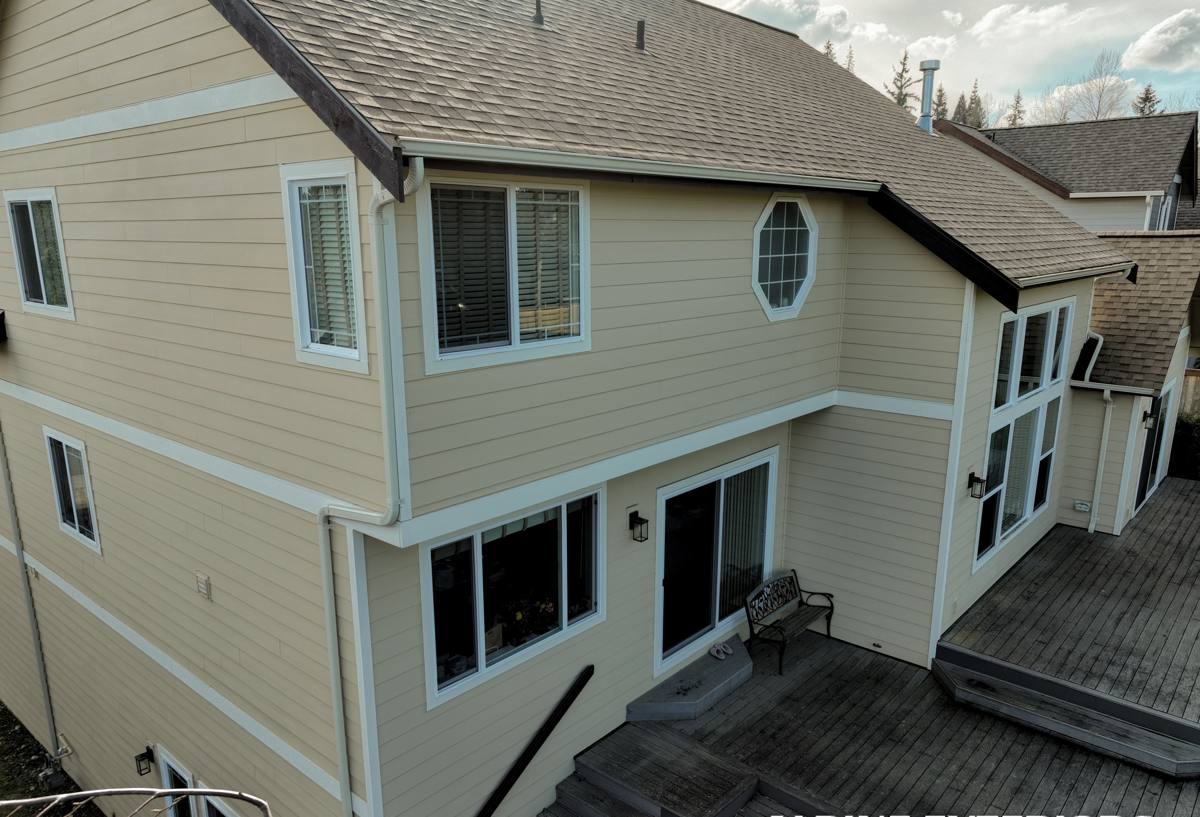
What Burlington Homes Actually Need From Their Windows
Moisture Management, Not Just a Tight Seal
A lot of window sales pitches focus on energy efficiency and stop there. In this climate, drainage matters just as much as insulation value. Every window needs a path for the small amount of water that inevitably gets past the outer seal during driving rain to escape back outside rather than pool in the sill or wick into the framing. That means weep holes that aren't painted or caulked shut, sill pans or flashing that actually direct water out, and a gap for drainage rather than a fully sealed perimeter that traps moisture in.
Frame Material That Handles Damp Without Babysitting
Wood windows can be beautiful and are still the right call for some historic or high-end projects, but they demand real upkeep in a climate this wet — repainting, caulk checks, and prompt attention to any spot where the finish has worn through. Vinyl and fiberglass frames sidestep most of that maintenance and handle sustained moisture exposure without rotting, which is why they're the practical default for most replacement projects in this area. We'll talk through the trade-offs honestly rather than push whatever's easiest to sell.
Glass Package for a Marine Environment
Double-pane, low-E glass with an argon fill is the baseline worth insisting on here — it cuts heat loss through a huge share of the wall area and reduces interior condensation, which is a real nuisance in a house that runs humid for months at a time. Homes closer to the water or in more exposed spots benefit from upgraded weatherstripping and a tighter air-infiltration rating, since sustained wind-driven rain finds gaps that calmer climates never test.
The Moss and Algae Problem, and Why It's a Window Issue Too
Moss season isn't just a roof and siding topic. On north-facing or shaded elevations, window sills, tracks, and the caulk lines around frames collect the same organic growth that builds up on a roof — and it holds moisture against the frame and finish longer than it would on an open, sunny wall. Untreated, that buildup degrades caulk and paint faster and gives water more opportunities to find a way in around the frame. Part of doing this job right in Skagit County is detailing those shaded, damp-prone elevations with materials and sealants that resist that growth, and making sure the finished installation doesn't leave ledges or gaps where moss gets a start.
What a Correct Custom Window Installation Involves
- Accurate measurement of each opening — settled older homes in this area are rarely perfectly square, and a stock-size window forced into an out-of-square opening is a leak waiting to happen
- Removal of the old window down to the framing, with an honest look at the sill and studs for hidden rot before anything new goes in
- Proper flashing integration with the existing weather-resistive barrier, lapped correctly so water sheds outward and down, never trapped behind the siding
- A sill pan or equivalent drainage plane under every window, not just the ones facing prevailing weather
- Correct shimming and fastening so the window operates smoothly and doesn't rack over time
- Low-expansion foam and backer rod at the gap, not just a bead of caulk covering a hollow space
- Exterior sealant and interior trim finished cleanly, with attention to the shaded, moss-prone elevations discussed above
Skip any one of these and the window itself — however good the brand — is only as reliable as the installation around it. This is where most window problems in older Skagit County homes actually originate.
Comparing Frame Materials for This Climate
| Frame Material | Moisture Resistance | Maintenance | Typical Fit |
|---|---|---|---|
| Vinyl | Very good — won't rot, doesn't absorb water | Low — occasional cleaning | Most replacement projects, budget-conscious remodels |
| Fiberglass | Excellent — dimensionally stable in wet/dry cycles | Low | Larger openings, higher-end replacements, painted finishes |
| Wood (clad or unclad) | Good if maintained, poor if neglected | High — finish upkeep required | Historic homes, custom architectural projects |
| Aluminum | Fair — prone to condensation without thermal break | Low | Not typically recommended for this climate without upgrades |
How Our Process Works
1. On-Site Assessment
We walk the exterior and interior of each window opening, checking for existing rot, past water intrusion, and how each elevation is exposed to prevailing wind and rain. This tells us where extra flashing detail or drainage attention is actually needed, rather than applying a one-size approach to every opening.
2. Honest Product Recommendation
We'll walk through frame material, glass package, and grille or trim options based on your home's exposure and your budget — not a single house brand we're incentivized to push. If wood makes sense for your project, we'll say so and explain the maintenance commitment that comes with it.
3. Precise Measurement and Ordering
Custom windows are built to the exact opening, which means measurement accuracy up front avoids delays and field modifications later.
4. Installation With Full Flashing and Drainage Detail
Every opening gets the full sequence — flashing, sill pan, correct fastening, insulation, and sealant — regardless of which elevation it's on. We don't cut that detail on the "easy" side of the house.
5. Cleanup and Walkthrough
We review operation, locks, and finish work with you before calling the job done.
Cost Factors Worth Understanding Before You Get Quotes
| Factor | Why It Moves the Price |
|---|---|
| Frame material | Vinyl is typically the most budget-friendly; fiberglass and wood cost more upfront |
| Opening condition | Hidden rot or out-of-square framing found during removal adds repair scope |
| Glass package | Upgraded low-E coatings, gas fills, or tempered glass for safety-code locations add cost |
| Window size and count | Larger openings and whole-house projects have per-unit efficiencies but higher total cost |
| Access and elevation | Second-story or hard-to-reach windows take more labor time |
We give straightforward, itemized estimates rather than a single vague number, so you can see exactly what's driving the cost on your specific home.
Why a Crew That Already Works Burlington and the Skagit Valley Matters
A contractor who works this area regularly has already seen how homes in Burlington, Anacortes, and the surrounding Skagit County communities age under this specific weather pattern — which elevations take the worst of the wind-driven rain, which older subdivisions tend to have particular framing quirks, and where moss buildup causes the most trouble. That local pattern recognition shows up in small decisions during installation that a crew unfamiliar with the region might not think to make. It also means we're a known, reachable local business if a warranty question or adjustment comes up years down the road — not a name that only shows up for the sale.
Signs Your Current Windows May Need Attention
- Fogging or moisture trapped between panes — a sign the seal has failed
- Visible gaps, drafts, or noticeable temperature difference near the window
- Soft or discolored wood at the sill or frame corners
- Difficulty opening, closing, or locking — often a sign of a settled or warped frame
- Black or green staining that returns quickly after cleaning
- Condensation forming on the interior glass regularly through fall and winter
Any one of these on its own isn't necessarily urgent, but a few together usually mean it's worth having someone look at the window rather than the glass alone.
If you're weighing whether it's time to replace windows on a Burlington-area home, we're happy to come take a look and give you a straightforward, no-pressure estimate — just fill out the form below.