 Anacortes Exterior
 Building Decks for Burlington's Wet, Mossy Climate
Burlington sits in the Skagit Valley, close enough to the water and the marine air pattern that moves through Anacortes and the rest of Skagit County that decks here take a beating most homeowners don't expect until it's already happened. It isn't one dramatic storm that wrecks a deck in this area — it's the steady grind of damp air, driving rain that comes in sideways off the water, and a moss season that can stretch from October well into spring. A deck built the way it's often built in drier parts of the state simply doesn't hold up the same way here.
We build and repair decks throughout Burlington and the surrounding Skagit County area, and the patterns we see are consistent: framing that was never sealed properly, boards laid tight enough to trap moisture, and fasteners that were never rated for the exposure they're getting. None of that is complicated to avoid — it just requires building for the actual climate instead of a generic set of plans.
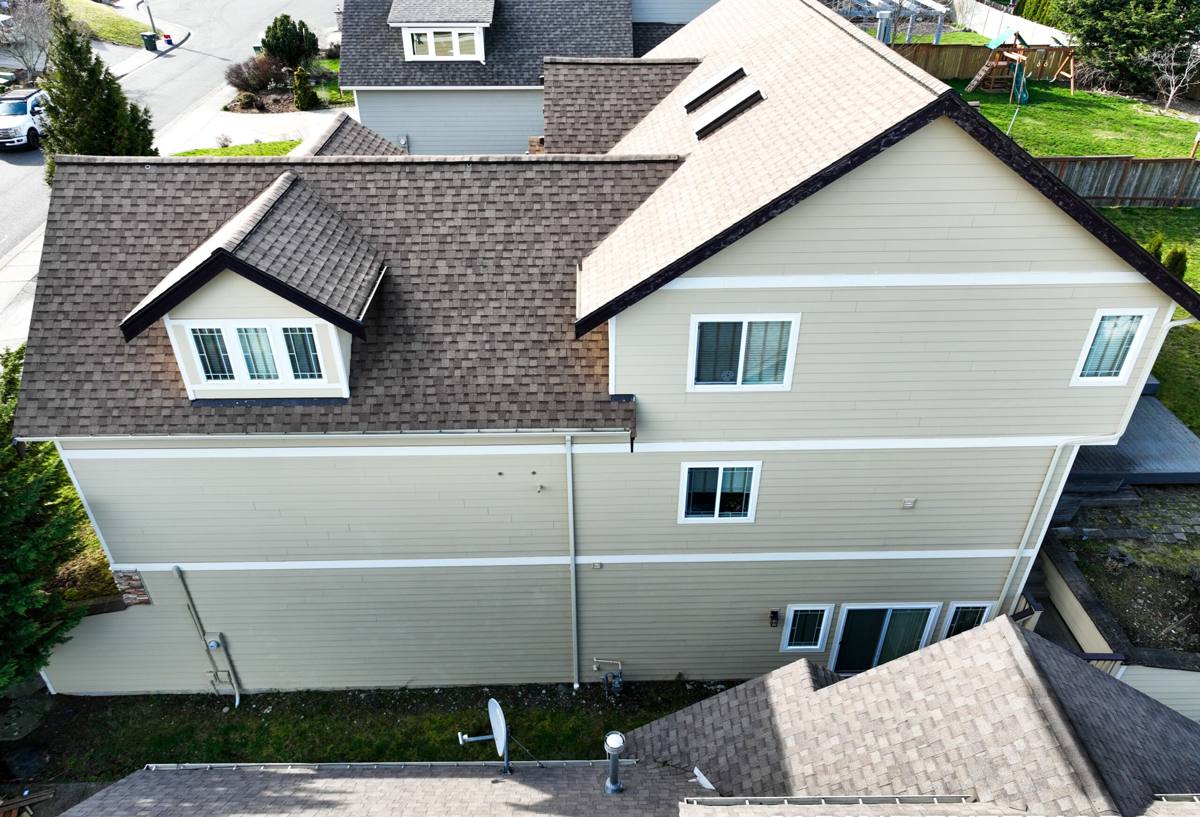
What Local Conditions Do to an Untreated or Poorly Built Deck
Moisture That Never Fully Dries
Between rain events, Skagit County's air stays humid enough that wood surfaces — especially horizontal ones like decking boards and stair treads — often don't get a full dry-out cycle for weeks at a stretch during the wet months. That constant low-grade dampness is what drives rot, not any single storm.
Moss and Algae Growth
Shaded decks, or decks under tree cover, grow moss and algae readily here. Beyond looking bad, moss holds moisture directly against the wood surface and turns steps and low-traffic areas into a slip hazard during the wetter months.
Salt-Influenced Air
Even away from the immediate waterfront, the marine air pattern that comes through this part of Skagit County carries enough salt influence to accelerate corrosion on lower-grade fasteners and hardware over time. It's a slower process than at a true beachfront property, but it adds up over the life of a deck.
Freeze-Thaw Cycling
Winters here aren't severe, but they're not stable either — Burlington gets enough freeze-thaw swings that water trapped in end grain, in a poorly flashed ledger connection, or in a cracked board can do real structural damage over a few seasons.
What a Correctly Built Deck Requires Here
A deck that's going to hold up in this climate isn't about using more expensive materials across the board — it's about getting a handful of details right that are easy to skip and expensive to fix later.
- Footings sized and set below frost depth, on undisturbed or properly compacted soil, not just poured onto whatever the ground happened to be doing that day
- A ledger board attached to the house with proper flashing and a moisture barrier, so water is directed away from the house framing rather than into it
- Joists and beams rated for exterior exposure, with cut ends field-treated before they're covered or in contact with other framing
- Corrosion-resistant fasteners and structural hardware matched to the treated lumber being used — mismatched metals accelerate corrosion in damp climates
- Deck board spacing that allows for drainage and airflow underneath, not tight-fit joints that trap standing water
- Stair and railing hardware installed to current code, with attention to grip and slip resistance given how often surfaces here stay damp
Decking Material Options for Burlington Homes
There's no single "right" decking material for every Burlington property — it depends on your budget, how much upkeep you're willing to do, and how exposed the deck is to shade, rain, and foot traffic. Here's how the common options compare for this climate specifically.
| Material | Moisture Performance Here | Maintenance | Typical Lifespan |
|---|---|---|---|
| Pressure-treated lumber | Good when properly sealed and re-coated; end cuts and fastener points are the weak spots | Annual cleaning and periodic sealing/staining | 15-25 years with upkeep |
| Cedar | Naturally moisture and insect resistant, but still needs sealing to resist moss and graying | Regular cleaning, periodic oil or sealant | 15-20 years with upkeep |
| Composite decking | Excellent — doesn't absorb water or rot, though it can still grow surface moss/algae if not cleaned | Occasional washing, no sealing or staining | 25-30+ years |
| PVC decking | Best moisture performance of the common options; fully non-absorbent | Occasional washing | 25-30+ years |
We'll walk you through the honest trade-offs for your specific deck — shade level, budget, and how the deck will actually be used — rather than steering you toward whatever costs the most.
Our Deck Building Process
1. On-Site Assessment
We look at your yard's drainage, sun and shade exposure, soil conditions, and how the deck will attach to the house before we ever talk materials. In this climate, footing depth and ledger flashing decisions start here, not on a generic plan.
2. Design and Permitting
Most deck projects in this area require a permit through the local jurisdiction, especially anything attached to the house or built above a certain height. We handle that process and design the structure to meet current code, including guardrail height, stair geometry, and structural load requirements.
3. Framing and Footings
This is where a deck's long-term durability is decided. We set footings to proper depth, install correctly flashed ledger connections, and use fasteners and hardware suited to Skagit County's damp, salt-influenced air.
4. Decking, Railing, and Finish Work
Boards are spaced for drainage, cuts are field-sealed, and railings and stairs are finished to code. If you're going with wood, we'll also talk through a realistic sealing and maintenance schedule before we leave.
5. Final Walkthrough
We walk the finished deck with you, point out anything you'll want to maintain seasonally, and answer questions before calling the job done.
Common Issues We See on Existing Burlington Decks
A lot of our deck work in Burlington isn't new construction — it's repair or partial rebuild on decks that were built without this climate in mind. The recurring problems:
- Ledger boards rotting from missing or failed flashing, sometimes damaging the house rim joist behind them
- Rusted or corroded fasteners causing loose boards and railings
- Moss buildup on shaded sections creating a slip hazard on stairs
- Undersized or improperly set footings causing settling and an uneven deck surface
- Tight board spacing that traps debris and moisture, accelerating rot in treated lumber
Most of these are fixable without a full teardown if they're caught before the damage spreads into the house framing — which is another reason we recommend a periodic inspection rather than waiting until a board fails underfoot.
Permits and Code in Skagit County
Deck permitting requirements depend on the deck's height, whether it's attached to the house, and the specific jurisdiction covering your Burlington address. Guardrail height, baluster spacing, stair rise and run, and structural connections all have to meet current building code. We handle the permit application and inspections as part of the job so you're not navigating that process on your own.
Protecting Your Deck After It's Built
A well-built deck in this climate still needs some seasonal attention. This is the maintenance rhythm we recommend to Burlington homeowners:
- Sweep debris off the deck surface regularly, especially in fall when leaves and needles collect and hold moisture
- Wash the deck at least once a year to remove moss, algae, and mildew before it takes hold
- Check and re-seal or re-stain wood decking on the manufacturer's recommended schedule, not just when it visibly grays
- Inspect the ledger flashing and fastener points annually for rust, gaps, or soft wood
- Keep gutters and downspouts near the deck clear so runoff isn't draining directly onto or under it
- Trim back vegetation that's shading the deck and slowing its dry-out time after rain
Why Hire a Crew That Already Works in Burlington
Building a deck that lasts here isn't about following a national how-to guide — it's about knowing how Skagit County's soil, drainage, and weather patterns actually behave on real properties. A crew that already works in Burlington knows what footing depth performs, which flashing details actually keep water out of ledger connections in this rainfall pattern, and which fastener and hardware choices hold up against the area's damp, salt-influenced air over the long run. That local track record is worth more than a lower bid from a crew that's never built here before.
If you're planning a new deck or dealing with an existing one that's showing its age, we're happy to take a look and give you a straightforward, no-pressure estimate. Use the form below to get started.