 Anacortes Exterior
 Ship Harbor's Siding Problem Isn't Like Everyone Else's
Ship Harbor sits right up against the water on Anacortes's western shoreline, and that location changes how siding ages. Homes a few miles inland in Skagit County deal with rain and cold. Homes near Ship Harbor deal with all of that plus salt-laden air blowing off Rosario Strait, near-constant wind exposure, and shade pockets from evergreens that never quite let the siding dry out between storms. We repair siding across Anacortes, but Ship Harbor jobs get flagged differently on our end before we even show up, because the failure patterns are different.
Salt air is corrosive to more than just metal. It accelerates the breakdown of paint film, works into seams and fastener heads, and speeds up the freeze-thaw cycling that opens up small cracks into real gaps. Combine that with the driving rain that comes sideways off the water during winter storms, and you get moisture finding its way behind siding through joints that would hold up fine on a more sheltered lot. Add a long moss season — Anacortes gets enough overcast, damp weather that north-facing and shaded wall sections can stay wet for weeks at a stretch — and you have three separate stressors working on the same wall at the same time.
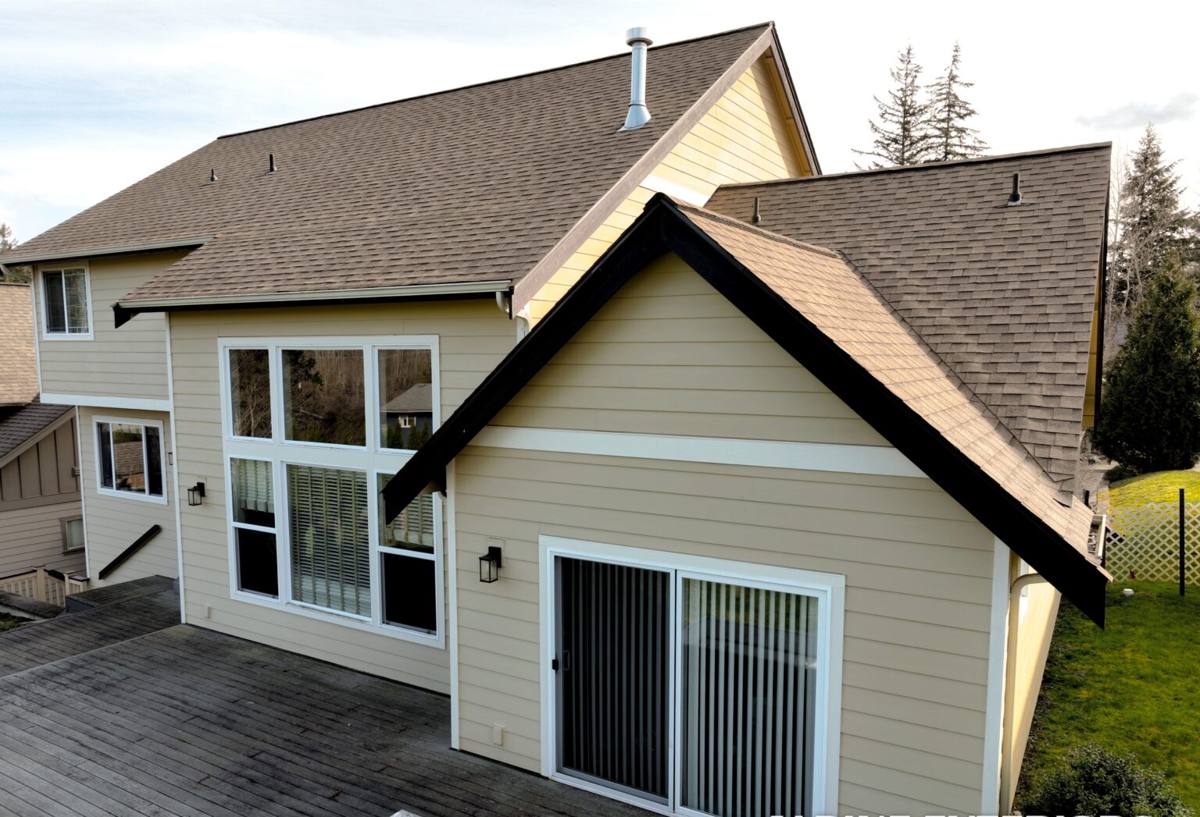
What "Correct" Repair Means on a Ship Harbor Home
A lot of siding repair is cosmetic patchwork — caulk a crack, paint over a stain, call it done. That approach doesn't hold up here. A correct repair on a Ship Harbor home starts with figuring out why the siding failed in that specific spot, not just fixing what's visible.
Questions we answer before we touch anything
- Is the damage from surface weathering, or is moisture already behind the siding?
- Is the underlying sheathing or framing still sound, or has trapped moisture started rot?
- Is the house wrap or flashing at that location doing its job, or did it fail first and the siding damage is a symptom?
- Is this an isolated spot, or is it the first visible sign of a wider problem on that wall?
Skipping that diagnostic step is how you end up re-doing the same repair in two years. We've opened up plenty of "small" siding repairs on waterfront-adjacent homes and found soft sheathing behind them — patching over that would have looked fine for a season and then failed again, worse.
Signs a Ship Harbor Home Needs Siding Repair
Some of these are obvious from the ground. Others take a closer look, especially on north- and west-facing walls that catch the worst of the wind and rain.
- Cracked, buckled, or separated siding panels or boards, especially at seams and corners
- Soft or spongy spots when you press on the siding near the bottom of walls
- Persistent moss or dark streaking that keeps returning after cleaning
- Paint that's bubbling, peeling, or chalking faster than the rest of the house
- Gaps opening up around window and door trim
- Visible fastener corrosion — rust streaks below nail or screw heads
- A musty smell or slight discoloration on interior walls that back up to exterior siding
Any one of these is worth a look. A few of them together, especially clustered on one side of the house, usually means water has been getting behind the siding for a while.
Repair or Replace: How We Make That Call
Homeowners often assume repair is automatically the cheaper, simpler option. Sometimes it is. Sometimes a repair on old, already-compromised siding is just delaying a replacement you'll pay for anyway, plus the cost of the repair. We walk through this honestly rather than defaulting to whichever job is bigger.
| Situation | Usually Repair | Usually Replace |
|---|---|---|
| Damage is isolated to one or two sections, rest of siding is sound | Yes | — |
| Underlying sheathing/framing tested and confirmed dry | Yes | — |
| Siding material is discontinued or an exact match isn't available | — | Often, on visible walls |
| Rot or moisture damage found behind more than one section | — | Yes |
| Siding is original, past its expected service life, and failing in multiple spots | — | Yes |
| Damage is limited to trim, flashing, or caulking rather than the siding itself | Yes | — |
On homes near Ship Harbor, we lean toward a slightly more conservative read of "isolated" — given the salt air and wind exposure, damage on one wall section is a reasonable early warning to check adjacent sections too, even if they look fine from the ground.
Our Repair Process
1. Assessment
We look at the damaged area and the sections around it, check for soft sheathing, and take a look at the flashing and house wrap where accessible. This is also when we tell you honestly whether repair makes sense or whether you're better off replacing that section or wall.
2. Removing compromised material
Damaged siding, and any wet or rotted sheathing behind it, gets removed back to solid material. Patching over rot doesn't stop it — it just hides it until it spreads.
3. Correcting the water path
If flashing, house wrap, or a seam detail contributed to the failure, we fix that before new siding goes back on. Replacing siding without correcting the underlying water-management issue means the same repair fails again on the same schedule.
4. Installing and finishing
New material goes in to match the existing siding as closely as possible, with attention to the seams, fastening, and clearances that matter most in a wind- and salt-exposed location — proper gapping at joints, correct fastener spacing, and keeping siding clear of grade and hard surfaces so it can drain and dry.
Checklist for a repair that's done right
- Root cause identified, not just the visible damage
- Sheathing checked and confirmed dry before new siding goes on
- Flashing and water-shedding details corrected where needed
- Fasteners and seams sized and spaced for wind and moisture exposure
- Finished repair blends with existing siding rather than standing out as a patch
What We Repair With
We're a James Hardie fiber cement contractor — it's the only siding system we install, on repairs and full replacements alike. On a repair job, that sometimes means matching an existing Hardie installation section-for-section, and other times it means a homeowner with older wood, vinyl, or another fiber cement product decides that a bad enough repair spot is a good moment to upgrade that wall to Hardie instead of patching a product we wouldn't have chosen in the first place.
We don't push a full re-side when a real repair will do. But we'll always tell you plainly when the material you have is working against you — some products just don't hold up as well to sustained salt air and moisture cycling, and repairing them the same way they were built only buys a few more years. Hardie's fiber cement doesn't absorb moisture the way wood-based products can, it's non-combustible, and its factory-applied ColorPlus finish is built to hold color and resist the kind of chalking and fading that salt air and UV speed up. When a repair section is going to be visible and needs to last, that's the material we recommend.
Cost Factors for Siding Repair Near Ship Harbor
| Factor | Why It Matters Here |
|---|---|
| Extent of hidden moisture damage | Wind-driven rain near the water means damage often extends further behind the siding than it appears from outside |
| Accessibility of the damaged section | Waterfront-adjacent lots sometimes have steeper grades or limited equipment access |
| Material match | Matching existing siding profile and color affects whether a patch blends in or stands out |
| Flashing and trim work required | Correcting the underlying water path is often the real cost driver, not the siding itself |
| Number and location of affected wall sections | Salt and wind exposure is rarely limited to just one spot, which affects total scope |
We give straightforward, itemized estimates rather than a single number that hides what you're actually paying for. If the scope grows once we open up a section, we tell you why before doing any additional work, not after.
Why a Crew That Already Works Ship Harbor Matters
Siding repair looks straightforward from a distance, but the details that matter — how much clearance to leave at the bottom of a wall, how to flash around trim so wind-driven rain doesn't find its way in, how aggressively to plan for moss regrowth on a shaded, damp wall section — are things you learn by doing this work on this kind of exposure, repeatedly, not by following a general specification sheet. A crew that's repaired siding elsewhere in Anacortes and around Skagit County, on homes with similar exposure to wind and salt air, isn't guessing at how a repair will hold up here. They've already seen what fails first and why.
That local pattern recognition is also what keeps a repair from turning into a surprise. We can usually tell early on whether a visible problem is isolated or whether it's the first sign of something wider, because we've opened up enough walls in similar conditions to know what to expect.
Maintenance Between Repairs
Good repair work lasts longer with basic upkeep, especially in this climate. A few habits go a long way:
- Rinse siding periodically to keep salt residue from building up, particularly on walls facing the water
- Keep gutters clear so water isn't sheeting down siding it shouldn't touch
- Trim back vegetation that keeps a wall section shaded and damp, encouraging moss
- Check caulking at trim and penetrations yearly — it's cheap to redo and expensive to ignore
- Address small cracks or gaps promptly rather than waiting for the next dry season
If you're seeing cracking, staining, soft spots, or persistent moss on a home near Ship Harbor, we're happy to take a look and give you an honest read on what's actually going on — no pressure, no inflated scope. Reach out for a free estimate using the form below.