 Anacortes Exterior
 Why Decks Near Ship Harbor Wear Out Faster
If you live in the Ship Harbor area of Anacortes, you already know your deck takes a different kind of beating than one built ten miles inland. Being this close to the water means near-constant exposure to salt-laden air, which accelerates corrosion in fasteners, hardware, and any metal connectors holding your deck together. Add in Skagit County's long wet season — driving rain that comes in sideways off the water, followed by months of damp, low-sun conditions — and you get a deck that stays wet longer than it should, season after season.
That combination is exactly what feeds moss and algae growth on deck boards, railings, and stair treads. Moss doesn't just look bad — it holds moisture against the wood surface, creates a slip hazard, and works its way into seams and fastener holes where rot gets started. A deck that might last 20+ years in a dry inland climate can start failing structurally in half that time here if it wasn't built with this specific environment in mind.
Replacement, done right, isn't just about swapping out old boards. It's about correcting the parts of the original build that were never suited to this climate in the first place.
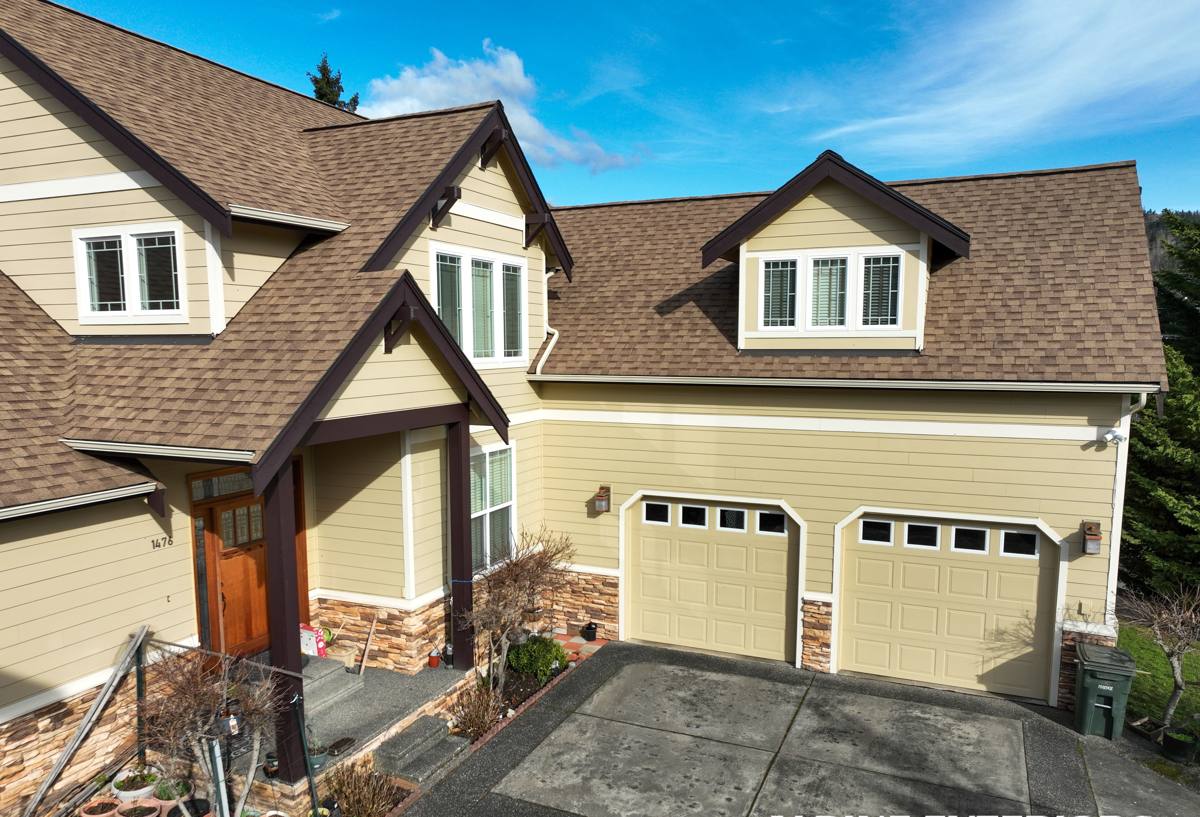
Repair or Full Replacement? How to Tell
Not every tired-looking deck needs to come out entirely. But there are signs that point to replacement rather than another round of patching.
Signs you likely need a full replacement
- Soft, spongy, or spring-back spots in the decking or framing when you walk across it
- Rot or dark staining at the ledger board where the deck attaches to the house
- Rusted, corroded, or missing joist hangers and structural connectors
- Posts that are soft, cracked, or have visible rot at the base or where they meet concrete
- Persistent moss or algae growth that returns within weeks of cleaning
- A deck more than 15-20 years old built with older fastener or flashing standards
If the issues are limited to a handful of surface boards and the substructure underneath tests solid, a repair may buy you a few more years. But once rot has reached the framing, ledger, or posts, patching individual boards is a short-term fix on a structure that's already compromised underneath.
What a Correct Deck Replacement Actually Involves
A deck replacement that's built for this climate goes well beyond pulling old boards and nailing down new ones. The parts of the deck you never see are what determine whether it lasts.
Ledger board and house connection
The ledger — where the deck attaches to your house — is the single most common failure point on decks in wet coastal climates. It needs proper flashing that directs water away from the house band joist, not just caulk or paint, which fails over time. We check and correct this connection on every replacement, since a compromised ledger can lead to water intrusion into the home itself, not just deck failure.
Framing and fasteners
Given the salt air, standard fasteners and connectors corrode faster here than they would inland. Correct hardware selection — stainless steel or coated fasteners rated for coastal or treated-lumber exposure — isn't optional if you want the frame to outlast the decking surface above it.
Footings and posts
Footings need to be sized and set to current code depth for frost and load, and posts need proper standoff hardware so wood never sits directly on concrete where moisture collects. This is one of the most common shortcuts on older decks we replace.
Drainage and airflow underneath
A deck that traps moisture underneath — due to poor grading, low clearance, or dense landscaping right up against the framing — will grow mold and accelerate rot no matter what decking material sits on top. Part of a correct replacement is making sure air and water can actually move away from the structure.
Choosing the Right Decking Material for This Climate
There's no single "best" decking material for every home — it depends on your budget, how much upkeep you're willing to do, and how close you are to direct salt spray and full sun exposure. Here's how the common options actually perform in a Ship Harbor-type environment.
| Material | Performance in Salt Air & Rain | Maintenance Needed | Relative Cost |
|---|---|---|---|
| Pressure-treated lumber | Good if sealed regularly; prone to moss and graying without upkeep | Annual cleaning and resealing | Lowest upfront |
| Cedar | Naturally rot-resistant but still needs sealing near the water | Regular cleaning, periodic oil/stain | Mid-range |
| Traditional composite | Resists rot well; can absorb moisture at cut edges if not capped | Occasional washing, no sealing | Mid to upper |
| Capped composite / PVC | Best resistance to moisture and salt exposure; sheds moss growth more easily | Simple periodic washing | Highest upfront |
For homes closest to the water and most exposed to wind-driven rain, we generally steer people toward capped composite or PVC decking, since it doesn't absorb moisture at the surface the way wood or uncapped composite can. That said, plenty of homeowners are happy sealing and maintaining real wood on a regular schedule — it's a legitimate choice as long as you go in knowing the maintenance commitment.
What we avoid recommending, and why
We're cautious about uncapped composite decking installed with poor drainage or tight board spacing in a wet climate like this — without adequate gapping and airflow, boards can hold moisture at the edges and develop mold surface staining faster than they should. It's less about the product itself and more about installing it correctly for the conditions it'll actually face here.
Our Deck Replacement Process
- On-site assessment — we inspect the existing deck's framing, ledger, footings, and posts to confirm what's salvageable versus what needs to come out
- Plan and material selection — we walk through decking options, railing systems, and layout changes based on your budget and how the space is used
- Permitting — we handle the permit application and inspections required for the scope of work
- Demolition — full removal of old decking, and framing/posts if compromised, disposed of properly
- Structural rebuild — new or corrected footings, posts, framing, ledger flashing, and hardware rated for coastal exposure
- Decking and railing installation — installed to manufacturer spec, including proper board gapping for drainage
- Final walkthrough — we go over the finished deck with you, including care instructions specific to the material chosen
Permits, Code, and Local Requirements
Deck replacement in Anacortes and unincorporated Skagit County typically requires a building permit once you're altering structural elements like framing, footings, or attachment to the house — this isn't a step worth skipping, since it protects you if there's ever a question about the work when you sell the home. Requirements around railing height, guard spacing, and stair geometry are also code-driven, not optional design choices, especially on elevated decks. We handle the permitting and inspection process as part of the job so you're not left tracking it down yourself.
Maintenance That Actually Extends Deck Life Here
Whatever material you choose, a few habits make a real difference in a climate that pushes moss and moisture year-round.
- Sweep debris and standing leaves off the deck surface regularly, especially in fall
- Clean moss and algae off boards and railings before it gets a foothold, not after
- Check the ledger board area annually for staining or soft wood
- Keep gutters and downspouts near the deck clear so water isn't dumping onto or under it
- Reseal wood decking on the schedule the product calls for — don't stretch it out
- Trim back vegetation that's shading the deck and keeping it damp longer than it needs to be
Why Local Experience in Ship Harbor Matters
A deck built to a generic national spec sheet doesn't always hold up to what this specific stretch of Skagit County throws at it. Crews who work this area regularly know which fastener grades actually last, which decking materials handle the salt air without excessive upkeep, and where the moisture problems tend to start on homes near the water. That local pattern recognition is the difference between a deck that needs attention again in five years and one that doesn't.
It also matters for permitting — knowing what the local building department expects to see on a deck replacement application means fewer delays and fewer surprises mid-project.
Ready to Talk Through Your Deck?
If your deck is showing soft spots, persistent moss, or just isn't holding up the way it used to, we're happy to take a look and give you an honest read on repair versus replacement. Reach out for a free, no-pressure estimate using the form below.