 Anacortes Exterior
 Siding Built for the Ship Harbor Waterfront
Ship Harbor sits right where Anacortes meets Rosario Strait, and that location shapes everything about how a home ages here. Homes near the water take a different kind of beating than houses a few miles inland — more direct salt-laden wind, more wind-driven rain hitting siding at an angle instead of straight down, and long stretches of damp, shaded weather that keep moss and algae going most of the year. Siding installation in this pocket of Anacortes isn't just a smaller version of a citywide job. It's a job that has to account for a harsher exposure profile from day one, or the homeowner ends up dealing with premature failure long before the siding should need replacing.
We install exclusively James Hardie fiber cement siding, and Ship Harbor is one of the clearer examples of why that standard matters. This page walks through what the local climate actually does to siding, what a correct installation looks like out here, and how our process is built around the realities of this neighborhood.
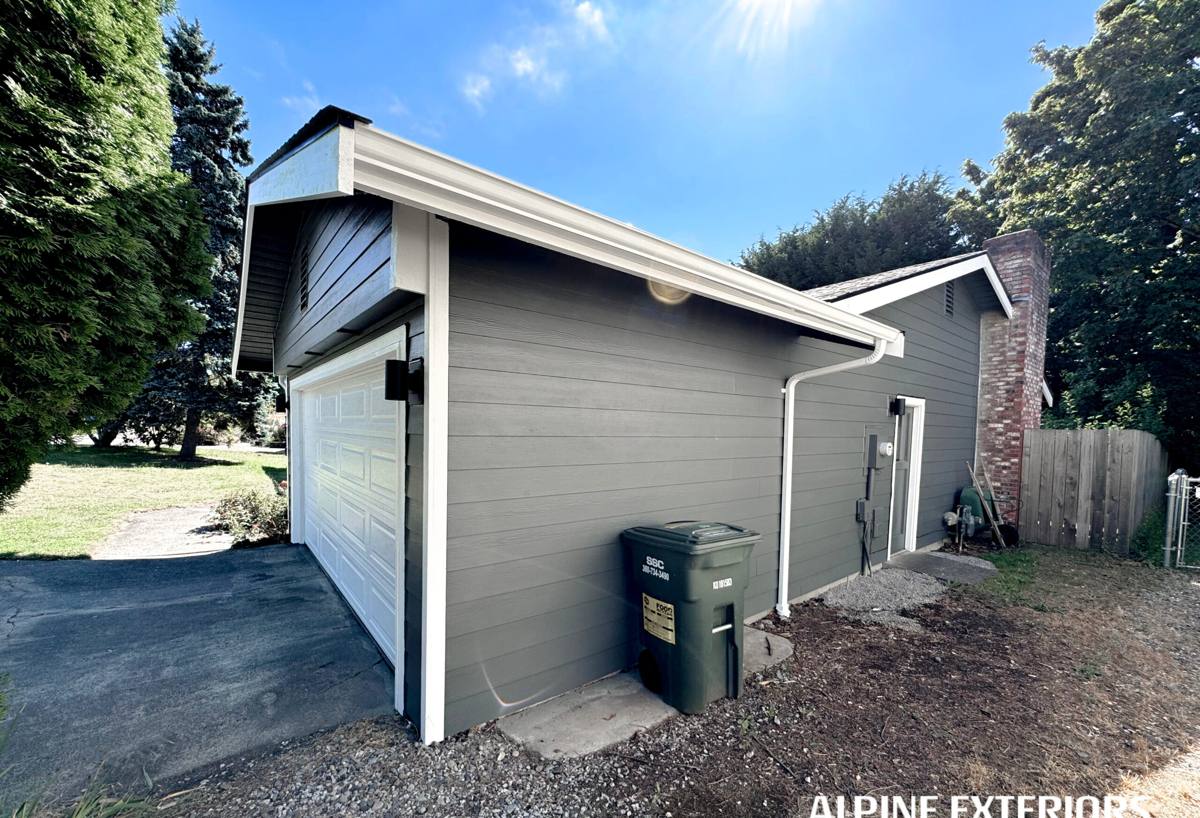
What Salt Air, Driving Rain, and Moss Season Do to Siding
Salt Air and Metal Fasteners
Airborne salt from Rosario Strait doesn't just sit on the surface of a wall — it works its way into every gap, seam, and fastener head over time. Cheap or improperly rated fasteners corrode faster near the water, and once a fastener starts to rust, it can telegraph a stain right through paint and eventually loosen its grip on the siding panel. Any siding installed within reach of salt air needs corrosion-resistant fasteners as a baseline, not an upgrade.
Driving Rain and Wind-Driven Moisture
Ship Harbor's exposure means rain frequently comes in sideways rather than straight down. That changes how water behaves at every horizontal joint, corner, and penetration on a house. A siding system that relies on caulk alone to keep wind-driven rain out of a wall assembly is a system waiting to fail — water finds the smallest gap eventually, especially under repeated wind pressure. Correct flashing detail matters more here than it does on a sheltered inland lot.
Moss, Algae, and the Shade-and-Damp Cycle
Skagit County's long wet season, combined with tree cover and north-facing walls that rarely get direct sun, gives moss and algae exactly what they need to take hold: constant moisture and shade. On siding materials that absorb water or have a porous surface, moss doesn't just sit on top — it can hold moisture against the material for months at a stretch, accelerating whatever deterioration is already happening underneath.
Why We Only Install James Hardie Here
James Hardie fiber cement is non-combustible and engineered specifically for wet, coastal-adjacent climates like this one. Hardie's HZ5 product line is built for exactly this kind of moisture and wind exposure, and the factory-applied ColorPlus finish resists the fading and cracking that painted wood or lower-grade composite products tend to show first near saltwater. Fiber cement doesn't swell, rot, or delaminate the way wood-based siding can when it stays damp for weeks at a time, which is a real advantage in a neighborhood where "weeks of dampness" describes a normal winter, not an unusual one.
We don't install vinyl, LP SmartSide, Cemplank, Allura, primed spruce, or cedar, and Ship Harbor is a good illustration of why. Vinyl can warp and become brittle with the temperature swings and wind loads near open water. Wood-based products need diligent, ongoing maintenance to keep moisture out of the substrate — maintenance that's easy to fall behind on, and unforgiving to skip near a marine environment. James Hardie's fiber cement composition and factory finish are engineered to hold up under exactly the conditions this neighborhood produces, which is why it's the only product we put on homes here.
What a Correct Ship Harbor Installation Involves
Fastener and Hardware Selection
Every fastener, flashing piece, and piece of trim hardware we use near the water is selected for corrosion resistance. This isn't optional upgrade pricing — it's the baseline for any home in this exposure zone, and it's one of the first things we check when we're asked to look at a previous installation that's showing early rust staining.
Water Management Behind the Siding
James Hardie siding is a rainscreen-compatible system, and in a wind-driven rain environment like Ship Harbor, that drainage gap behind the panel is doing real work. Correct installation means a weather-resistive barrier installed shingle-style, properly lapped and taped seams, and a drainage plane that lets any moisture that does get past the cladding find its way back out instead of sitting against the sheathing.
Flashing at Every Vulnerable Point
Windows, doors, deck ledgers, and any wall penetration are the places wind-driven rain finds its way in first. We flash these details individually rather than relying on sealant to do the job caulk was never meant to do alone — sealant is a secondary layer of protection, not the primary one.
Joint and Seam Treatment
Butt joints and panel seams get treated with the manufacturer's specified sealants and flashing tape, sized correctly for the expected movement and moisture exposure in this location. Loose or under-detailed seams are one of the most common places we find water intrusion starting on older installations near the water.
Our Installation Process
- On-site assessment — We walk the exterior, check existing siding condition (if applicable), look at drainage patterns around the foundation, and note shaded, moss-prone wall sections.
- Product and color selection — We help match the right James Hardie HZ product line and ColorPlus finish to the home's exposure level and the owner's aesthetic goals.
- Tear-off and substrate check — Old siding comes off and we inspect the sheathing underneath for hidden moisture damage before anything new goes up.
- Weather barrier and drainage plane installation — This is the layer that does the real long-term work protecting the wall assembly.
- Flashing at penetrations and transitions — Windows, doors, and any wall-mounted fixtures get flashed before siding installation begins.
- Hardie panel installation — Installed to manufacturer fastening and clearance specifications, which is what keeps the warranty valid.
- Trim, caulking, and finish detail — Final sealant and trim work is applied as the secondary moisture defense layer, not the primary one.
- Final walkthrough — We review the completed work with the homeowner and point out anything they should keep an eye on going forward.
Comparing Siding Approaches for a Ship Harbor Exposure
| Factor | Vinyl / Wood-Based Products | James Hardie Fiber Cement |
|---|---|---|
| Salt air exposure | Can degrade, warp, or require frequent refinishing | Engineered for coastal-adjacent, moisture-heavy climates |
| Wind-driven rain resistance | Highly dependent on caulk and maintenance schedule | Rainscreen-compatible system with proper flashing detail |
| Moss and algae resistance | Porous or absorbent surfaces can hold moisture longer | Dense fiber cement composition, factory finish resists buildup |
| Fire performance | Varies by product; some are combustible | Non-combustible material |
| Maintenance burden | Often requires more frequent inspection and upkeep | Lower maintenance when installed and finished correctly |
Cost Factors for Ship Harbor Homes
Every home's number is different, but a few factors consistently move the estimate for homes in this specific location:
- Direct water exposure and wind orientation of the lot
- Condition of the existing sheathing once old siding comes off
- Amount of trim, window, and door detail on the home's exterior
- Access — waterfront and hillside lots sometimes limit staging and equipment access
- Product line and color selection within the James Hardie system
- Extent of any moss, algae, or moisture damage found during tear-off
We give homeowners a real number after walking the property, not a phone estimate based on square footage alone — hidden sheathing damage and access difficulty are the two things that most often change a quote after the fact, and we'd rather catch them early.
Signs Ship Harbor Homeowners Should Watch For
- Persistent moss or algae growth on north-facing or shaded walls that keeps returning after cleaning
- Soft spots, bubbling, or visible warping in existing siding, especially near ground level or roof lines
- Rust streaks below fastener heads or trim hardware
- Peeling or chalking paint that returns quickly after repainting
- Visible gaps or separation at panel seams and corner trim
- Any musty smell or interior wall staining near exterior walls, which can indicate moisture already inside the assembly
Why a Locally Experienced Crew Matters Here
A crew that already works this stretch of Anacortes knows how differently a waterfront-adjacent wall behaves compared to a home a few miles inland in Skagit County. That means knowing which walls need extra attention for moss and shade, understanding how wind direction off the strait affects where driving rain actually lands on a building, and having already seen what happens when a previous installation skipped a flashing detail that didn't matter somewhere drier. None of that is guesswork — it's the difference between a siding job that looks right on installation day and one that's still performing correctly ten winters later.
If you're planning a siding project for a home in or near Ship Harbor, we're happy to walk the property, look at what your home's specific exposure is dealing with, and put together a straightforward estimate — no pressure, no upsell, just a clear look at what correct installation would involve for your house. Use the form below to request a free estimate.