 Anacortes Exterior
 Storm Damage Roof Repair in Ship Harbor
Ship Harbor sits right where Anacortes meets the water, and that location cuts both ways. It's one of the more scenic corners of Skagit County to live in, and one of the harder places in the county to keep a roof intact. Wind off Rosario Strait doesn't arrive politely — it gusts, shifts direction, and drives rain sideways under flashing and shingle edges that would stay dry in a more sheltered inland yard. When a storm rolls through, homes here often take on damage that isn't obvious from the driveway. We do storm damage roof repair work specifically in this neighborhood, which means we already know which roof styles, ages, and exposures tend to fail first here — and we don't have to guess at what the wind actually did.
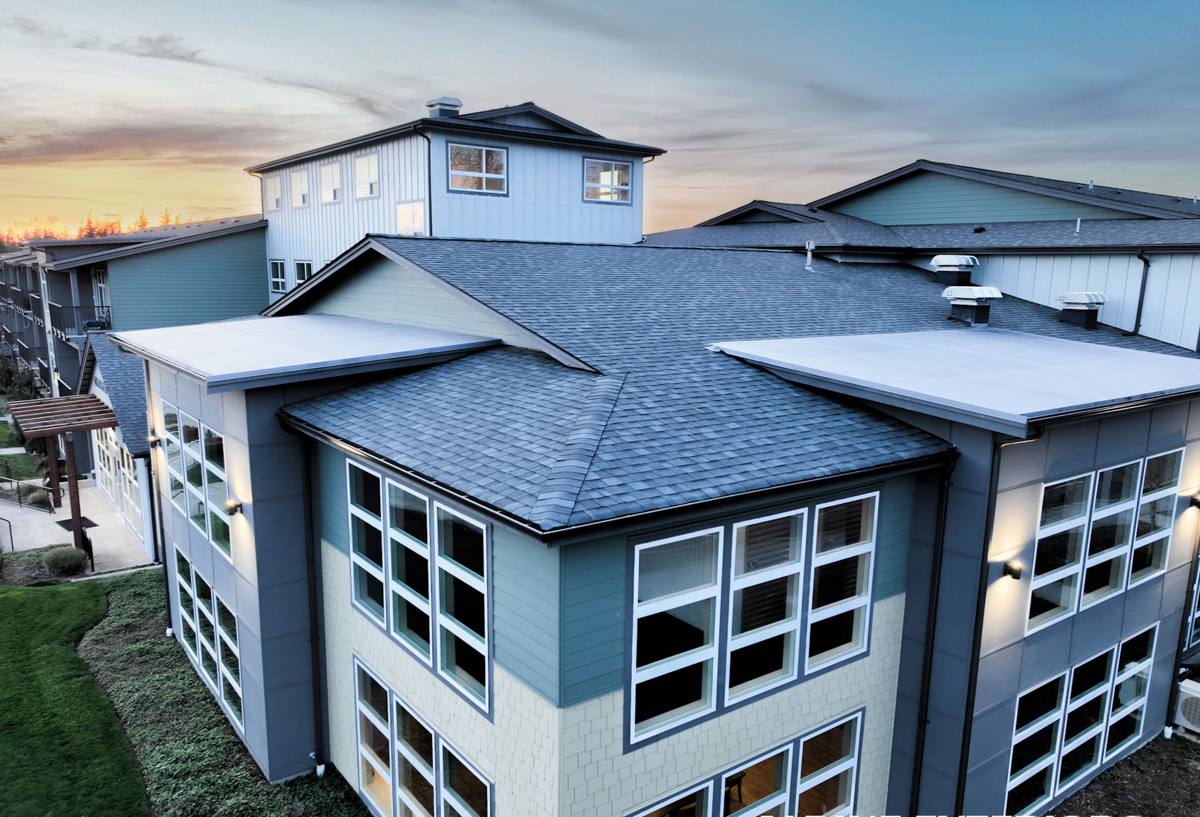
Why Ship Harbor Roofs Take a Different Kind of Beating
Most storm damage guides are written for a generic house in a generic town. Ship Harbor isn't generic. A few things stack up here that matter for how we approach repairs:
Wind exposure off the water
Homes closer to the waterfront and ferry terminal side of the neighborhood catch more direct wind than homes tucked back toward town. That means uplift on ridge caps, lifted shingle tabs along eaves and rakes, and — on older roofs — whole sections of shingles that have worked loose over multiple storms rather than one big event.
Driving rain and wind-driven moisture
Wind-driven rain doesn't just fall on a roof, it pushes sideways into any gap it can find: under a lifted shingle tab, along a flashing seam that's lost its seal, or through a nail hole that's backed out slightly. This is different from a slow roof leak — the water gets in fast, during the storm, and then the sign of damage shows up days later as a stain on a ceiling.
Salt air and long-term material fatigue
Salt-laden air degrades exposed metal flashing, fasteners, and vent components faster than it does further inland. A flashing detail that would hold up for fifteen years in a drier, less coastal part of Skagit County can start corroding and losing its seal years earlier here. That matters after a storm, because a fastener or flashing seam that was already weakened by salt exposure is far more likely to be the point that fails when wind and rain hit it hard.
A long moss season
Anacortes gets a lot of damp, mild weather, and moss doesn't need much encouragement to take hold on north-facing slopes and shaded valleys. Moss holds moisture against the roof surface and lifts shingle edges as it grows, which means a roof with an established moss problem is already more vulnerable when a storm hits — the wind has more to grab onto.
What Actually Counts as Storm Damage
Not every roof problem that shows up after bad weather was caused by that storm. Being honest about this distinction matters, especially if you're dealing with an insurance claim.
- Storm-caused: shingles physically torn, creased, or blown off; flashing bent or ripped away from a wind gust; impact damage from a falling branch; a sudden new leak that started during or right after the storm.
- Storm-revealed, not storm-caused: a roof nearing the end of its service life that finally gave way under stress it might have handled a few years ago; moss-related shingle lifting that was already in progress; flashing that had already lost its seal from age or salt corrosion.
- Unrelated pre-existing wear: granule loss from normal aging, minor cosmetic wear, or ventilation issues that have nothing to do with the storm event.
We tell you which category we're looking at and why, in plain terms, rather than labeling everything "storm damage" by default. It's the right way to do this work, and it also holds up better if you end up filing a claim.
What a Correct Storm Damage Repair Involves
A rushed storm repair — a few shingles nailed back down and a bead of sealant over a flashing gap — often fails again within a season or two, especially in a wind-and-salt environment like this one. A repair done right involves a few consistent steps:
Full-roof inspection, not just the visible damage
We walk the whole roof, not just the area where you noticed a stain or a shingle in the yard. Wind damage is frequently worse on the leeward or side slopes than on the obvious windward face, and a missed section becomes next winter's leak.
Matching materials, not just patching
Where shingles need replacing, we match the existing product as closely as possible in style, profile, and color line so the repair doesn't stand out as an obvious patch — and so the new material performs the same as what's around it under wind load.
Flashing and fastener attention, every time
Given how hard salt air and wind-driven rain are on flashing in this area, we don't just replace shingles and leave old flashing in place if it shows corrosion or a compromised seal. Re-sealing a flashing detail that's already failing from age is a short-term fix that won't hold through the next storm.
Underlayment and decking check where water got through
If water made it past the shingle layer, we check the underlayment and deck for saturation or soft spots before closing anything back up. Covering wet decking with new shingles just traps the problem.
Our Process From First Call to Finished Roof
- Assessment: We inspect the roof, document what we find, and explain what's storm-related versus pre-existing.
- Temporary protection if needed: If there's an active leak or exposed decking, we get it covered and weather-tight before the full repair is scheduled.
- Written scope and estimate: You get a clear description of the work and cost before anything is done — no vague verbal promises.
- Repair: Matching materials, proper flashing work, and attention to the fasteners and details that failed in the first place.
- Final walk-through: We show you what was done and what to watch for going forward.
Repair vs. Replacement: What Actually Drives the Decision
Storm damage doesn't automatically mean a full new roof, and it doesn't automatically mean a quick patch is enough either. A few honest factors decide which direction makes sense:
| Factor | Leans Toward Repair | Leans Toward Replacement |
|---|---|---|
| Age of existing roof | Roof is well within its expected service life | Roof is already near the end of its expected life |
| Extent of damage | Isolated to one slope or a limited area | Spread across multiple slopes or structurally significant |
| Underlying condition | Decking and underlayment are sound | Decking is soft, rotted, or widely saturated |
| Moss and prior wear | Minimal moss history, shingles otherwise intact | Heavy moss history has already degraded large sections |
| Material availability | Matching shingles are still available | Discontinued product with no reasonable match |
We'll tell you plainly which category your roof falls into. If a repair is the honest answer, we don't upsell a full tear-off — and if a repair would just be a stopgap on a roof that's already failing, we'll say that too.
Insurance Claims: What We Can and Can't Do
Many storm damage repairs in Ship Harbor go through a homeowner's insurance claim. We're not your insurance adjuster and don't represent ourselves as one, but we can provide a clear, documented inspection report with photos and a written scope that you can submit with your claim. We'll answer an adjuster's questions about the scope of work if needed. What we won't do is inflate a scope or label unrelated wear as storm damage to help a claim along — it's not honest, and it can come back on you.
Why a Crew That Already Works Ship Harbor Matters
Storm damage repair rewards local, specific knowledge. A crew that's worked roofs in this neighborhood already knows which flashing details tend to fail first in this wind exposure, which roof ages are showing salt-related corrosion, and how bad the moss situation typically is on north-facing slopes near the water. That means less time spent re-diagnosing from scratch and a repair scope that's built around how this specific stretch of Anacortes actually behaves in weather — not a generic checklist written for a roof three states away.
After a Storm: What to Do (and Not Do)
- Do document visible damage with photos from the ground before anything is touched.
- Do check attic spaces or ceilings for new stains, especially after wind-driven rain.
- Do get a professional inspection promptly — small entry points get worse with the next round of weather.
- Don't climb onto the roof yourself to inspect or "fix" damage; wet, wind-damaged roofing is genuinely unsafe footing.
- Don't assume a few missing shingles is the whole story — wind damage often extends further than what's visible from below.
- Don't let a tarp or temporary cover sit indefinitely; it's a stopgap, not a repair.
Get an Honest Look at the Damage
If a recent storm has left shingles missing, flashing lifted, or a new stain on a ceiling anywhere in Ship Harbor, it's worth getting eyes on the roof before the next system rolls through off the strait. We'll give you a straightforward assessment of what's storm-related, what it'll take to fix it correctly, and a written estimate with no pressure to sign anything on the spot. The form below gets you a free estimate — just tell us what you're seeing and we'll take it from there.