 Anacortes Exterior
 Why Ship Harbor Homes Wear Out Siding Faster Than You'd Expect
Ship Harbor sits close enough to the water that homes here take a different kind of beating than a house a few miles inland in Anacortes. Salt-laden air settles on exterior walls day after day, driving rain comes in sideways during winter storms off Rosario Strait and Guemes Channel, and the shaded, damp pockets around mature trees and north-facing walls stay wet long after the rest of Skagit County has dried out. That combination — salt, wind-driven moisture, and a long moss season — is exactly the environment that exposes weak siding systems fastest. Paint that should last a decade starts chalking and peeling in five or six years. Seams that were tight at installation open up as wood-based products swell and shrink with the moisture cycle. Moss and algae take hold in shaded corners and hold water against the wall long after a dry day.
None of this means Ship Harbor is a bad place to own a home. It means the siding has to be chosen and installed with this specific exposure in mind, not treated the same as a subdivision fifteen minutes from the water with no salt exposure and full sun most of the day.
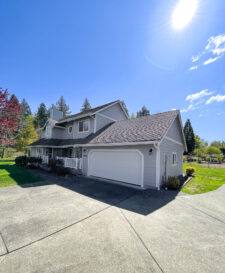
What Actually Fails First on Homes Near the Water
When we walk a siding replacement estimate in Ship Harbor, we're looking for the same failure patterns over and over:
- Paint failure and chalking on wood or engineered wood siding, especially on south and west walls that take direct weather
- Soft, delaminating panel edges where moisture has worked into the substrate over multiple seasons
- Moss and algae staining on shaded elevations that never get enough sun to fully dry between rain events
- Rust streaking from corroding fasteners, accelerated by the salt content in the air
- Buckled or warped panels where the siding expanded and contracted more than the product was designed to handle
- Caulk and trim joints that have separated, giving water a path behind the siding instead of off of it
Salt air is corrosive to fasteners and hardware in a way inland homes simply don't experience. It also holds moisture against surfaces longer, which is part of why moss and mildew growth show up earlier and spread faster here than on a comparable home away from the water.
Why We Only Install James Hardie Fiber Cement
We made a decision a long time ago to install one siding system — James Hardie fiber cement — and nothing else. Not vinyl, not LP SmartSide, not primed spruce or cedar, not other fiber cement brands. That's not a marketing position, it's a standard we hold ourselves to because we've seen what each of the alternatives does over time in exactly this kind of climate.
Fiber cement is made from cement, sand, and cellulose fibers. It doesn't have the organic wood content that gives moisture something to feed on, and it's non-combustible, which matters more every year given wildfire smoke and ember exposure across the Pacific Northwest in late summer. James Hardie's ColorPlus factory-applied finish is baked on under controlled conditions rather than field-applied, which gives it materially better fade and chip resistance than a job-site paint job — a real advantage on a home that's getting hit with salt air and UV for years without a repaint. Hardie also engineers specific product lines (their HZ5 designation, for example) for harsher climate zones, which is the right approach for a coastal exposure rather than a one-size-fits-all product.
We're not going to tell you every other product is worthless — vinyl is inexpensive and low-maintenance in mild climates, engineered wood has genuine fans, and cedar has a look some homeowners love. But we've made a professional call: in a Ship Harbor exposure, the moisture behavior, warranty structure, and long-term appearance of fiber cement is the standard we're willing to put our name behind. That's why it's the only thing we install.
What a Correct Siding Replacement Involves
It Starts Underneath the Siding, Not With the Siding
Most siding failures near the water trace back to what's happening behind the panels, not the panels themselves. A proper replacement means stripping the old siding fully, inspecting the sheathing for rot or soft spots, and correcting anything we find before a single new panel goes up. In a salt-air, high-rainfall environment, we pay particular attention to:
- A correctly lapped weather-resistive barrier, sealed at every penetration
- Proper flashing at windows, doors, and any roof-to-wall transitions
- Rainscreen or drainage gap detailing where the wall assembly calls for it, so incidental moisture can drain and the wall can dry
- Corrosion-resistant fasteners rated for the exposure, not standard hardware that will rust prematurely in salt air
Installing to Manufacturer Spec — Not Just "Close Enough"
James Hardie publishes specific installation requirements around fastener spacing, clearances from grade and roofline, joint treatment, and caulking. Skipping or shortcutting those details is exactly how a fiber cement job ends up with the same moisture problems as a poorly installed wood product — the material is only as good as the install. This is also where the manufacturer's warranty lives or dies: installation outside of spec can void coverage, so we treat those requirements as non-negotiable, not a checklist to speed through.
Our Process for a Ship Harbor Project
- On-site inspection of the current siding, trim, and any visible moisture damage, with photos discussed directly with you
- A written scope covering tear-off, sheathing repair allowances, weather barrier and flashing detail, and the specific Hardie products and color proposed
- A clear timeline that accounts for Skagit County's wetter months — we plan around weather windows rather than rushing an install during a stretch of driving rain
- Full tear-off and sheathing inspection, with any rot or damage reviewed with you before we close the wall back up
- Installation to manufacturer specification, including fastening, clearances, and joint treatment
- A final walkthrough so you can see the finished work and ask questions before we consider the job done
Cost Factors for Siding Replacement Near the Water
Every home is different, but the variables that move the price on a Ship Harbor project tend to be the same handful of things:
| Factor | Why It Matters Here |
|---|---|
| Sheathing condition | Homes with long-term moisture exposure often need more substrate repair than inland homes of the same age |
| Wall complexity | Dormers, multiple gables, and cut-up elevations common in view-oriented coastal homes add labor time |
| Product line and profile | HZ5-rated Hardie products and certain plank profiles or colors cost more than standard lines |
| Trim and accessory scope | Fascia, corner boards, and trim replacement alongside siding affects total scope |
| Access and site conditions | Waterfront lots, steep grades, or limited staging area can affect labor and equipment needs |
We'll walk through which of these apply to your home during the estimate rather than quoting a number before we've seen the walls.
Why Hiring a Crew That Knows Ship Harbor Matters
A siding contractor who mostly works dry, inland neighborhoods can still do competent work — but they may not default to the rainscreen detailing, fastener corrosion resistance, or moisture-management thinking that a coastal Anacortes property actually needs unless they're used to building for it. Crews that regularly work Ship Harbor and similar shoreline areas of Skagit County already account for salt exposure, wind-driven rain angles, and moss-prone shaded walls as a matter of habit, not an afterthought added after something fails. That local pattern recognition is worth as much as any product spec sheet.
Signs It's Time to Replace, Not Just Repair
- Soft or spongy siding when pressed, especially near the bottom courses or under windows
- Paint failure that returns within a year or two of repainting
- Visible warping, buckling, or panels pulling away from the wall
- Persistent moss or algae growth that returns quickly after cleaning
- Rot found during any recent repair, window replacement, or inspection
- Rising energy bills alongside visible drafts at the wall line
If you're only seeing one or two of these and the siding is otherwise sound, a repair or partial replacement may be the honest answer — we'll tell you that directly rather than pushing a full tear-off you don't need yet.
If your Ship Harbor home is showing any of these signs, or you'd simply like an honest read on how much life your current siding has left, we're happy to walk the property with you. The estimate is free, there's no pressure, and you'll get a straight answer about what your home actually needs.