 Anacortes Exterior
 Why Fidalgo Island Homes Need a Different Approach to Windows
Fidalgo Island sits right where Skagit County meets the Salish Sea, and that location shapes everything about how windows perform here. Homes on or near the island deal with a mix of salt-laden air, wind-driven rain coming off the water, and long stretches of overcast, damp weather that keeps moisture in contact with building materials far longer than it would in a drier inland climate. A window that's rated fine for a general Pacific Northwest install can still underperform on Fidalgo Island if it wasn't installed with this specific exposure in mind.
We're not talking about exotic engineering. We're talking about paying attention to the details that matter most in a marine environment: the hardware that touches salt air, the flashing that stops wind-driven rain from finding a way in, and the sealants that need to hold up through repeated wet-dry cycles and moss season without breaking down. Get those details right and a window installation on Fidalgo Island can last just as long as anywhere else. Skip them, and problems show up faster than most homeowners expect.
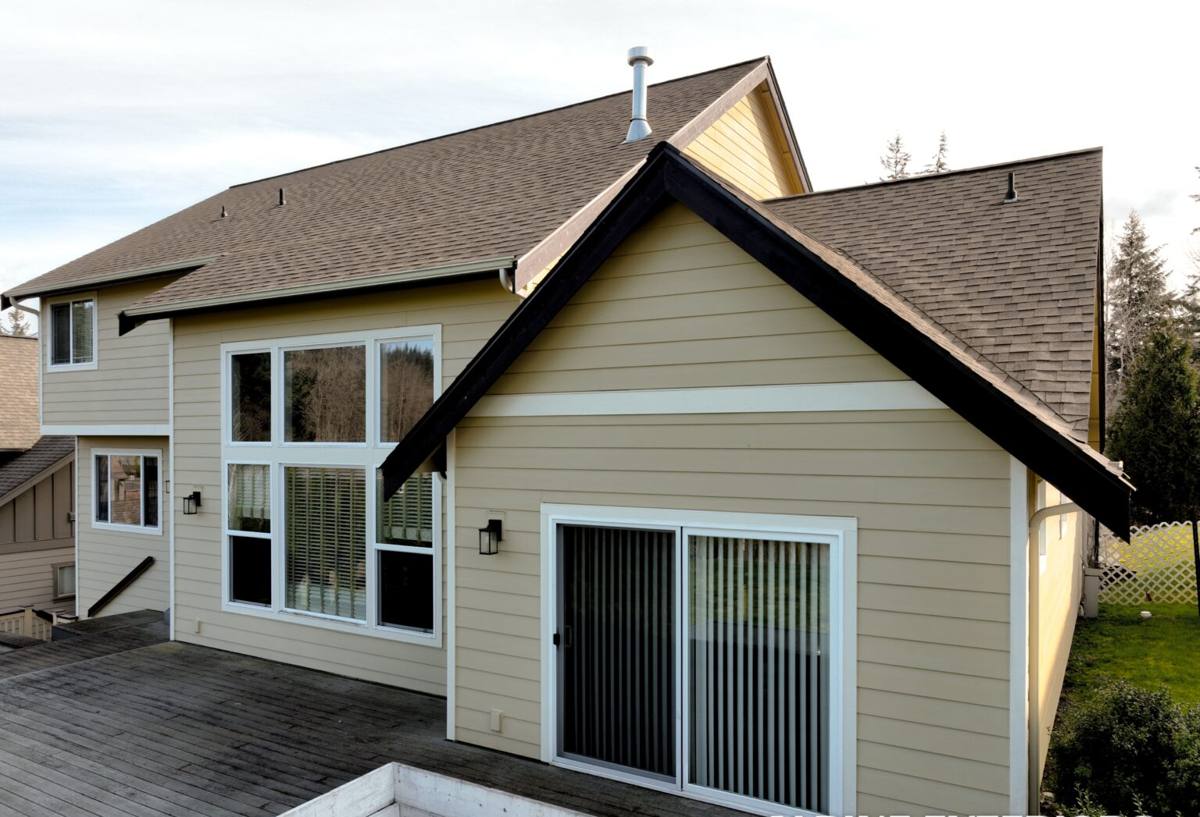
What Salt Air, Driving Rain, and Moss Season Actually Do to Windows
Salt air and hardware corrosion
Airborne salt is corrosive to unprotected metal, and window hardware — hinges, locks, balance systems, and even some fasteners — is often the first thing to show wear. Lower-grade hardware can start pitting or seizing up years before the glass or frame shows any problem. This is one of the biggest differences between a window installed for a standard inland home and one installed for a Fidalgo Island property.
Wind-driven rain and water intrusion
Storms coming off the water don't just drop rain straight down — they push it sideways, right into wall assemblies and window openings. If flashing, sill pans, and sealant details aren't installed correctly, water finds the path of least resistance, and that's usually into the framing around the window rather than staying outside where it belongs. This kind of intrusion is often slow and hidden, which is what makes it costly by the time it's noticed.
Moss, mildew, and shaded, damp exposures
Fidalgo Island's tree cover and marine humidity create ideal conditions for moss and mildew growth, especially on north-facing walls and anything shaded for large parts of the day. Around windows, that moisture-holding growth can degrade caulking and trim faster than in drier, sunnier exposures, which shortens the useful life of an otherwise sound installation if it isn't accounted for up front.
Signs a Fidalgo Island Home May Need New Windows
Not every issue means a full replacement, but these are the signs we tell homeowners not to ignore:
- Fogging or moisture between panes of double-pane glass, which usually means a failed seal
- Windows that are noticeably harder to open, close, or lock than they used to be
- Visible corrosion or chalky white residue on hardware or metal frame components
- Soft or discolored wood trim, sills, or framing near the window opening
- Drafts or a noticeable temperature difference near the window even when it's fully closed
- Persistent moss or mildew staining on trim that keeps coming back after cleaning
- Peeling paint or bubbling finish on the interior or exterior casing
What a Correct Window Installation Actually Involves
Flashing and weather barrier integration
The window itself is only part of the system. Proper flashing has to integrate with the home's existing weather-resistive barrier so water is directed out and away from the wall assembly, not trapped behind the siding. This step gets rushed on lower-quality jobs because it takes more time and isn't visible once the trim goes back on — but it's the single biggest factor in whether a window stays leak-free for the long haul.
Sill pans and drainage
A sloped sill pan under the window gives any water that does get past the exterior seal somewhere to go, instead of sitting against the framing. In a climate with as much sustained rain as Skagit County sees, skipping this detail is one of the more common (and expensive) shortcuts we see in older or poorly done installations.
Sealants matched to marine exposure
Not all exterior sealants hold up the same way to constant damp-dry cycling and salt exposure. We use sealant products and application methods chosen for this specific climate, and we pay attention to cure time and weather conditions during installation, since sealing a window in the wrong conditions can undermine the whole job regardless of the product used.
Choosing a Window Frame Material for a Fidalgo Island Home
Every frame material has real trade-offs in a marine climate — none of them are "bad," but some fit this exposure better than others without added maintenance.
| Frame Material | Salt Air / Moisture Behavior | Maintenance Needs |
|---|---|---|
| Vinyl | Doesn't corrode; consistent performance near the water | Low — occasional cleaning |
| Fiberglass | Very stable in temperature and moisture swings, resists corrosion | Low |
| Wood (uncladded) | Can absorb moisture and is more vulnerable to rot in damp, shaded exposures | High — regular painting/sealing |
| Wood-clad (vinyl or aluminum exterior) | Exterior is protected; interior wood look preserved | Moderate — depends on clad quality |
| Aluminum | Can corrode over time without proper coating; conducts cold | Moderate — coating maintenance matters |
We'll walk through these trade-offs honestly based on your home's exposure — a fully shaded, water-facing wall calls for different choices than a sheltered, sun-exposed one, even on the same property.
Our Window Installation Process
- On-site assessment — we look at existing window condition, framing, exposure direction, and any signs of past water intrusion before recommending anything.
- Product selection — we go over frame material, glass options, and hardware suited to your home's specific exposure on Fidalgo Island, not a one-size-fits-all recommendation.
- Removal and opening inspection — once the old window is out, we check the framing and sheathing underneath for hidden moisture damage before installing anything new.
- Flashing and sill pan installation — integrated with your home's existing weather barrier, sloped for drainage.
- Window installation and shimming — set level, plumb, and square, with attention to proper fastening for wind exposure.
- Sealing and insulation — gaps insulated correctly (not overpacked, which can bow frames) and sealed with marine-appropriate sealant.
- Trim and finish work — interior and exterior trim reinstalled or replaced, finished to shed water correctly.
- Final walkthrough — we test operation, check seals, and go over care going forward.
What Affects the Cost of Window Installation
Costs vary a fair amount based on the specifics of the home, but these are the main factors that move the number up or down:
| Cost Factor | Why It Matters |
|---|---|
| Frame material | Vinyl and fiberglass generally cost less upfront than wood-clad options |
| Window size and type | Custom shapes, larger openings, or specialty operating styles cost more than standard sizes |
| Number of windows | Whole-house replacements typically bring a lower per-window cost than one-off replacements |
| Condition of existing framing | Hidden rot or water damage found during removal adds repair work before the new window goes in |
| Exposure and accessibility | Upper-story, waterfront-facing, or hard-to-access windows can take more labor time |
| Glass package | Double vs. triple pane, low-E coatings, and gas fills all affect price and performance |
We give straight, itemized estimates so you can see exactly what's driving the number — no vague lump-sum pricing.
Why Hiring a Crew That Already Works Fidalgo Island Matters
A lot of window problems we get called out to fix weren't caused by a bad window — they were caused by an installation that didn't account for local exposure. A crew that mostly works inland has less day-to-day experience with how salt air behaves on hardware, how driving rain off the water tests flashing details, or how moss and shade affect long-term trim performance. That's not a knock on general contracting skill — it's just a different set of conditions than most installers deal with regularly.
Working around Anacortes and Skagit County day in and day out means we see how installations actually hold up over years in this specific climate, not just how they look on install day. That feedback loop is what shapes the flashing details, sealant choices, and hardware recommendations we make on every job.
Maintaining New Windows in a Salt Air Environment
A correct installation is most of the battle, but a little regular attention extends the life of any window near the water:
- Rinse frames and hardware periodically to reduce salt buildup, especially after storms
- Keep weep holes (drainage openings at the bottom of the frame) clear of debris and moss
- Check exterior caulking annually for cracking or separation, especially on shaded walls
- Lubricate locks and moving hardware as needed if operation starts to feel stiff
- Trim back vegetation that keeps a window's exterior consistently damp or shaded
If you're weighing whether it's time to replace windows on your Fidalgo Island home, or just want a second opinion on a quote you've already gotten, we're happy to take a look and give you a straightforward, no-pressure estimate. There's a form below to get that started.