 Anacortes Exterior
 Why Fidalgo Island Roofs Wear Differently
Fidalgo Island sits right where Skagit County's marine climate hits hardest. Homes here deal with a combination most inland roofs never see: salt-laden air off the water, wind-driven rain that gets pushed sideways under poorly sealed edges, and a moss season that can run eight or nine months out of the year in shaded, north-facing sections of a roof. None of these factors are dramatic on their own, but stacked together year after year, they shorten the useful life of a roofing system that wasn't installed with this specific exposure in mind.
Salt air accelerates corrosion on exposed metal fasteners, flashing, and vent components faster than it would twenty or thirty miles inland. Constant damp conditions keep organic growth active on north- and east-facing slopes long after roofs in drier parts of the state have dried out for the season. And driving rain off the strait finds every weak seam, under-lapped shingle, or short-nailed course a crew left behind. An asphalt shingle roof built for a generic Pacific Northwest climate isn't automatically built for Fidalgo Island's specific version of it.
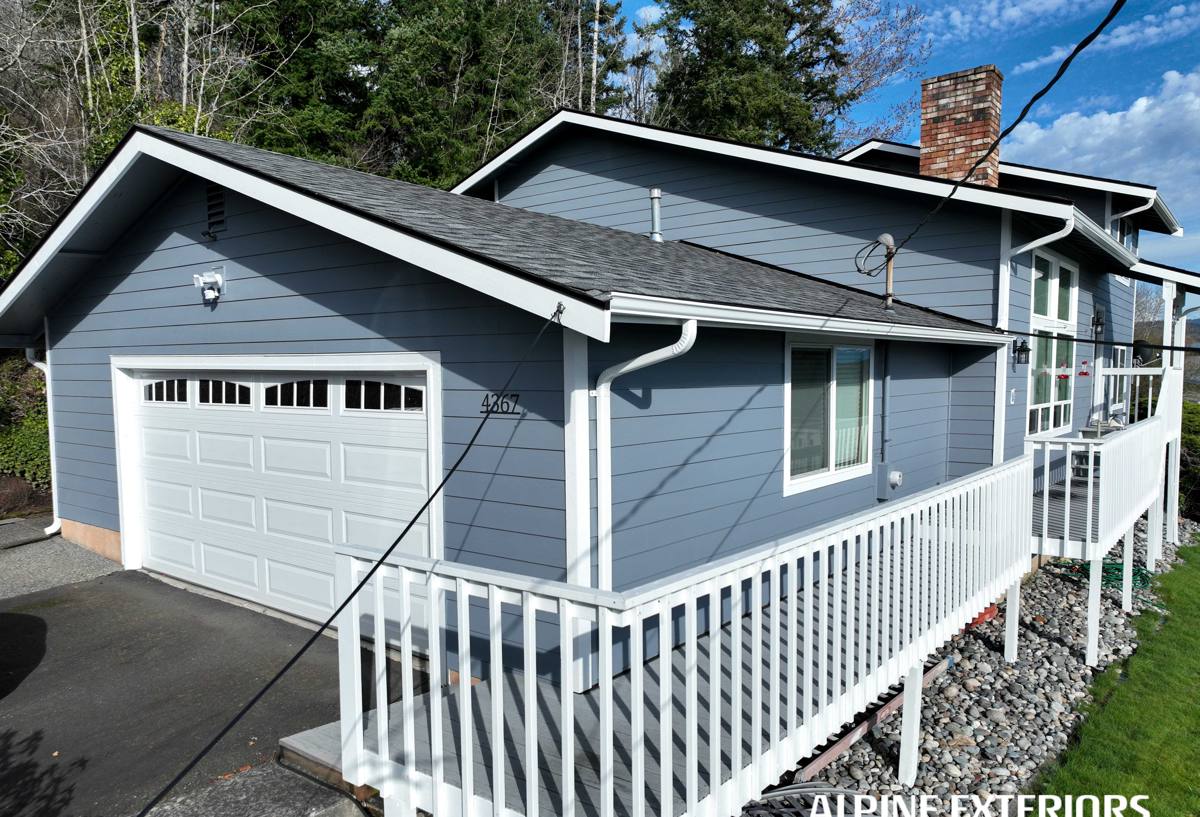
What a Correct Asphalt Shingle Roof Needs Here
A roof that holds up on the island isn't about buying a fancier shingle. It's about getting the details underneath and around the shingle right, since that's where most premature failures actually start.
Underlayment That Can Handle Wind-Driven Rain
Standard felt underlayment can work, but on exposed or waterfront-adjacent lots we lean toward synthetic or self-adhered underlayment in vulnerable zones — eaves, valleys, and low-slope transitions — because it resists the kind of wind-driven moisture intrusion that felt alone can struggle with during a strong southwesterly blow.
Algae-Resistant Shingles Where Shade and Moisture Meet
Most major shingle manufacturers now offer algae-resistant (AR) shingle lines with copper- or zinc-infused granules built to slow moss and algae growth. On a shaded, moisture-prone roof on Fidalgo Island, this isn't a cosmetic upgrade — it's a practical one that reduces how often a homeowner needs moss treatment or gentle cleaning down the road.
Corrosion-Resistant Fasteners and Flashing
We don't cut corners on fastener and flashing material near the water. Hot-dipped galvanized or stainless fasteners and properly matched flashing metal resist the accelerated corrosion that salt air causes, especially at roof-to-wall transitions, chimney flashing, and valley metal — the spots where a small rust-through becomes a leak years before the shingles themselves are due for replacement.
Signs Your Fidalgo Island Roof Needs Attention
Because moss and moisture damage build gradually, a lot of homeowners don't notice a problem until it shows up as a stain on a ceiling. Here's what we tell island homeowners to watch for between inspections:
- Moss or dark streaking concentrated on north-facing or heavily shaded slopes
- Granules collecting in gutters or at the base of downspouts
- Shingle edges that look curled, cupped, or lifted, especially after a windy stretch
- Rust staining running down from flashing at chimneys, vents, or skylights
- Soft or spongy spots when walking the roof deck during an inspection
- Daylight visible through the roof deck from inside an unfinished attic
- Interior ceiling stains that appear or worsen after heavy rain events
Any one of these on its own isn't necessarily an emergency, but a few showing up together usually means it's time for a closer look before the next wet season.
Our Asphalt Shingle Roofing Process
We approach every asphalt shingle project the same methodical way, whether it's a full replacement or a targeted repair.
- On-site assessment. We walk the roof and the attic when accessible, checking deck condition, ventilation, existing flashing, and the specific exposure of each slope to sun, shade, and prevailing wind and rain.
- Honest scope and options. We explain what's actually needed — full tear-off versus repair, underlayment upgrades where they matter, flashing that needs replacing — and what's optional, so you're not paying for work your roof doesn't need.
- Deck prep and repair. Any soft, rotted, or delaminated decking gets replaced before a single shingle goes down. Shingles laid over a compromised deck never perform the way they're supposed to.
- Underlayment and flashing installation. We install underlayment matched to each slope's exposure and replace flashing at every penetration, valley, and wall transition rather than reusing old metal that's already showing wear.
- Shingle installation to manufacturer spec. Proper nail placement, exposure, and starter course installation matter for wind resistance and warranty validity — we follow manufacturer installation requirements, not shortcuts.
- Ventilation check. We confirm intake and exhaust ventilation are balanced, since poor attic ventilation is one of the biggest drivers of premature shingle failure and moss growth on this island.
- Final walkthrough. We review the completed work with you, including care and maintenance specific to your roof's exposure.
Shingle Options and Cost Factors
Asphalt shingles come in a range of grades and price points, and the right choice depends on your roof's exposure, your home's style, and how long you plan to stay in the house. Here's a general comparison to help frame the conversation:
| Shingle Type | Typical Lifespan | Best Suited For |
|---|---|---|
| 3-tab (standard) | 15–20 years | Budget-conscious projects, less wind exposure |
| Architectural / dimensional | 25–30 years | Most Fidalgo Island homes; better wind rating and appearance |
| Premium / designer | 30+ years | Higher-end aesthetics, steep-slope or highly visible roofs |
| Algae-resistant (AR) upgrade | Same as base shingle | Shaded, north-facing, or heavily wooded lots |
Beyond the shingle itself, the biggest cost factors we see on island projects are the condition of the existing deck, the number and complexity of roof penetrations (skylights, chimneys, multiple vents), roof pitch and accessibility, and whether flashing needs full replacement. We'll walk through all of this with you before any work starts — no vague allowances, no surprise change orders for things we could have identified upfront.
Ventilation and Moss Prevention
Moss doesn't grow because a roof is old — it grows because moisture sits somewhere it shouldn't for long enough to take hold. On Fidalgo Island, that usually means shaded slopes, overhanging tree cover, or attic spaces that aren't venting moisture and heat properly.
Balanced Attic Ventilation
Intake vents at the eaves and exhaust vents at or near the ridge work together to keep air moving through the attic. When intake and exhaust aren't balanced, moisture gets trapped against the underside of the roof deck, which speeds up both moss growth and shingle deterioration from below — a failure mode that's easy to miss until it's advanced.
Trim Back What You Can
Overhanging branches keep a roof section shaded and damp far longer after a rain event than open sky would. Where it's practical, trimming back tree cover near the roofline reduces the moss-friendly conditions that are otherwise hard to avoid in a wooded part of the island.
Gentle, Regular Cleaning Beats Aggressive Treatment
Pressure washing shingles can strip granules and shorten shingle life. We recommend gentle moss removal methods and periodic soft cleaning rather than harsh treatments, paired with algae-resistant shingles on new installations so the problem is smaller to begin with.
Flashing and Water Management Details
More roof leaks trace back to flashing failure than to worn-out shingles. On a Fidalgo Island roof, this deserves extra attention because of how much wind-driven rain the island sees compared to more sheltered parts of Skagit County.
We pay particular attention to step flashing at roof-to-wall intersections, valley metal where two roof planes meet, and pipe and vent boot flashing, which is one of the most common leak points on any asphalt shingle roof once the rubber gasket around a boot starts to break down from age and UV exposure. Chimney flashing gets counter-flashing installed correctly into the masonry or siding, not just caulked over — caulk is a maintenance item, not a permanent seal.
Why Hiring a Crew That Already Works Fidalgo Island Matters
A roofing crew that mostly works drier, more sheltered inland areas doesn't always think about salt exposure, moss cycles, or wind-driven rain the same way a crew working the island day in and day out does. We're based in Anacortes and work Fidalgo Island and the surrounding Skagit County area regularly, which means we're not guessing at how a given slope, shade pattern, or exposure will behave over time — we've seen it play out on roofs like yours.
That local familiarity shows up in small decisions that add up: which slopes get upgraded underlayment even when it's not strictly required, which flashing details need extra attention given a specific home's orientation to the water, and which shingle lines hold up better under this island's particular combination of salt, rain, and shade.
Caring for Your Roof After Installation
A properly installed asphalt shingle roof on Fidalgo Island still benefits from routine attention. We recommend the following as a general maintenance rhythm:
- Visual inspection after major wind or storm events, especially fall and winter
- Gutter cleaning at least twice a year to prevent water backing up under eave shingles
- Annual check of flashing, boots, and sealant at penetrations
- Gentle moss removal as needed on shaded slopes, rather than letting it build up over multiple seasons
- Prompt attention to any interior ceiling staining, even if it seems minor
Staying ahead of small issues is almost always less costly than waiting until a leak forces a repair under pressure.
Get a Straightforward Estimate
If you're dealing with moss buildup, aging shingles, or a roof that's never quite performed the way it should in Fidalgo Island's weather, we're happy to take a look and give you an honest read on what it actually needs. Fill out the form below for a free, no-pressure estimate — no obligation, just a clear picture of your options.