 Anacortes Exterior
 Building Decks That Hold Up on Fidalgo Island
Fidalgo Island sits right where Skagit County meets Rosario Strait and the open water of the San Juans, and that location shapes everything about how a deck ages here. Homes on and around Fidalgo Island — from the bluffs and waterfront lots to the wooded lots further inland near Anacortes — deal with a mix of salt-laden air, driving rain off the water, and long stretches of gray, damp weather that keeps moss and algae established year-round. A deck built to a generic set of plans, without accounting for that combination, tends to show its age fast: soft spots in the decking, rusted fasteners, slick green boards, and framing that rots from the inside before the surface ever looks bad. Building correctly for this environment isn't about upgrading everything to the most expensive material — it's about choosing the right materials and details in the right places, and getting the parts you can't see right the first time.
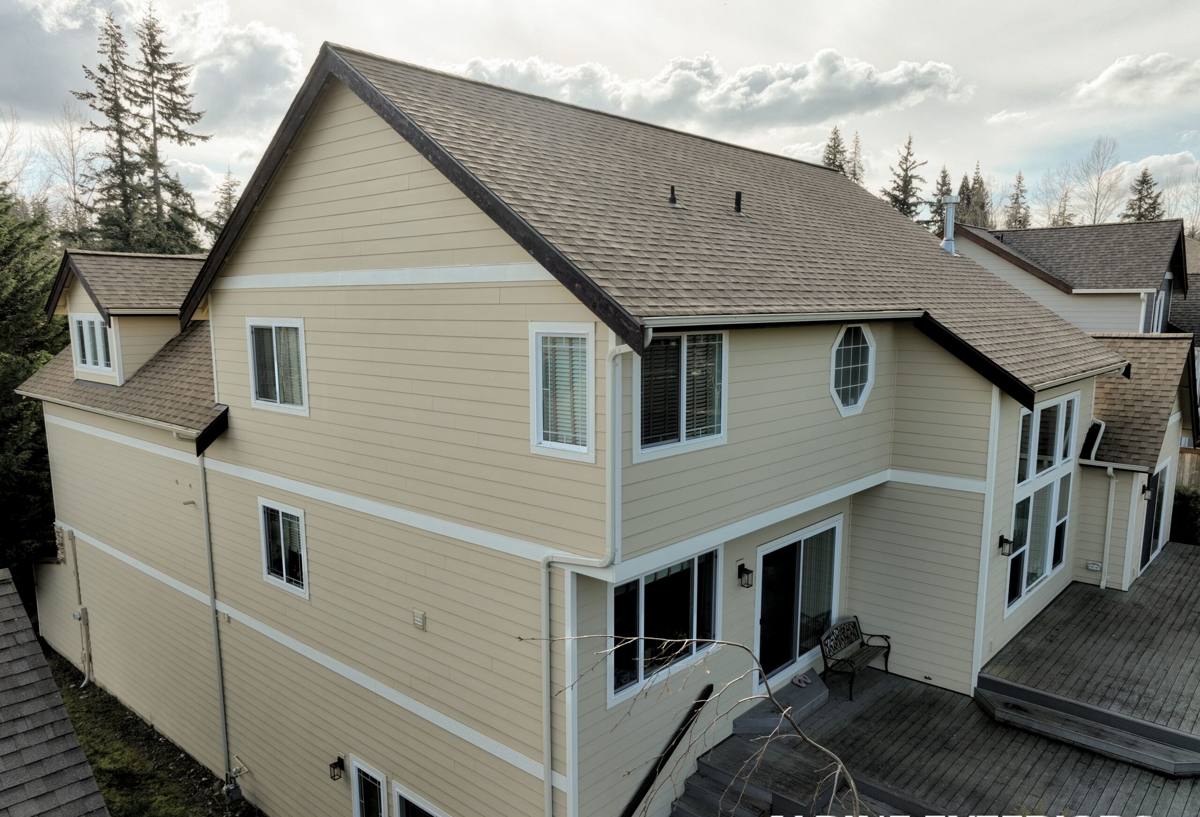
What the Marine Climate Does to an Ordinary Deck
Salt Air and Metal Hardware
Airborne salt from the strait travels further inland than most people expect, especially with the prevailing wind patterns around the island. It settles on any exposed metal — screws, joist hangers, bolts, flashing — and accelerates corrosion. On a lot of decks we're asked to repair, the wood itself is still sound but the fasteners holding it together have rusted, streaked the boards, and loosened their grip. Once a fastener starts to corrode, the connection weakens quietly, often with no visible sign until the board itself starts to move.
Driving Rain and Wind-Driven Moisture
Storms coming off the water don't just fall straight down — wind pushes rain sideways, under railings, behind fascia boards, and into any gap that isn't properly flashed or sealed. That means water reaches parts of a deck that a calmer climate would never test: the ledger connection to the house, the tops of posts, the end grain of boards. A deck built for a drier inland town often skips details that are optional there and mandatory here.
Moss, Shade, and Slow-Drying Surfaces
Skagit County's long wet season, combined with the tree cover common on Fidalgo Island lots, means decks stay damp longer between rains than they would in full sun. Moss and algae need exactly that: shade, moisture, and time. Once established, they hold water against the board surface, which is where slow rot and slip hazards both start.
Choosing Decking Material for Fidalgo Island Conditions
There's no single "right" decking material for every home — it depends on budget, how much upkeep you want to do, and how much sun or shade the deck gets. Here's how the common options actually perform in this specific climate:
| Material | How It Handles This Climate | Maintenance Reality |
|---|---|---|
| Pressure-Treated Wood | Affordable and strong, but end grain and fastener holes need real diligence to keep water out; shaded areas moss up faster | Needs cleaning and re-sealing on a regular cycle to hold color and shed water |
| Cedar | Naturally more rot-resistant than most softwoods and handles moisture well, but is softer and shows scuffs; still needs protection from standing water | Periodic cleaning and finish renewal to prevent graying and moss buildup |
| Composite / PVC Decking | Doesn't absorb water the way wood does, so it resists rot at the board level; still needs correct spacing and airflow underneath to keep moss from forming on the surface | Lower upkeep, but still needs periodic washing — moss and pollen sit on top of any material if the deck doesn't dry out between rains |
We'll walk you through the honest trade-offs for your specific lot — how much shade it gets, whether it's exposed to wind off the water, and what you're willing to maintain — rather than defaulting to whatever's easiest to sell. Fastener style is worth a specific mention too: hidden clip systems, common with composite and PVC decking, mean fewer exposed screw heads on the surface for salt air to work on. Wood decking is more often face-screwed, which is easier to repair board by board but puts more fastener heads directly in the weather, so getting the fastener grade right matters even more.
What a Correctly Built Deck Requires Below the Surface
Framing and Fasteners
The boards are the part you see, but the framing and fasteners are what actually determine how long a deck lasts in this climate. We use fasteners and hardware rated for the corrosion exposure this location sees, not the minimum grade that passes code in a drier region. Every joist hanger, structural screw, and bolt is a point where salt air and moisture can start a failure, so we treat those connections as the priority, not an afterthought.
Ledger Attachment and Flashing
The ledger board — where the deck attaches to the house — is one of the most common points of serious deck failure in this region and beyond, and driving rain off the water makes it worse here. Correct flashing at the ledger, installed in the right sequence with the house's existing water barrier, keeps rain from getting behind the siding and rotting the rim joist or wall framing from inside. This is not a step to shortcut, and it's usually invisible once the deck is finished — which is exactly why it matters that it's done right the first time.
Footings and Post Bases
Footings need to be sized and set for the soil conditions on the actual lot, and post bases should hold posts up off the concrete so end grain isn't sitting in standing water after every storm. Frost depth and soil conditions can vary from lot to lot on the island, so footing depth isn't something to standardize from a generic plan set — it should match what's actually under your yard. On sloped or wooded Fidalgo Island lots, drainage around footings deserves extra attention so water doesn't pool against posts over time.
Drainage and Layout Details That Prevent Moss and Rot
Beyond the big structural items, a handful of layout details make a real difference in how much moss and moisture become a problem later:
- Board spacing that allows water to drain through rather than sit on the surface
- Joist spacing tight enough to prevent boards from cupping and holding water in low spots
- Airflow underneath the deck so the framing can dry out between rain events, not just after the occasional sunny stretch
- Stair stringers and post bases kept clear of soil and mulch buildup, which trap moisture against the wood
- Railing post connections detailed so water can't collect where the post meets the decking
None of these add much to the cost of a project, but skipping them is exactly how a five-year-old deck ends up needing board replacement and re-framing instead of a simple wash.
Our Deck Building Process
We keep the process straightforward and make sure you understand what's happening at each stage:
- On-site walkthrough of your Fidalgo Island property — sun exposure, wind direction, slope, and how the deck will be used
- Honest conversation about material options and what each one means for upkeep, based on your specific lot
- Design and layout, including how the deck ties into the house and any grading or drainage work needed
- Permitting through the appropriate local jurisdiction before any work begins
- Framing and structural work, with ledger flashing, fasteners, and footings built to handle this climate, not just pass a minimum inspection
- Decking installation with attention to spacing, fastening pattern, and finish work
- Final walkthrough so you know what maintenance the specific material you chose will actually need
Scheduling Around Island Weather
Timing matters more here than in drier parts of the state. Concrete footings need dry-enough conditions to cure properly, and any staining or sealing step needs a real dry window to bond instead of trapping moisture under a fresh finish. We build the schedule around actual weather windows rather than a fixed calendar date, which sometimes means a short delay on finish work but avoids locking in a coating that never cured correctly. It's a small patience trade-off that pays off in how long the finish actually lasts.
Keeping a Fidalgo Island Deck Looking and Performing Well
Even a well-built deck needs some ongoing attention in this climate — the goal of good construction is to make that upkeep manageable rather than eliminate it entirely. A realistic maintenance routine looks like:
- Sweeping debris and organic buildup off the deck regularly, especially in shaded areas under trees
- Washing the surface on a seasonal basis to remove moss and algae before it establishes and gets slick
- Checking fasteners and hardware periodically for early signs of rust staining
- Re-sealing or refinishing wood decking on the schedule appropriate to that product, rather than waiting until it visibly grays or cups
- Keeping gutters and downspouts near the deck clear so roof runoff isn't adding extra water to the area
- Trimming back overhanging branches where practical to let the deck surface dry faster after rain
Permits, Codes, and Local Considerations
Deck construction on Fidalgo Island falls under Anacortes or Skagit County building code depending on the specific property, and permitting is part of doing the job correctly — not an optional step for a project this size. Requirements touch on things like railing height, guard spacing, footing depth, and ledger attachment method, all of which matter more, not less, in a climate that stresses every connection point. We handle the permitting process as part of the build so you're not left navigating it alone.
Why Local Experience on Fidalgo Island Matters
A crew that only occasionally works this area can build a technically sound deck and still get the climate details wrong — the wrong fastener grade, a ledger flashing detail suited to a drier region, or a material choice that looks fine on paper but moss over within a couple of wet seasons. Working Fidalgo Island and the surrounding Anacortes area regularly means we've seen how decks actually age here, not just how they're supposed to perform in a manufacturer's spec sheet. That local pattern recognition is what shows up years later as a deck that's still solid, versus one that needed board replacement or reframing well before it should have.
If you're planning a new deck or replacing one that's showing its age, we're happy to walk your property, look at your specific sun and wind exposure, and talk through honest material options. Use the form below to request a free, no-pressure estimate.