 Anacortes Exterior
 Metal Roofing on Fidalgo Island: Built for the Climate You Actually Live In
Fidalgo Island sits right where Puget Sound weather gets serious about testing a roof. Homes here deal with salt-laden air coming off the water, wind-driven rain that doesn't just fall straight down but gets pushed sideways under eaves and around fascia, and a long wet season that keeps roof surfaces damp for months at a stretch. A roof that would hold up fine in a drier inland climate can start showing problems within a few years out here if it wasn't built with this specific exposure in mind. Metal roofing, installed correctly, is one of the more capable options for standing up to all three of those stresses at once — but "installed correctly" is doing a lot of work in that sentence, and that's really what this page is about.
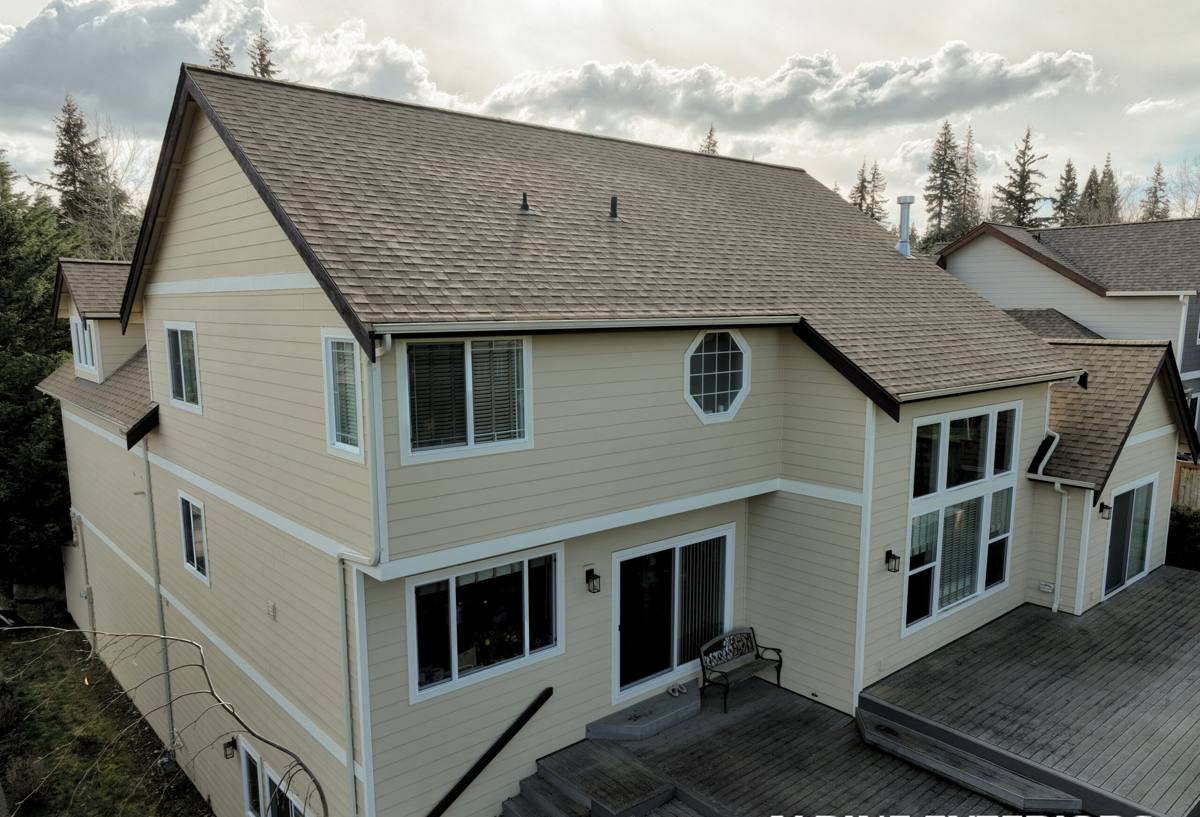
What Fidalgo Island's Climate Does to a Roof
Salt Air and Corrosion
Proximity to saltwater means airborne salt settles on every exterior surface of a home, roofs included. Over time, salt exposure accelerates corrosion on unprotected or poorly coated metal, degrades fastener heads, and can shorten the life of lower-grade flashing. It doesn't mean metal roofing is a bad fit for Fidalgo Island — it means the specific alloy, coating, and fastener choices matter more here than they would forty miles inland.
Driving Rain
Storms coming off the Sound frequently bring wind alongside the rain, which pushes water sideways and upward under laps, around vents, and into any gap in flashing that wouldn't be a problem in a calmer climate. A roof system built for driving rain needs proper lap coverage, sealed penetrations, and underlayment that can handle incidental moisture intrusion without failing.
Moss Season
Anacortes and the rest of Skagit County get a long stretch of cool, damp weather that's ideal for moss growth, especially on north-facing slopes or roof sections shaded by trees. Moss holds moisture against a roof surface far longer than open sun and air would allow, which is exactly the kind of sustained dampness that shortens the life of roofing materials that aren't built to shed water quickly and dry out between rains.
Why Metal Roofing Fits This Environment
Metal roofing has a few properties that line up well with what Fidalgo Island homes actually need:
- Sheds water fast off a slick, continuous surface instead of holding moisture in overlapping layers
- Doesn't absorb water the way organic shingle materials can, which limits how much moss and algae have to work with
- Handles wind-driven rain well when panels, laps, and flashing are installed to spec
- Available in coatings and finishes specifically rated for coastal, high-salt environments
- Long service life reduces how often a roof gets touched — fewer penetrations, fewer chances for something to go wrong
None of that is automatic, though. A metal roof is only as good as the coating spec, the fastener choice, and the flashing detail work that goes into it. A rushed or under-detailed metal roof can fail early in exactly the ways this climate punishes hardest.
Panel Types and Finishes: What the Choice Actually Means
Not all metal roofing is the same product wearing different colors. The panel style and finish you choose affects appearance, maintenance, and how the roof handles salt air and driving rain over the long run.
| Option | How It's Attached | Best Fit | Maintenance Consideration |
|---|---|---|---|
| Standing seam | Concealed fasteners under raised seams | Coastal exposure, longer-term ownership | Fewer exposed penetrations to inspect over time |
| Exposed-fastener panel | Screws through the panel face, gasketed | Budget-conscious projects, outbuildings, shops | Fastener gaskets need periodic inspection and eventual replacement |
| Standard steel finish | Painted or Galvalume coating | General use, most residential settings | Reasonable durability with routine coating inspection |
| Coastal-rated finish | Enhanced corrosion-resistant coating | Homes with direct or near-direct water exposure | Built to resist salt-driven coating breakdown longer |
For most Fidalgo Island homes, we lean toward standing seam with a coastal-rated finish specifically because it minimizes the number of exposed fasteners that salt air and driving rain can work on over the years. Exposed-fastener systems aren't wrong for every project — they're a legitimate, more economical option — but we're upfront that they carry a higher long-term maintenance load in this environment, and we'll walk through that trade-off honestly rather than upselling a system your project doesn't need.
What a Correct Metal Roof Installation Actually Involves
Underlayment
Metal panels are only the visible layer. Underneath, a high-temperature synthetic or self-adhered underlayment provides the actual water barrier if wind-driven rain gets past a seam or a panel is compromised down the road. This layer matters more on a driving-rain coastline than it does in a sheltered inland yard, and it's not a place to cut corners.
Flashing and Penetrations
Every place a roof plane changes direction, meets a wall, or gets interrupted by a vent, chimney, or skylight is a place water can find its way in — especially when rain is being pushed sideways by wind. Correct flashing detail at valleys, ridges, eaves, and penetrations is where most roof failures actually originate, on metal or any other material. This is detail work that separates a roof that performs for decades from one that leaks within a few winters.
Fasteners and Attachment
In a salt-air environment, fastener material and coating matter. Using fasteners rated for corrosion resistance, and following the panel manufacturer's spacing and torque specifications, protects the roof's structural attachment from becoming the weak point over time.
Ventilation
Proper attic and roof ventilation keeps moisture from condensing under the roof deck, which matters year-round in a climate this damp. Ventilation gets planned as part of the roofing system, not treated as an afterthought.
Moss, Debris, and Ongoing Roof Health
Metal roofing gives moss less to hold onto than organic shingle surfaces, but it doesn't make a home immune to Skagit County's moss season, especially under tree cover or on shaded slopes. Keeping gutters and valleys clear of needles and debris, and addressing overhanging branches where practical, goes a long way toward keeping any roof — metal included — performing the way it's supposed to. We're happy to point out problem areas we notice during an estimate, even if moss or debris isn't the reason you called.
Our Process for a Fidalgo Island Metal Roofing Project
- On-site assessment — we look at your current roof, deck condition, ventilation, and any trouble spots like valleys or wall intersections before recommending anything
- Honest scope and options — we explain panel and finish choices in plain terms, including trade-offs, without pushing the most expensive option by default
- Tear-off or overlay decision — we evaluate whether your existing roof deck and structure support the planned system, and explain why if a tear-off is the safer call
- Installation — underlayment, flashing, and panel work done to spec, with attention to the driving-rain and salt-air details this location demands
- Walkthrough and cleanup — we go over the finished work with you and leave the site clear of debris and fasteners
Signs Your Current Roof May Be Ready for a Metal Roofing Conversation
- Granule loss, curling, or repeated shingle repairs on a roof more than 15-20 years old
- Persistent moss regrowth shortly after cleaning, especially on shaded or north-facing slopes
- Visible rust, staining, or corrosion on existing metal flashing or accessories
- Interior signs of moisture — stains, musty smell in the attic, or daylight visible around penetrations
- Planning to stay in the home long-term and wanting to stop cycling through roof replacements
- Wanting a roof better matched to wind-driven rain and coastal salt exposure than what's currently installed
Why Work With a Crew That Already Works Fidalgo Island
Roofing crews who mostly work drier, inland climates don't always plan for driving rain and salt-air corrosion as a matter of habit — it's not wrong, it's just not what their usual jobs demand. A crew that regularly works Anacortes and the rest of Skagit County treats coastal-grade flashing detail, corrosion-resistant fasteners, and moss-aware ventilation planning as standard practice, not an upsell. That familiarity shows up in the small decisions made throughout a job — the ones a homeowner won't necessarily see, but will feel in how the roof performs ten winters from now.
If you're weighing metal roofing for a Fidalgo Island home, we're glad to take a look and give you a straight assessment — no pressure, no inflated urgency, just an honest read on your roof and what it actually needs. Use the form below to request a free estimate.