 Anacortes Exterior
 Building a Deck That Actually Holds Up on Fidalgo Island
Fidalgo Island sits right where Puget Sound weather gets personal. Homes here deal with a combination most inland Skagit County properties don't: salt-laden air off the water, wind-driven rain that finds its way into joints and end-grain, and a long, damp shoulder season where moss and algae get a real foothold on any horizontal wood surface. A deck built to a generic spec sheet might look fine for a year or two, then start showing the telltale signs — graying and splitting on the sun side, soft spots near ledger boards, black streaking under railings, and moss creeping into the deck boards themselves. A deck built for this specific island's conditions looks and performs differently five and ten years out, and that difference comes down to material choices and construction details most homeowners never think to ask about.
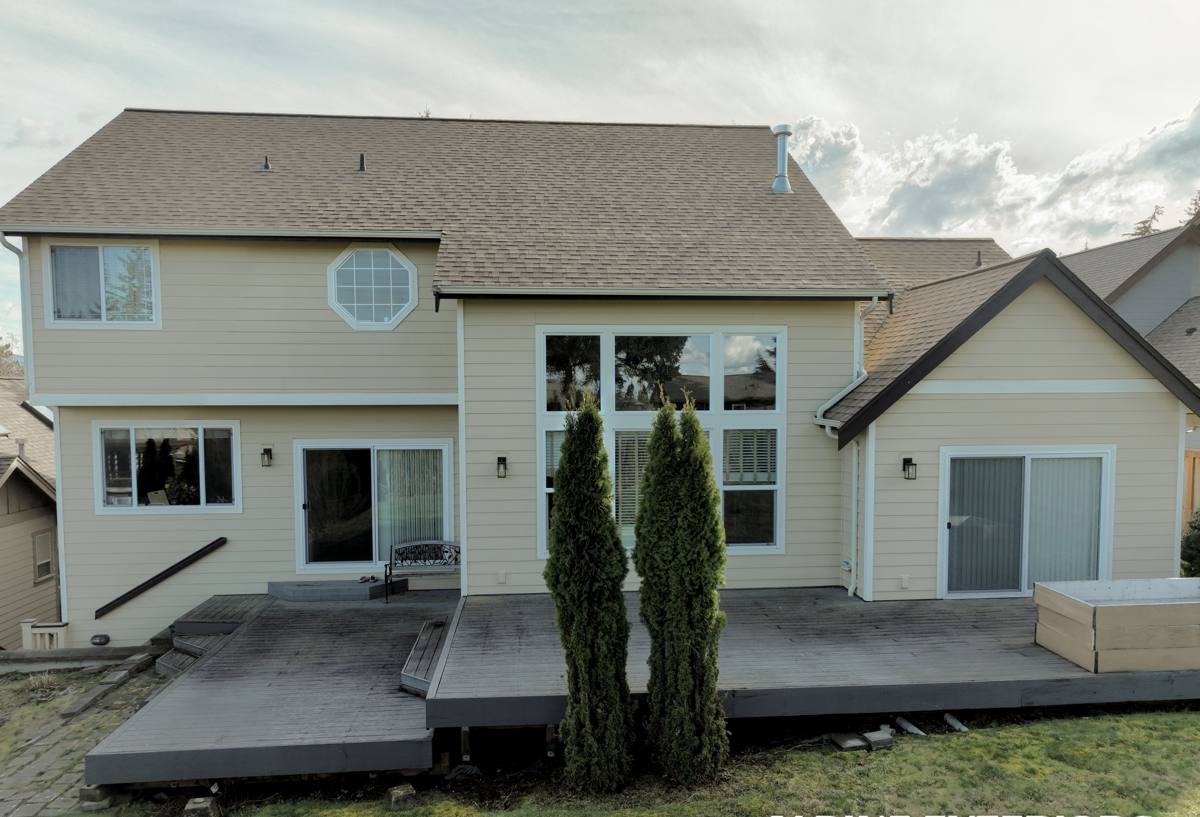
What Salt Air, Driving Rain, and Moss Actually Do to a Deck
Each of these three factors attacks a deck in a different way, and understanding them is the whole basis for building correctly out here.
Salt Air
Airborne salt accelerates corrosion on any exposed metal — fasteners, brackets, railing hardware, and post bases. Standard hot-dip galvanized hardware can start showing rust streaks within a few seasons this close to the water; the wrong fastener choice is one of the most common reasons we get called out to look at a deck that's only a few years old.
Driving Rain
Wind off the Sound doesn't just fall straight down — it drives rain sideways into railing joints, under ledger flashing, and into end grain that isn't sealed. Water that gets trapped instead of shedding is what causes rot, not rain itself. Flashing details and drainage gaps matter more here than in a sheltered inland yard.
Moss and Algae
Shade, moisture, and mild temperatures are exactly what moss wants, and much of Fidalgo Island has tree cover or north-facing exposure that keeps decks damp longer than a sunnier lot would. Moss holds moisture against the board surface, and on some materials it can etch or stain the surface over time even after it's cleaned off.
Choosing the Right Decking Material for This Climate
There's no single "best" decking material — there's a best material for your budget, your maintenance appetite, and how exposed your specific lot is to wind and moisture. Here's how the common options actually perform in Anacortes conditions:
| Material | Moisture/Salt Air Behavior | Moss Resistance | Maintenance |
|---|---|---|---|
| Pressure-treated fir/pine | Good if properly sealed; end-grain cuts need field treatment | Low — needs regular cleaning | Annual sealing recommended |
| Western red cedar | Naturally rot-resistant, ages gracefully near salt air | Moderate — still needs periodic cleaning | Stain/seal every 2-3 years |
| Capped composite | Excellent — won't absorb moisture or rot | Moderate to good depending on brand/texture | Occasional wash, no sealing |
| Uncapped composite | Fair — some older formulations can absorb moisture at cut edges | Low to moderate | Periodic cleaning; edge sealing at cuts |
We don't push one material on every job. A cedar deck under a covered porch on a sheltered lot is a very different situation than an open, wind-exposed deck facing the water — the second one is usually a better candidate for capped composite simply because it removes moisture absorption from the equation entirely. Where we do steer clients away from a product, it's almost always about long-term maintenance burden or how a material handles field cuts and fastener holes at the edges, not about the brand itself.
Framing and Substructure: Where Most Deck Problems Start
The decking surface gets all the attention, but the framing underneath is what determines whether a deck lasts 15 years or 40. On Fidalgo Island specifically, we pay close attention to:
- Ledger board flashing — this is the single most common failure point on older decks in wet climates, and it's invisible until there's already damage
- Joist tape or cap protection on framing lumber, so fasteners don't create a direct path for water into the wood
- Proper drainage slope away from the house, especially important given how much rain this area gets over the fall and winter
- Adequate airflow underneath the deck so the substructure can dry out between storms instead of staying damp
- Post base connections set above grade and away from standing water, which is common on lots with any slope toward the water
None of this is visible once the deck is finished, which is exactly why it's the part most likely to get shortcut on a lower bid. It's also the part that determines whether you're looking at a resurfacing job or a full rebuild in 15 years.
Hardware, Fasteners, and Connections
Given the salt air along the island, hardware selection isn't a minor detail — it's one of the top three things we discuss with every custom deck client here. Stainless steel fasteners cost more up front than standard coated screws, but in a salt-air environment the difference in corrosion resistance is significant, especially for anything exposed to weather like railing hardware, joist hangers, and post connections. We match fastener and connector material to the decking product being used, since mismatched metals can actually accelerate corrosion through galvanic reaction — a detail that's easy to overlook but shows up as rust bleed and weakened connections a few years down the road.
Design Considerations Specific to Fidalgo Island Properties
Beyond materials and hardware, a few design factors come up repeatedly on island lots:
Wind and Water Exposure
Decks with unobstructed water views often catch more direct wind and rain than a sheltered backyard deck. Railing style, board spacing, and even the orientation of the deck can be adjusted to reduce how much driving rain actually lands on the surface.
Slope and Elevation
Many Fidalgo Island lots have grade changes, rock outcroppings, or drainage patterns that affect footing placement and post height. We assess this on-site rather than assuming a flat, standard build.
Tree Cover and Shade
Lots with mature trees get more moss pressure and slower drying times. On these sites we often recommend decking with better moss resistance or design in wider board gaps to help airflow, even if the same choice wouldn't matter on a sunnier lot across town.
How Our Process Works
1. On-Site Assessment
We walk your specific lot — sun exposure, tree cover, wind direction, existing drainage — before recommending materials. What works on one Anacortes street doesn't always work two blocks away depending on exposure.
2. Design and Material Selection
We go over the material comparison honestly, including maintenance expectations, so you're choosing based on how you actually want to live with the deck, not just the up-front price.
3. Permitting
Deck projects in Skagit County and the City of Anacortes typically require permits depending on size, height, and attachment to the home. We handle that process as part of the job.
4. Construction
Framing and flashing details go in first, inspected before decking goes down. This is the stage that matters most for longevity and the stage that's hardest to fix later.
5. Final Walkthrough
We go over care and maintenance specific to the material you chose, so you know what to expect in year one versus year ten.
Maintenance Checklist for Fidalgo Island Decks
Whatever material you choose, a few habits go a long way toward getting the full lifespan out of your deck in this climate:
- Sweep debris and standing organic matter off the deck regularly, especially in fall when leaves and needles accumulate
- Rinse salt residue off railings and hardware periodically if your deck faces the water directly
- Check and clean gaps between boards each spring so moss and algae don't get established
- Inspect ledger flashing and railing connections annually for early signs of water intrusion
- Reseal or restain wood decking on the manufacturer's recommended schedule — don't wait until it's visibly gray or dry
- Keep nearby vegetation trimmed back to improve airflow and sun exposure where possible
Why It Matters to Hire a Crew That Already Works Fidalgo Island
A contractor who mostly builds decks in drier, inland parts of Washington will default to specs that work fine there and fall short here. The framing, flashing, hardware, and material choices we've outlined aren't upgrades for the sake of it — they're the baseline for a deck that's actually built for salt air, driving rain, and a long moss season. Working across Anacortes and the surrounding Fidalgo Island area regularly means we're not guessing at how a given material or detail holds up in this specific environment; we've seen what fails and what doesn't, and we build accordingly from the first estimate.
If you're planning a new deck or replacing one that's showing its age, we're happy to come take a look at your property and put together a straightforward, no-pressure estimate. Use the form below to get started.