 Anacortes Exterior
 Storm Damage Roofing on Fidalgo Island: What Makes It Different
Fidalgo Island sits where Rosario Strait, Guemes Channel, and the open water of the Salish Sea all meet, which means homes here take weather from more directions than a typical inland Skagit County property. A roof on this island isn't just dealing with rain — it's dealing with wind that shifts direction fast, salt-laden air that never really stops moving, and long stretches of gray, damp weather that keep every roof surface wet far longer than homes even twenty miles inland. When a storm does real damage here, the repair has to account for all of that, not just patch the hole and move on.
We work on Fidalgo Island regularly, which matters more than it sounds like it should. A crew that already knows which roof lines catch the worst of the southwest wind, which neighborhoods sit exposed to salt spray, and which older homes were built before code required certain underlayment or fastening standards can assess storm damage faster and more accurately than a crew driving in from out of the area for a single job.
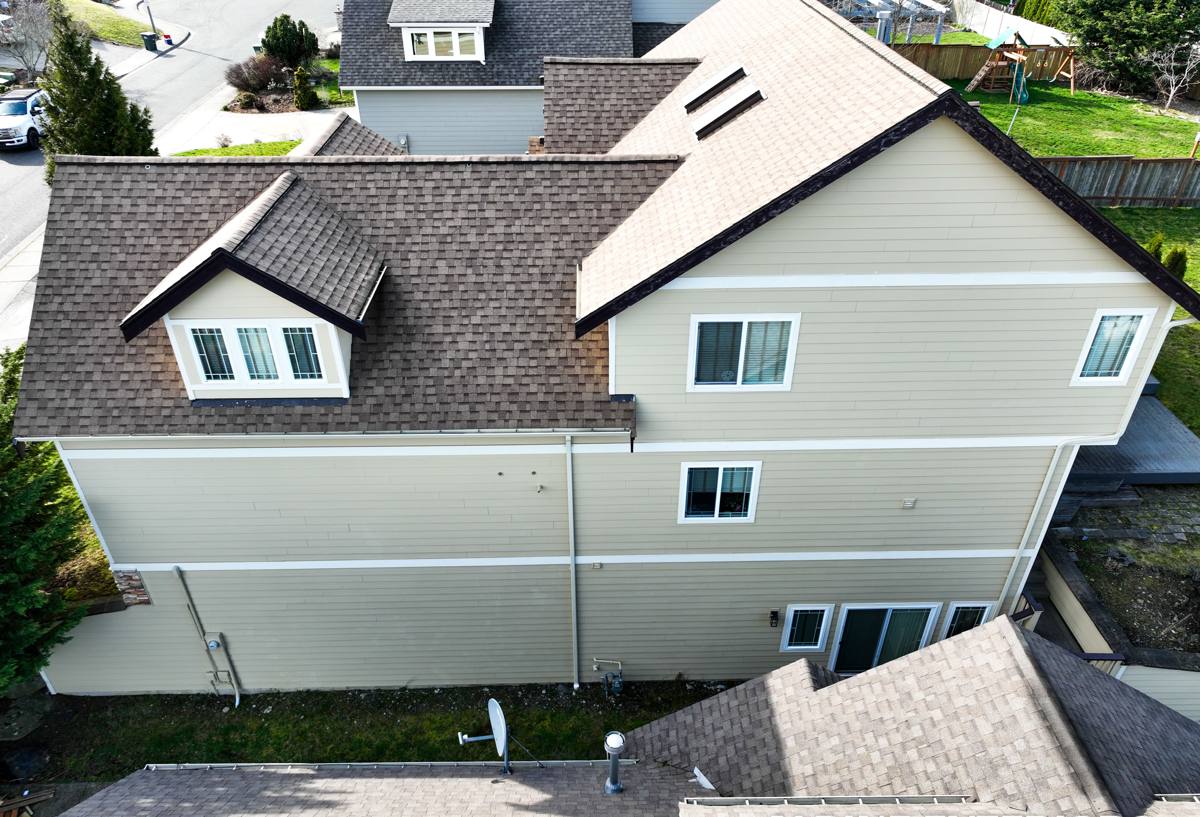
The Storms That Actually Damage Roofs Here
Wind Events
Anacortes and Fidalgo Island get hit by fall and winter windstorms that funnel through the straits and gain speed over open water before they reach land. Gusts don't need to be hurricane-force to lift shingles or shift metal panels — they just need to catch an edge, a ridge cap, or a spot where fasteners have already loosened from age or salt corrosion. Once wind gets under one shingle or panel edge, it tends to cascade down the roof line, so a small area of visible damage after a storm is often a sign of wider loosening you can't see from the ground.
Driving Rain
Rain on Fidalgo Island rarely falls straight down. Wind pushes it sideways and up under eaves, into vents, and behind flashing that was fine in calm weather. Storm damage from driving rain usually shows up as interior leaks, stained ceilings, or damp insulation days after the actual storm, once water has had time to travel along framing before it finds a way inside. That delay is exactly why we recommend a roof check soon after any significant wind-and-rain event, even if nothing looks obviously wrong from the driveway.
Moss and Prolonged Moisture
This isn't a single-storm issue, but it compounds storm damage. Anacortes gets a long moss season because of consistent shade, humidity, and mild temperatures. Moss holds moisture against the roof surface, which softens shingles, corrodes fasteners, and lifts edges over time — so a roof that's carried moss for a season or two is more vulnerable to wind and rain damage during any single storm than a clean, well-maintained roof would be.
What a Correct Storm Damage Assessment Looks Like
A rushed inspection misses things. A correct assessment on a Fidalgo Island home covers the roof surface, the edges, and everything that penetrates the roof — because storm damage rarely stays confined to one clean, obvious spot.
- Shingle or panel condition across the full roof plane, not just the side facing the street
- Ridge caps and hip lines, which take the brunt of wind uplift
- Flashing around chimneys, skylights, and roof-to-wall transitions
- Vent boots and pipe collars, which crack and pull loose in wind and salt air
- Gutter and eave condition, since storm debris and wind can bend or tear these loose
- Attic or interior ceiling checks for water staining, even without visible roof damage
- Fastener condition, especially on older roofs where corrosion from salt air weakens grip over time
We document what we find with photos and plain-language notes before recommending any repair. If a roof only needs a targeted fix, that's what we propose — we don't upsell a full replacement when a repair will hold up.
How We Handle a Repair, Step by Step
1. Initial Contact and Safety Check
After a storm, we prioritize calls where there's an active leak or visible structural concern. If water is actively coming into the house, we talk through immediate steps to limit interior damage before we can get on-site.
2. On-Site Inspection
We walk the roof and the interior spaces below it, looking for both the obvious damage and the secondary signs — soft spots, lifted edges, water tracking. This is where local experience helps: we know the roof styles and ages common on Fidalgo Island and what tends to fail first on each.
3. Written Scope and Estimate
Before any work starts, you get a clear written scope of what needs to be repaired, what materials will be used, and an honest cost range. No vague "we'll figure it out as we go."
4. The Repair Itself
Depending on the damage, this might mean replacing a section of shingles or panels, resealing and re-flashing a penetration, refastening lifted material, or replacing damaged decking underneath. We match materials to what's already on the roof where possible, and we don't cut corners on underlayment or fastening just because it's "just a repair."
5. Follow-Up Check
For significant repairs, we recommend a follow-up look after the next heavy rain to confirm the fix is holding, especially on older roofs where one repair sometimes reveals a second weak spot nearby.
Repair vs. Replacement: How We Decide
Not every storm-damaged roof needs a full replacement, and not every roof can be reasonably patched forever. The decision usually comes down to the roof's age, how widespread the damage is, and how many prior repairs it's already had.
| Factor | Leans Toward Repair | Leans Toward Replacement |
|---|---|---|
| Roof age | Under 12-15 years, or well within expected lifespan for the material | Near or past expected lifespan for its material |
| Damage extent | Isolated to one section or a few penetrations | Spread across multiple roof planes |
| Prior repair history | First or second repair on this roof | Multiple past patches, especially in different spots |
| Underlying decking | Solid, dry decking under the damaged area | Soft, rotted, or water-damaged decking found during inspection |
| Moss/moisture history | Minimal moss, roof kept relatively clean | Long-term moss buildup with visible granule loss or lifting |
We'll tell you honestly which side of that table your roof falls on. If a repair is the right call, that's what we'll recommend — we'd rather do the smaller job right than push a bigger one you don't need yet.
Materials and Fastening Choices for a Salt-Air Environment
Not every fastener or flashing material holds up the same way this close to salt water. Standard fasteners can corrode faster here than they would twenty miles inland, and that corrosion is a common root cause of storm damage that looks unrelated on the surface — a fastener that's already weakened will let go under wind stress that a sound fastener would have handled fine.
Our standard on Fidalgo Island jobs is to use corrosion-resistant fasteners and flashing rated for coastal exposure, even on repair work, not just full replacements. It costs a little more upfront than using whatever's on the truck, but it's the difference between a repair that lasts and one that needs redoing after the next storm season. We also pay close attention to sealant choice around penetrations, since UV, salt, and constant damp cycling break down lower-grade sealants faster here than in drier inland climates.
What Homeowners Can Check Themselves After a Storm
You don't need to get on the roof yourself — and we'd rather you didn't, especially right after a storm when surfaces are wet and debris may be loose. But there are things worth checking from the ground or inside the house before calling anyone.
- New water stains on ceilings, especially near chimneys, skylights, or where roof planes meet
- Shingle pieces or granules in the gutters, downspouts, or on the ground around the house
- Visibly lifted or missing shingles or panel sections viewed from the ground or a neighboring window
- Sagging or uneven spots along the roofline
- Gutters pulled loose or bent from wind or falling debris
- Any musty smell in attic spaces, which can indicate moisture intrusion before it's visible
If you notice any of these after a wind or rain event, it's worth getting a professional look sooner rather than later. Small storm damage left unaddressed through a wet Skagit County winter tends to get worse, not better.
Insurance and Documentation
Most storm damage claims move faster and smoother when there's clear documentation of the damage tied to a specific weather event. We provide detailed photos and written notes of what we find during inspection, which you can use when filing a claim. We're not an insurance company and we don't handle the claim itself, but we'll give you the honest, accurate documentation of the roof's condition that makes the claims process easier on your end.
Why a Local Crew Matters for This Kind of Work
Storm damage repair rewards familiarity. A crew that already works Fidalgo Island knows the general roof ages and construction styles common to the area, understands how salt air and moss season compound over time, and can usually get eyes on a damaged roof faster than a company that has to travel in from further away. That local knowledge shows up in small ways that matter: knowing to check a particular flashing detail more carefully, recognizing early signs of corrosion before they become full failures, and being available for a follow-up check without another long drive.
If your roof has visible or suspected storm damage, we're happy to come take an honest look and walk you through exactly what we see. There's no pressure and no cost for the estimate — just a straight answer about what your roof needs and what it doesn't.