 Anacortes Exterior
 Skyline Homes Face a Tougher Siding Environment Than Most
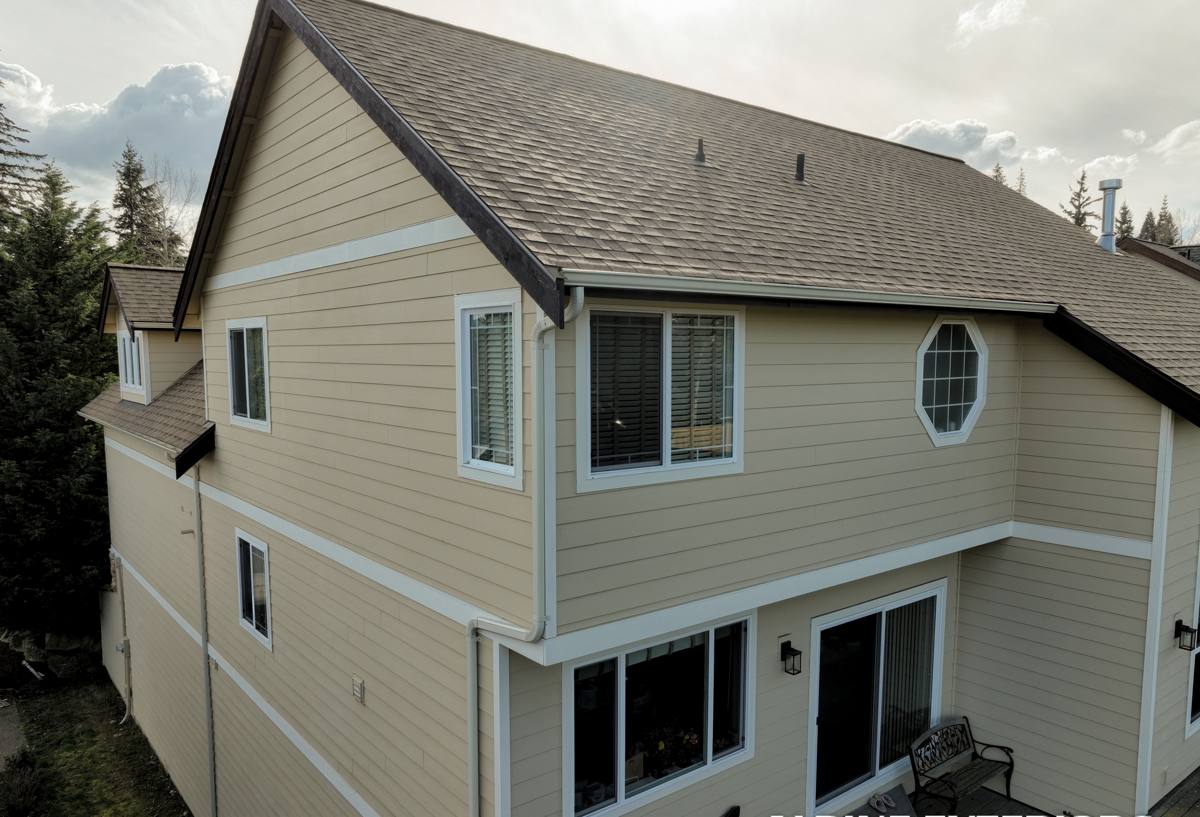
Homes in Skyline sit up and exposed, which is part of what makes the neighborhood desirable — but that same exposure means walls take a steady beating from wind-driven weather coming off the water. Add Skagit County's damp, shaded stretches and a moss season that runs longer than most homeowners expect, and you have a siding environment that punishes anything not built and installed for it. This page covers what fiber cement siding needs to hold up on a Skyline home specifically, what a correct installation actually involves, and why we install only James Hardie fiber cement — nothing else — on homes in this area.
What Anacortes' Climate Actually Does to Siding
Every siding material reacts differently to the combination of salt-laden air, sustained rain, and prolonged damp shade that's typical here. Understanding the specific stress is the first step to choosing a product that won't let you down in year eight or ten.
Salt Air and Marine Exposure
Being close to Puget Sound and the Rosario Strait means airborne salt is a constant, low-grade presence on exterior surfaces, especially on elevated or wind-facing walls. Salt accelerates the breakdown of many paint films and can corrode fasteners and trim metal that isn't rated for it. Siding that depends on a thin field-applied coating to protect it is fighting that exposure from day one.
Driving Rain and Wind-Driven Moisture
Anacortes doesn't just get rain — on exposed, elevated ground it often gets rain pushed sideways by wind, which forces water into laps, seams, and fastener penetrations that would stay dry in a calmer setting. This is where installation detail matters as much as the material itself. Even a premium siding product will fail early if the flashing, gaps, and water management behind it weren't done correctly.
The Long Moss Season
Shaded, north-facing, and tree-adjacent walls in Skiing County stay damp for a large part of the year, and that dampness is exactly what moss and mildew need to take hold. Moss on siding isn't just cosmetic — it holds moisture against the surface far longer than open air would, which is hard on paint, caulk, and the substrate underneath if any of those are marginal to begin with.
Why We Standardize on James Hardie Fiber Cement
We install James Hardie exclusively. We don't offer vinyl, LP SmartSide, Cemplank, Allura, primed spruce, or cedar, and that's a deliberate standard, not a lack of options. Each of those alternatives has real strengths, but each also carries a trade-off — moisture sensitivity in engineered wood products, expansion and fading in vinyl, or the ongoing maintenance burden of a natural wood substrate — that we've decided isn't worth carrying into a climate like this one. Hardie's fiber cement composition is non-combustible, dimensionally stable in swings between wet and dry, and resistant to the kind of moisture intrusion that causes swelling or rot at cut edges and seams.
ColorPlus Finish vs. Field-Applied Paint
Most Hardie product on the homes we build goes on with a factory-applied ColorPlus finish rather than field paint. That finish is baked on under controlled conditions, adheres more consistently than a coat applied on a ladder in variable weather, and is backed by its own finish warranty. In a salt-air environment where field-applied paint tends to chalk and fade faster, that difference shows up in how the siding looks ten years out, not just how it looks on install day.
Climate-Engineered HZ Product Lines
Hardie makes region-specific HZ formulations, and homes in our part of Washington fall into the HZ5 zone, engineered for wetter, more freeze-thaw-variable climates than the HZ10 product sold in the arid Southwest. Installing the correct HZ line matters — it's part of why manufacturer-trained installation is worth insisting on rather than treating fiber cement as one interchangeable product.
What a Correct Fiber Cement Installation Actually Involves
Fiber cement siding is only as good as the water management system behind it. A rushed or undertrained install can leave a Skyline home more vulnerable than the old siding it replaced, even with a premium product on the wall.
| Detail | Why It Matters in Skyline |
|---|---|
| Weather-resistive barrier, properly lapped | Backstops any water that gets past the siding during wind-driven rain |
| Flashing at windows, doors, and penetrations | The most common failure point on exposed, elevated walls |
| Correct fastener spacing and type | Under-fastened or wrong-gauge fasteners loosen under sustained wind load |
| Manufacturer-spec gaps at butt joints and trim | Allows for expansion and keeps caulk joints from failing early |
| Bottom clearance off grade, decks, and roof lines | Reduces splash-back and standing moisture that feeds moss and mildew |
| Field-cut edges sealed per spec | Unsealed cut edges are the fastest path to moisture wicking into the board |
Every one of those details is spelled out in Hardie's own installation manual. Skipping any of them doesn't void the product's quality — it voids the reason you chose a durable product in the first place.
Our Process on Skyline Homes
The steps don't change from house to house, but how we apply them does, based on a given wall's exposure to wind, rain, and shade.
Assessment and Exposure Mapping
We walk the property and note which elevations take the brunt of wind-driven rain, which stay shaded and damp longest, and where the existing siding or trim shows early signs of moss, staining, or fastener corrosion. That mapping shapes flashing and detailing decisions before a single board goes up.
Tear-Off and Substrate Check
Removing the old siding lets us inspect sheathing and framing for hidden moisture damage — something that's common on older homes in wetter microclimates and worth catching before it's covered back up.
Water Management First
Weather-resistive barrier, flashing, and trim go in before any siding, installed to shed water down and out rather than trap it behind the cladding.
Installation to Manufacturer Spec
Fastening, gapping, and clearances follow Hardie's published requirements for our HZ5 zone, not a generic install pattern used regardless of climate.
Final Inspection
We walk the finished job checking caulk lines, flashing laps, and clearances — the same details that determine whether the siding is still performing well a decade from now.
Living With Fiber Cement in a Moss-Prone, Salt-Air Setting
Correctly installed Hardie siding is low-maintenance, not no-maintenance. A little seasonal attention goes a long way toward protecting the investment.
- Rinse siding annually, and more often on shaded or north-facing walls where moss tends to establish first
- Keep gutters clear so overflow doesn't run down the face of the siding
- Trim back vegetation and tree limbs that keep a wall shaded and damp
- Re-caulk trim joints if you notice gaps or cracking, rather than waiting for water to get behind them
- Have caulking and flashing points checked periodically, especially on the most wind- and rain-exposed elevations
- Avoid pressure washing directly into laps and seams — a garden hose and soft brush are usually enough
Why Hiring a Crew That Already Works in Skyline Matters
Siding installation isn't one-size-fits-all, even within Anacortes. A crew that regularly works Skyline homes already knows which elevations tend to take the worst of the wind and rain, how shaded lots behave through the moss season, and how to sequence a job around this area's weather windows. That local pattern recognition shows up in better flashing decisions and fewer callbacks — it's not something a crew unfamiliar with the neighborhood can fully substitute with a manual alone.
Cost Factors for a Skyline Fiber Cement Project
Every home is different, but the same handful of factors drive most of the variation in scope and price on projects in this area.
| Factor | How It Affects the Job |
|---|---|
| Home size and wall complexity | More corners, gables, and trim detail mean more labor and material |
| Substrate condition | Any hidden rot or moisture damage found at tear-off adds repair scope |
| Siding profile and finish | Lap width, texture, and ColorPlus color selection affect material cost |
| Trim and accessory work | Fascia, soffit, and window trim replacement is often bundled with siding |
| Access and elevation | Steep lots or multi-story walls affect equipment and labor time |
We give straightforward, itemized estimates rather than a single vague number, so you can see exactly what's driving the cost on your specific home.
If you're weighing a siding project on a Skyline home, we're happy to take a look and walk you through what your walls specifically need. Reach out for a free, no-pressure estimate — there's no obligation, and you'll leave the conversation with a clearer picture of your options either way.