 Anacortes Exterior
 Roof Repair Built for Skyline's Exposure
Homes in the Skyline area of Anacortes sit close enough to the water that the roof over your head is doing more work than most people realize. Salt-laden air off the surrounding waterways accelerates corrosion on fasteners, flashing, and any exposed metal. Driving rain off Rosario Strait and the wider Salish Sea doesn't fall straight down here — it comes in sideways, which means it finds every marginal seam, lap, and penetration a roof has. And Skagit County's long, damp shoulder seasons give moss and moisture months to work into a roof system before a homeowner ever sees a stain on the ceiling.
A roof repair in Skyline isn't just patching a hole. It's addressing a system that lives under near-constant coastal weather stress, and it needs to be fixed with that reality in mind — not with a generic quick patch that fails again in a year or two.
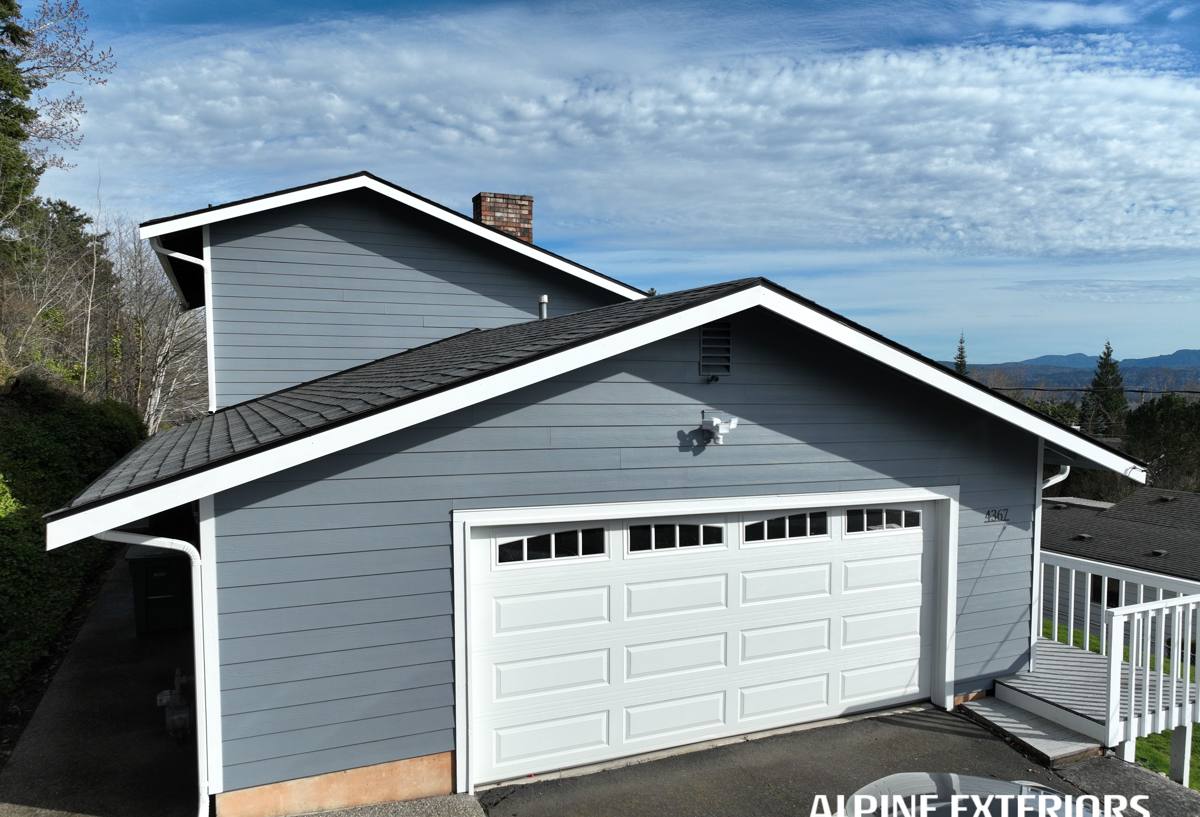
Why Skyline Roofs Wear Differently
Salt Air and Metal Fatigue
Salt air speeds up corrosion on nails, screws, drip edge, valley metal, and flashing around chimneys and vents. Once fasteners start to corrode, they lose holding power, and shingles or panels that were nailed down correctly ten years ago can start to lift in wind. This is one of the most common root causes we find behind a "mystery leak" on homes in this part of Anacortes — it's not the shingle that failed first, it's the metal underneath it.
Driving Rain and Wind-Driven Water
Wind off the water pushes rain uphill under shingle laps and around anything that penetrates the roof plane — vents, skylights, chimneys, and roof-to-wall transitions. A repair that only addresses the visible shingle and ignores the underlayment or flashing detail underneath it will often leak again in the next hard blow, even though it looked fine on a calm day.
Moss and Prolonged Moisture
Skagit County's wet season runs long, and north-facing or shaded roof sections in Skyline can stay damp for weeks at a stretch. Moss doesn't just sit on top of shingles — its root structure works into the granule surface and lifts shingle edges, which opens a path for water. Left alone through a full moss season, a small patch of moss can turn a minor leak point into a rotted section of decking.
Signs a Skyline Roof Needs Repair, Not Just Watching
Some warning signs are obvious. Others show up gradually and get written off as normal aging. Watch for:
- Dark streaking or green-black growth concentrated on shaded or north-facing slopes
- Granules collecting in gutters or at downspout outlets after rain
- Curling, cupping, or lifted shingle edges, especially on sections facing prevailing wind
- Rust staining below metal flashing, vent boots, or valley metal
- Soft or spongy spots when walked (a sign of decking damage underneath)
- Water stains on interior ceilings, especially after a windy rainstorm rather than a calm one
- Daylight visible through the attic at flashing points or nail holes
- Cracked or brittle rubber boots around plumbing vents
Any one of these on its own might be minor. Two or three together, especially on a roof over ten years old, usually means water has already found a way past the surface layer.
What a Correct Repair Actually Involves
Diagnosing the Real Source
Water rarely stains the ceiling directly below where it enters the roof — it travels along rafters, sheathing, or old flashing before dripping. A correct repair starts with tracing the leak to its actual entry point, not just patching the spot that's showing damage inside. On older Skyline roofs, this often means checking flashing details around chimneys, dormers, and roof-to-wall intersections first, since those are the highest-failure points in wind-driven rain.
Matching Materials and Technique
A repair should use materials compatible with what's already on the roof — matching shingle profile and weight, correct nail placement and count, and flashing metal that won't set up galvanic corrosion against what's already installed. Mismatched materials or the wrong fastener type can create a repair that looks fine for a season and then fails.
Addressing Underlayment and Decking
If water has been getting in for a while, the underlayment beneath the shingles and the wood decking itself may be compromised. Replacing surface shingles over saturated, soft decking doesn't solve anything — it just covers a problem that will keep spreading. Any competent repair includes a check of what's underneath before new material goes down.
Clearing Moss and Treating the Cause
Where moss is part of the problem, a proper repair includes safe removal (not aggressive scraping that damages granules) and addressing why that section stays wet longer than the rest of the roof — often a shade or ventilation issue that's worth pointing out even if it's outside the scope of the repair itself.
Common Roof Repair Jobs We Handle in Skyline
| Repair Type | Typical Cause in This Area | What's Involved |
|---|---|---|
| Flashing repair or replacement | Salt-air corrosion, wind-driven rain at joints | Remove and replace failed metal, reseal correctly, check adjacent shingles |
| Shingle replacement (localized) | Wind lift, moss lifting edges, granule loss | Match existing shingle type, replace affected section plus adjacent course |
| Valley repair | High water volume concentration, debris buildup | Clear debris, inspect underlayment, replace valley metal if corroded |
| Vent boot / penetration repair | Rubber boots cracking with age and UV exposure | Replace boot, check surrounding shingle seal |
| Moss remediation | Long damp season, shaded roof sections | Safe removal, treatment, and addressing moisture retention cause |
| Decking repair | Prolonged undetected leak | Cut out and replace damaged sheathing before re-covering |
How Our Process Works
1. Inspection
We walk the roof (or use safe alternate inspection methods where the roof pitch or condition calls for it) and check the attic from inside when accessible. We're looking for both the visible symptom and the underlying cause.
2. Honest Estimate
You get a written explanation of what's actually wrong, what needs to happen to fix it correctly, and what it will cost — including whether a repair is the right call or whether the roof is close enough to the end of its service life that a repair would just be a short-term patch on a bigger problem.
3. The Repair
We match materials to what's already on your roof, use fastening and flashing appropriate for a coastal wind and salt environment, and don't cut corners on the parts that don't show — underlayment, decking, and flashing details.
4. Cleanup and Walkthrough
We clear debris, remove old material, and walk you through what was done and what to keep an eye on going forward.
Repair or Replacement — How We Help You Decide
Not every roof problem calls for a full replacement, and not every leak is fixable with a patch that will actually hold. The honest answer depends on the roof's age, how widespread the damage is, and whether the decking underneath is still sound. A few factors we walk through with Skyline homeowners:
| Factor | Favors Repair | Favors Replacement |
|---|---|---|
| Roof age | Under roughly two-thirds of expected material lifespan | Near or past expected lifespan for the material |
| Extent of damage | Localized to one section or detail | Multiple areas failing independently |
| Decking condition | Solid, no soft spots found | Soft, rotted, or repeatedly repaired decking |
| Granule loss | Minor, isolated | Widespread across multiple slopes |
| History of repairs | First or second repair on this roof | Repeated repairs to the same areas |
We'll tell you plainly which side of that line your roof falls on, and we won't recommend a full replacement when a properly done repair will genuinely hold up.
Why Hire a Crew That Already Works in Skyline
A roofer unfamiliar with this stretch of Anacortes might treat every job the same way they would inland — standard materials, standard fastening, no particular attention to wind exposure or salt air. That approach tends to produce repairs that need to be redone sooner than they should. Crews who regularly work waterfront and near-waterfront properties in Skagit County know which flashing details fail first in this exposure, which fastener types hold up against salt-air corrosion, and which sections of a roof are worth extra attention because of how the wind and rain actually hit a house here — not in a textbook, but on this specific stretch of Fidalgo Island. That local pattern recognition is the difference between a repair that lasts and one that's a temporary fix.
After the Repair: Simple Upkeep That Pays Off
A correctly done repair still benefits from basic seasonal attention, especially given the local climate:
- Clear gutters and valleys before the fall rains ramp up
- Do a visual check after any major windstorm for lifted or missing shingles
- Keep overhanging branches trimmed back to reduce shade and debris on north-facing slopes
- Have moss growth addressed early in the season rather than waiting until it's established
- Schedule a periodic roof check-in, particularly as the roof approaches the back half of its expected lifespan
None of this requires much time, but it's the difference between a repair that's the last work your roof needs for years and one that turns into a recurring problem.
If you're seeing any of the warning signs above, or you just want an honest read on where your roof stands, we're happy to take a look. We offer free, no-pressure estimates for homeowners in the Skyline area — just fill out the form below and we'll get in touch to schedule a time.