 Anacortes Exterior
 Why Skyline's Climate Is Harder on Windows Than It Looks
Skyline sits up and out toward the water, which is exactly why people buy homes there — and exactly why the windows in those homes take more punishment than windows a few miles inland. Elevation and water exposure mean more wind-driven rain hitting the glass and frames directly, more salt-laden air moving through the neighborhood on a regular basis, and a damp season that runs long even by Skagit County standards. None of that is dramatic on any single day. It's the accumulation that gets you.
Salt air is corrosive to hardware — locks, hinges, balance mechanisms — in a way that inland air simply isn't. Driving rain finds any weak point in flashing or sealant and pushes water where it doesn't belong. And the extended wet, low-light stretch of a Pacific Northwest fall through spring keeps wood trim and sills damp long enough for moss and mildew to take hold on surfaces that never fully dry out. A window built and installed for a drier, calmer climate will show its age in Skyline years before it would somewhere less exposed.
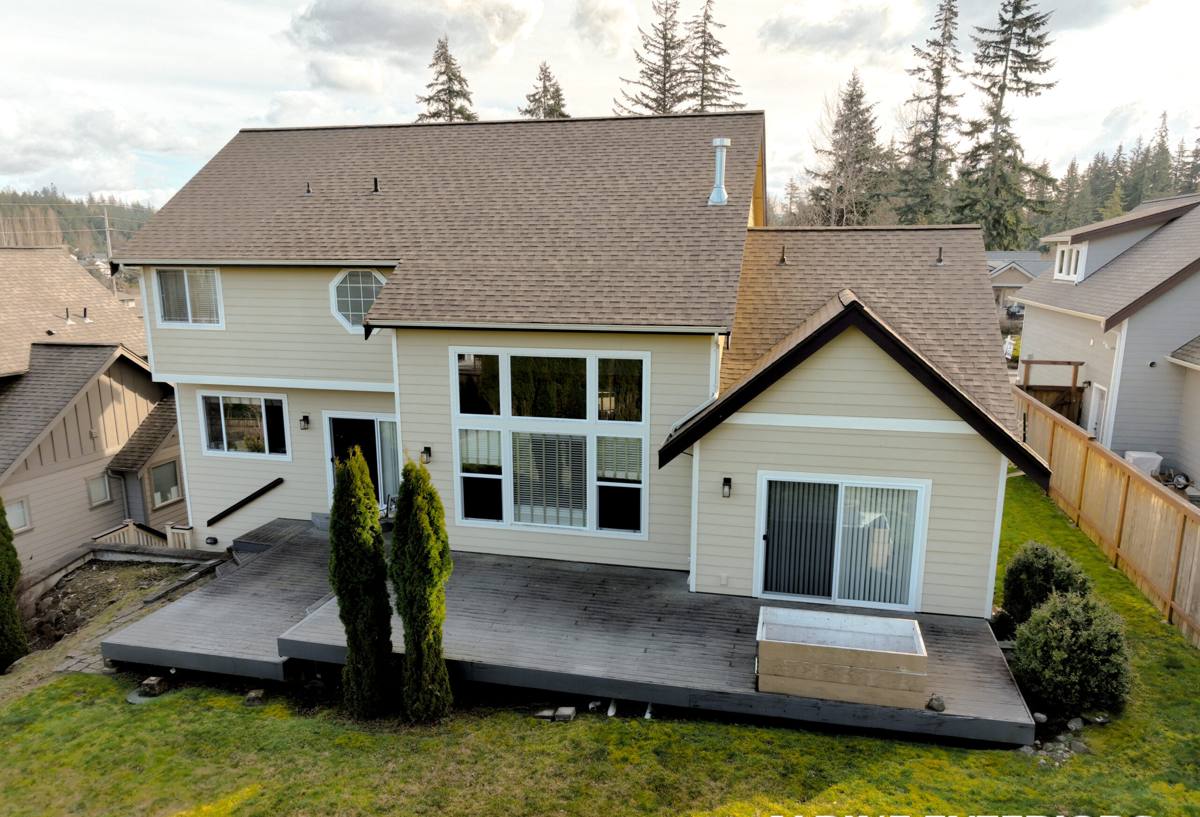
Signs Your Windows Have Reached the End
Window failure is usually gradual, and homeowners often adjust to small problems without noticing how much has changed. Here's what we look for, and what you can check yourself:
- Fogging or a permanent haze between panes of glass — this means the seal has failed and the insulating gas has escaped
- Drafts you can feel near the frame even when the window is fully closed and locked
- Locks or cranks that are stiff, pitted, or corroded rather than smooth
- Soft, spongy, or discolored wood at the sill or lower frame corners
- Paint that's peeling or bubbling specifically around the window opening, not the whole wall
- Visible moss or dark staining building up on the sill or exterior trim between cleanings
- A noticeable jump in heating costs with no other explanation
Any one of these on its own isn't necessarily urgent. Several of them together, especially on the windows facing the prevailing weather, usually means it's time to stop patching and start planning a replacement.
What a Correct Window Replacement Actually Involves
The window unit itself is only part of the job. In a climate like this one, how the window is integrated into the wall matters as much as which window you buy. A correct installation manages water at every layer, not just at the surface.
Full-Frame vs. Insert Replacement
An insert (or "pocket") replacement drops a new window into the existing frame and is faster and less invasive — a reasonable option when the existing frame is still sound and dry. A full-frame replacement removes the window down to the rough opening, which lets us inspect and repair the framing, sill, and flashing underneath. On a home exposed to driving rain and salt air, we don't recommend an insert replacement over a frame that shows any sign of moisture damage — sealing new glass into a compromised opening just hides the problem for a few more years instead of solving it.
Flashing and Water Management
Correct installation means integrating new flashing with the existing weather-resistive barrier so water is shed down and out, never trapped behind the siding. That includes a sloped sill pan under the window, proper head flashing above it, and sealant compatible with both the window frame material and the siding it meets. Skipping or rushing this step is the single most common cause of hidden rot we find when we open up a wall in this area.
Insulation and Air Sealing
The gap between the window frame and the rough opening needs to be insulated and air-sealed correctly — not overpacked with expanding foam, which can bow the frame, and not left with gaps, which defeats the point of a new window. Done right, this step is what actually stops drafts and cuts heating costs, more than the glass package alone.
Choosing a Frame Material for a Marine Climate
Every frame material has real trade-offs. In a salt-air, high-moisture environment like Skyline, some hold up with less maintenance than others.
| Frame Material | Salt Air / Moisture Performance | Maintenance | Notes |
|---|---|---|---|
| Vinyl | Good — won't rot or corrode | Low; occasional cleaning | Most cost-effective option; wide color and style range |
| Fiberglass | Very good — dimensionally stable, resists warping | Low | Higher upfront cost; holds paint well if a custom color is wanted |
| Aluminum-clad wood | Good on the exterior face, but wood core needs a sound seal | Moderate | Real wood interior look; relies on the cladding staying intact |
| Solid wood | Poor without diligent upkeep in this climate | High | We don't recommend it as an exterior-facing choice this close to the water without a strict maintenance schedule |
We're not against wood windows as a category — they have real appeal — but we're honest about what a wood exterior requires in a marine climate: regular repainting or refinishing and prompt attention to any failed caulk joint. For most Skyline homes, vinyl or fiberglass gives the best balance of appearance, performance, and long-term maintenance.
Our Window Replacement Process
- On-site assessment. We measure every opening, check the condition of the existing frame and sill, and note which elevations take the worst weather.
- Product selection. We walk through frame material, glass package, and hardware options based on your home's exposure and your budget — no pressure toward a single brand.
- Permitting, if required. We handle the paperwork with the City of Anacortes when the scope of work calls for it.
- Removal and inspection. Old windows come out and we inspect the rough opening for hidden rot or moisture damage before anything new goes in.
- Repair, if needed. Any damaged framing or sheathing gets repaired before installation continues — we don't seal a new window over a problem.
- Installation. New flashing, sill pan, and window go in per manufacturer specs, with attention to level, plumb, and square.
- Insulation and sealing. The gap is properly insulated and sealed, inside and out.
- Trim and finish work. Interior and exterior trim is reinstalled or replaced and finished to match.
- Cleanup and walkthrough. We clear the site and walk every window with you before calling the job done.
What Affects the Cost
We're not going to quote a number here that doesn't apply to your specific home — window replacement pricing depends on too many variables to give an honest flat figure. What we can tell you is what actually drives the cost up or down:
| Factor | Why It Matters |
|---|---|
| Window size and configuration | Larger units, custom shapes, and multi-panel windows cost more than standard single units |
| Frame material | Vinyl is typically the most affordable; fiberglass and clad-wood cost more upfront |
| Insert vs. full-frame installation | Full-frame work costs more but is often necessary when framing damage is found |
| Hidden rot or moisture damage | Repairs to the rough opening or sheathing add cost but prevent repeat failures |
| Glass package | Upgraded low-E coatings or gas fills add cost and improve energy performance |
| Number of windows | Doing several windows in one project typically lowers the per-window cost |
Most homeowners in this area are looking at a project that runs from a few thousand dollars for a small number of standard windows up into five figures for a whole-house replacement with premium materials. The only way to get a real number is a site visit, which is why we always start there instead of guessing over the phone.
Why a Crew That Already Works in Skyline Matters
Window replacement isn't a one-size-fits-all job, and a crew that regularly works this part of Anacortes brings something a general contractor from farther inland doesn't: a working sense of which elevations and orientations in this neighborhood take the worst of the wind and rain, familiarity with the permitting process at the City of Anacortes, and enough repeat experience with this climate to know that skipping flashing details is exactly what causes callbacks two winters later. That local pattern recognition doesn't replace a proper site assessment on your specific home, but it does mean fewer surprises once we open up a wall.
Maintaining New Windows in a Salt Air, Moss-Heavy Climate
A correctly installed window still benefits from basic upkeep in this environment. A little attention a couple of times a year goes a long way:
- Rinse salt residue off glass and frames periodically, especially after storms with onshore wind
- Keep weep holes at the base of the frame clear of debris so water can drain out as designed
- Check exterior caulk joints once a year and re-seal any that have cracked or pulled away
- Clean moss and organic buildup off sills and lower trim before it holds moisture against the surface
- Lubricate locks, cranks, and hinges to keep salt air from seizing them up
- Watch for any new drafts, stiffness, or condensation and address it early rather than waiting
None of this is complicated, but skipping it is how a well-installed window ends up needing attention years before it should.
If your windows in Skyline are showing their age or you're just planning ahead, we're happy to take a look and give you a straightforward, no-pressure estimate — use the form below to get started.