 Anacortes Exterior
 Roof Replacement in Skyline: Built for Fidalgo Island Weather
Skyline sits on the west side of Anacortes, close enough to the water that salt air is part of daily life and far enough into the tree cover that shade and moisture linger on rooflines long after a storm passes. Homes here take a different kind of beating than roofs ten miles inland in Skagit County. If you're looking at a roof replacement in Skyline, the job isn't just "tear off and redo" — it's about matching the roof system to what this specific stretch of Anacortes actually throws at it.
This page covers what Skyline homeowners should know before replacing a roof: what the climate does to roofing materials here, what a correct replacement actually involves, how we run the job from estimate to cleanup, and why local experience on this side of the island matters more than it might seem.
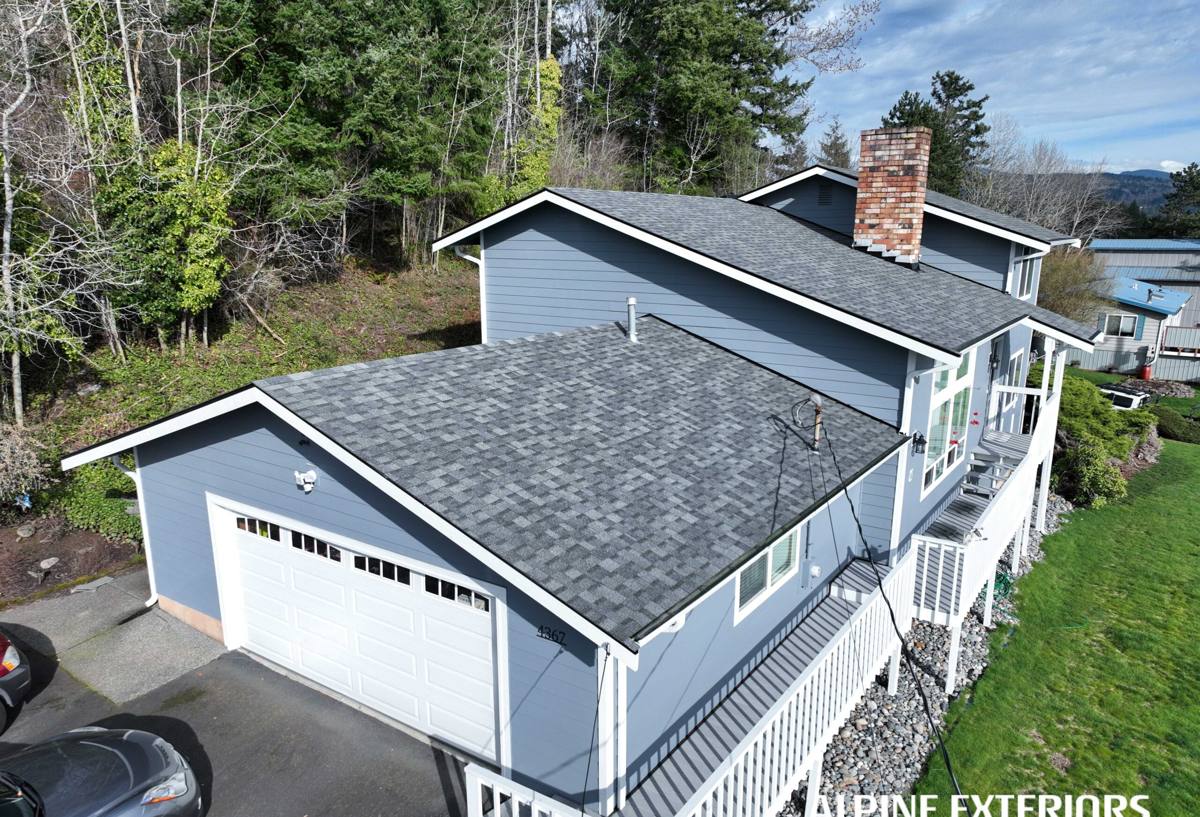
What Skyline's Climate Does to a Roof
Three things drive most of the roof failures we see in this neighborhood:
- Salt air corrosion. Being close to the shoreline means airborne salt settles on metal flashing, fasteners, and vents year-round. Lower-grade metal components corrode faster here than they would in a landlocked town, even one just a few miles away.
- Driving rain. Storms off the water don't just fall straight down — wind pushes rain sideways and up under laps, edges, and poorly sealed penetrations. A roof that would be fine in a calmer climate can leak here if the underlayment and flashing details aren't done right.
- Moss and moisture retention. Tree cover and a long damp season mean moss gets a real foothold on north-facing slopes and shaded valleys. Moss holds water against shingles and roof decking far longer than open sun exposure would, which accelerates granule loss and, eventually, deck rot underneath.
None of this is unique to Skyline — it's a Pacific Northwest coastal problem — but the combination of shoreline proximity and tree canopy makes it more pronounced here than in some other Anacortes neighborhoods.
Signs a Skyline Roof Is Due for Replacement, Not Another Repair
- Granule loss heavy enough that you're finding grit in gutters every season, not just after a new roof settles in
- Moss that keeps returning within a year of cleaning, especially on shaded slopes
- Soft spots or give underfoot on the decking when walked (a sign moisture has reached the wood)
- Rusting or heavily pitted flashing, nail heads, or vent boots
- Multiple repair visits in the same two or three years for leaks in different spots
- Shingles curling, cupping, or losing their seal along the edges
One or two of these on their own might mean a repair is enough. Several together usually mean the roof system as a whole has reached the end of its useful life and patching it is just delaying a bigger repair bill.
What a Correct Roof Replacement Involves
A roof replacement done right in this climate is about the layers most people never see, not just the shingles on top. Here's what should happen on every full replacement:
1. Full Tear-Off and Deck Inspection
We don't roof over an existing layer. A full tear-off lets us inspect the decking underneath for soft spots, rot, or delamination — problems that are invisible from the surface but common under roofs that have been holding moss and moisture for years. Any compromised sheathing gets replaced before anything new goes down.
2. Underlayment Suited to Wind-Driven Rain
Because Skyline gets rain pushed sideways off the water, we pay close attention to underlayment coverage and lap direction, with extra protection at eaves, valleys, and any low-slope transitions where wind-driven water tends to find its way in.
3. Corrosion-Resistant Flashing and Fasteners
Given the salt air exposure, we favor flashing, fasteners, and vent components rated for coastal or corrosive environments over standard-grade hardware. It costs a bit more up front and pays for itself by not needing replacement in five years when standard metal starts to pit and rust.
4. Ventilation That Accounts for Moisture and Shade
Proper intake and exhaust ventilation keeps the underside of the roof deck dry, which matters even more on shaded lots where the roof surface itself doesn't get enough sun to dry out quickly after a storm.
5. Moss-Resistant Details Where They Make Sense
On shaded slopes prone to moss, we look at options like zinc or copper strips near the ridge, which release trace metal ions that discourage moss growth as rain washes over them. It's not a fix for every roof, but on the shadiest sections in Skyline it's often worth discussing.
Material Options: What Fits Skyline Homes
| Material | How It Handles This Climate | Maintenance Consideration |
|---|---|---|
| Architectural asphalt shingles | Good balance of cost and performance; modern algae-resistant granules help slow moss and moisture staining | Periodic moss removal on shaded slopes; standard inspection schedule |
| Standing seam metal | Sheds wind-driven rain very well and resists moss better than shingles due to smooth, sloped surface | Needs coastal-rated fasteners and coatings to manage salt air corrosion long-term |
| Synthetic/composite shingles | Resists moisture absorption and holds up well to salt air; doesn't feed moss the way organic materials can | Higher upfront cost; product warranty structure varies by manufacturer |
| Wood shake | Traditional look but retains moisture longer in shaded, damp conditions — a real factor this close to the water and tree cover | Requires more frequent treatment and inspection; we're upfront that this is a higher-maintenance choice here |
We don't push one product on every home. The right call depends on your roof's slope, how much shade it gets, your maintenance appetite, and budget. We'll walk through the honest trade-offs for your specific roof rather than a one-size answer.
Our Process, Start to Finish
- Free on-site estimate. We look at your current roof, decking condition where visible, ventilation setup, and any trouble spots you've noticed.
- Written scope and material options. You get a clear breakdown of what's included — tear-off, decking, underlayment, flashing, ventilation, and material choice — with pricing tied to what's actually being done, not a vague lump sum.
- Scheduling around Skagit County weather. We plan the tear-off and dry-in around forecasted rain windows so your home isn't left exposed longer than necessary.
- Tear-off and deck inspection. Old roofing comes off, decking gets checked and repaired as needed, and we flag anything that changes the original scope before proceeding.
- Installation. Underlayment, flashing, ventilation components, and final roofing material go on according to manufacturer specs and the details this climate calls for.
- Cleanup and walkthrough. Magnetic sweep for nails, full site cleanup, and a walkthrough so you understand what was done and how to maintain it.
Pre-Replacement Checklist for Skyline Homeowners
- Note which slopes get the least sun — that's usually where moss and moisture issues concentrate
- Check gutters for granule buildup or standing debris after the last few storms
- Ask any contractor bidding the job what flashing and fastener grade they're using given the salt air here
- Confirm whether ventilation will be upgraded or just reused as-is
- Get the tear-off and material scope in writing before work starts, not just a total price
Cost Factors Homeowners Should Understand
Roof replacement pricing varies by roof size, pitch, current layer count, decking condition, and material choice, so we won't quote a number without seeing the roof. What we can tell you is what tends to move the price up or down on Skyline jobs specifically:
- Decking replacement needs found during tear-off — more common on roofs that have held moss and moisture for several years
- Steep or complex rooflines with multiple valleys, which take longer to flash correctly against wind-driven rain
- Upgraded corrosion-resistant hardware, which costs more initially but avoids early hardware failure from salt exposure
- Material choice — metal and synthetic options generally cost more upfront than asphalt shingles but can offer longer service life in this environment
Why a Crew That Already Works Skyline Matters
A roof replacement is only as good as the details most homeowners never see — how the flashing is lapped, whether the fasteners are rated for salt exposure, whether ventilation was actually addressed or just left alone. A crew that's replaced roofs elsewhere in Skagit County but hasn't worked this specific stretch of coastline can miss how much salt air and shaded moisture change those decisions. We've done the work here, so we know which slopes in this neighborhood tend to hold moss, which details actually matter for wind-driven rain off the water, and which shortcuts don't hold up under this climate — even if they'd be fine somewhere drier or further from the shoreline.
If your roof is showing its age, we're happy to take a look and give you a straightforward assessment — no pressure, no upsell, just an honest read on whether you need a repair or a full replacement. Reach out through the form below to schedule a free estimate.