 Anacortes Exterior
 Guemes Island Roofs Work Harder Than Most
Guemes Island sits out in the water off Anacortes, and that location is exactly why roofs there age differently than roofs a few miles inland. Homes on the island catch salt-laden air coming off the Salish Sea, take driving rain straight off open water during winter storms, and sit under tree cover that keeps roof surfaces shaded and damp for long stretches of the year. That combination — salt, wind-driven moisture, and shade — is a tough environment for any roofing material, and it shows up as accelerated wear if a roof isn't built and maintained with that reality in mind.
A roof repair on Guemes Island isn't just a smaller version of a repair anywhere else in Skagit County. It has to account for how the island's exposure and access affect both the damage itself and how the work gets done. That's the focus of this page: what Guemes Island homes actually need from a roof repair, what a correct job looks like, and why local, island-familiar experience matters here more than most places.
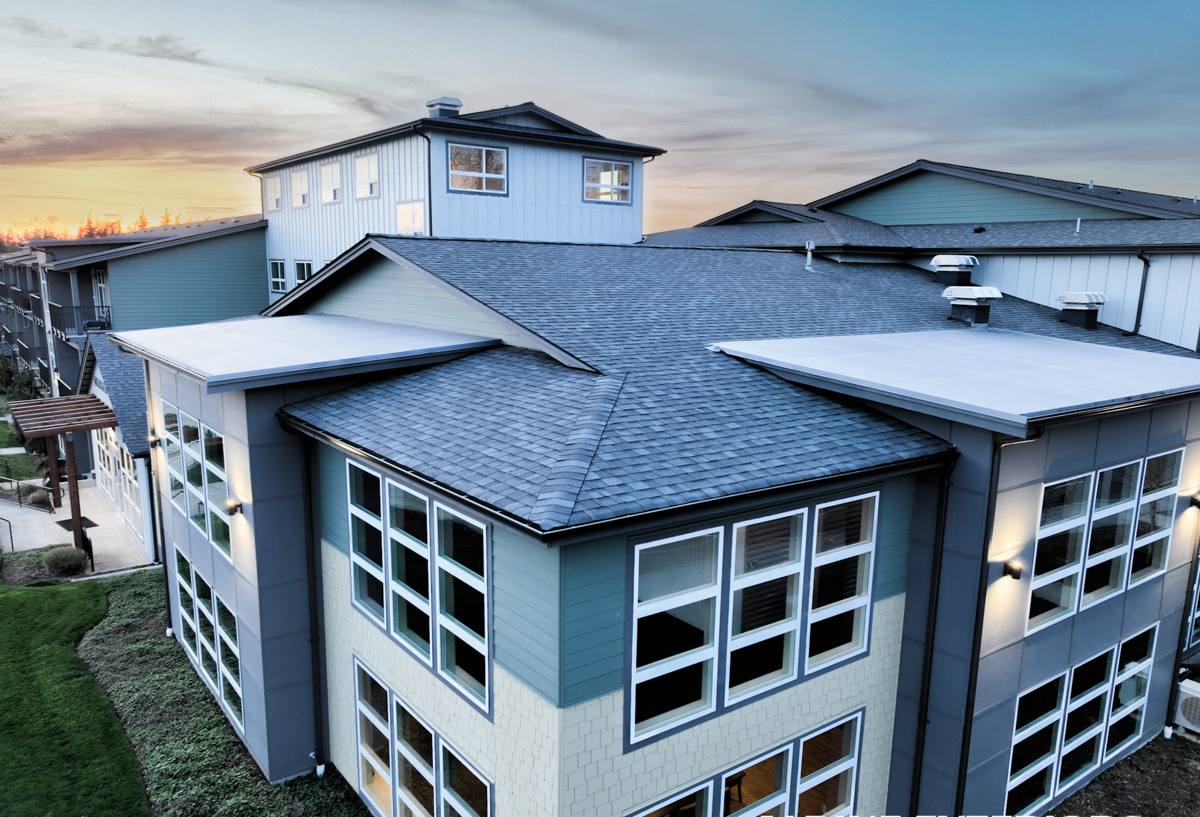
How the Local Climate Attacks a Roof
Salt Air and Metal Fatigue
Airborne salt is corrosive to exposed metal — flashing, fasteners, gutters, vents, and any metal roofing components. On an island, that salt exposure is more constant than it would be a few miles inland, since there's open water on more sides. Over years, salt accelerates rust and corrosion on lower-grade fasteners and untreated flashing, which is often where a "small leak" actually starts.
Driving Rain and Wind-Driven Water
Storms coming off open water don't just drop rain straight down — wind pushes it sideways, up under shingle edges, and into any gap in flashing or underlayment that wouldn't normally see water. This is why roofs here need tighter, more deliberate flashing and sealing details than roofs in more sheltered inland locations. A repair that only patches the visible surface without addressing wind-driven water paths tends to fail again in the next big blow.
Moss, Shade, and a Long Wet Season
Much of Guemes Island is wooded, and shaded roof sections stay damp longer after rain than roofs in open sun. That moisture, combined with a long moss season typical of the Pacific Northwest, lets moss and algae take hold on roof surfaces — especially on north-facing slopes and anywhere debris collects. Moss isn't just cosmetic. It holds moisture against the roofing material, lifts shingle edges as it grows, and can work its way under flashing over time.
Signs a Guemes Island Roof Needs Repair
Homeowners often notice a problem long after it started, because the damage happens slowly and out of sight. Watch for:
- Moss or dark streaking concentrated on shaded or north-facing roof slopes
- Granule buildup in gutters or downspouts, a sign shingles are wearing thin
- Rust staining below metal flashing, vents, or fasteners
- Soft spots, sagging, or discoloration on ceilings after a windy rainstorm
- Curling, cracked, or lifted shingle edges, particularly near valleys and eaves
- Daylight visible through the roof deck from inside an attic or crawlspace
- Gutters pulling away from the fascia or overflowing during heavy rain
Any one of these is worth a look. Several at once usually means water has already been getting in longer than the visible symptoms suggest.
What a Correct Repair Actually Involves
A repair that holds up on Guemes Island has to do more than patch the spot that's leaking. We look at the whole system around the damaged area, because water rarely stays where it entered.
Diagnosis Before Patching
We trace the water path, not just the stain. A leak that shows up on a ceiling can originate several feet away, following a rafter or the underside of the decking before it drips. Patching the visible spot without finding the actual entry point is a common reason repairs don't last.
Flashing and Fastener Condition
Given the salt exposure here, we check the condition of flashing, fasteners, and any exposed metal near the repair area — not just the shingles or roofing membrane. Corroded fasteners or failing flashing are often the real cause of a leak that looks like a shingle problem.
Underlayment and Deck Condition
If water has been getting in for a while, the underlayment or the roof deck itself may be compromised, not just the surface layer. A proper repair replaces any wet or deteriorated decking and underlayment rather than roofing over damage that will keep spreading underneath.
Moss and Debris Removal, Done Carefully
Where moss is part of the problem, we remove it using methods that don't damage the shingle surface — no aggressive pressure washing that strips granules and shortens the roof's remaining life. Debris in valleys and around penetrations gets cleared as part of the repair, since trapped debris is often what let moisture sit long enough to cause damage in the first place.
Common Problems We See on Guemes Island Roofs
| Problem | Typical Cause | What a Proper Fix Involves |
|---|---|---|
| Leak at a valley or flashing junction | Wind-driven rain forcing water past aging flashing seals | Remove and reflash with corrosion-resistant materials, reseal properly |
| Moss colonies on north-facing slopes | Prolonged shade and moisture retention | Careful removal, treat affected area, address surrounding drainage |
| Rust streaking near vents or fasteners | Salt air corroding lower-grade or exposed metal | Replace corroded components with metals suited to coastal exposure |
| Soft or sagging roof deck | Long-term moisture intrusion through an undetected leak | Cut out and replace affected decking, not just surface shingles |
| Clogged or sagging gutters | Debris from surrounding trees plus storm-driven runoff | Clear, resecure, and confirm proper pitch and downspout flow |
Repair or Replacement? Weighing the Real Factors
Not every damaged roof needs to be replaced, and not every repair is the right call either. We give homeowners a straight answer based on what we actually find, not a default push toward the bigger job.
| Factor | Leans Toward Repair | Leans Toward Replacement |
|---|---|---|
| Age of roof | Well within expected lifespan | At or past expected lifespan for the material |
| Extent of damage | Isolated to one area or system | Widespread across multiple slopes |
| Deck condition | Solid, dry decking found under damage | Multiple areas of soft or rotted decking |
| History of past repairs | First significant issue | Repeated patches in different spots over the years |
| Moss and algae extent | Limited to isolated patches | Widespread coverage affecting most of the roof surface |
Rough cost for a straightforward, isolated repair is typically a modest fraction of a full replacement, but the honest answer only comes from an on-roof inspection. We'll tell you plainly if a repair is a short-term fix that's likely to need replacement sooner rather than later — that's information you deserve before spending money either way.
Our Process for Guemes Island Jobs
Working on an island changes the logistics, and we plan for that rather than treating it as an afterthought.
- Inspection and honest assessment — we look at the roof in person, trace the actual cause of any leak, and explain what we find in plain terms.
- Written scope and pricing — you get a clear description of the repair, the materials involved, and the cost before any work starts.
- Ferry-aware scheduling — because access to Guemes Island runs on a limited ferry schedule, we plan crew time and material deliveries around it in advance, so a job doesn't stall waiting on a missed sailing or a supply run that has to wait for the next one.
- Materials staged ahead of time — we bring what the job needs in one trip whenever possible, rather than discovering a shortage mid-repair with no easy way to run back for it.
- The repair itself — done to the same standard as our mainland work, matched to the island's salt and moisture exposure.
- Cleanup and walkthrough — debris removed, work explained, and any maintenance recommendations passed along before we leave.
Ongoing Maintenance That Extends a Repair's Life
A good repair lasts longer with a little regular attention, especially given how long the moss season runs here. A few habits make a real difference:
- Keep overhanging branches trimmed back to reduce shade and debris on the roof
- Clear gutters and valleys at least twice a year, more often under heavy tree cover
- Have moss addressed early, before it spreads or lifts shingle edges
- Walk the attic or crawlspace after major storms and check for new staining
- Have flashing and fasteners checked periodically for early signs of corrosion
Why Local, Island-Familiar Experience Matters
A roofing crew that hasn't worked Guemes Island before is learning the island's logistics on your job — the ferry timing, the material planning, the specific way salt air and shade show up in the damage. That learning curve costs time and can cost you money if a trip gets wasted or a repair doesn't account for conditions a mainland-only crew isn't used to.
We already know how to plan a Guemes Island job properly: what to check first given the salt exposure, how moss behaves on shaded island roofs, and how to schedule around the ferry so the work gets done efficiently instead of dragging out. That familiarity is part of what you're paying for when you hire a crew that already works this area, alongside the rest of Anacortes and Skagit County.
If you're dealing with a leak, visible moss, or just want an honest read on your roof's condition, we're glad to take a look. Reach out for a free, no-pressure estimate using the form below — we'll give you a straight assessment and a clear plan, whether that's a targeted repair or simply peace of mind that your roof is holding up fine.