 Anacortes Exterior
 Why Guemes Island Decks Wear Out Faster Than You'd Expect
A deck on Guemes Island lives a harder life than the same deck would live twenty miles inland. The island sits right in the path of salt-laden air off Rosario Strait and the Salish Sea, and that salt finds its way into every exposed fastener, every cut end of lumber, and every joint where two boards meet. Add the driving rain that comes sideways off the water during fall and winter storms, and a long, damp moss season that can stretch from October well into spring, and you've got a structure that's under constant assault from three directions at once.
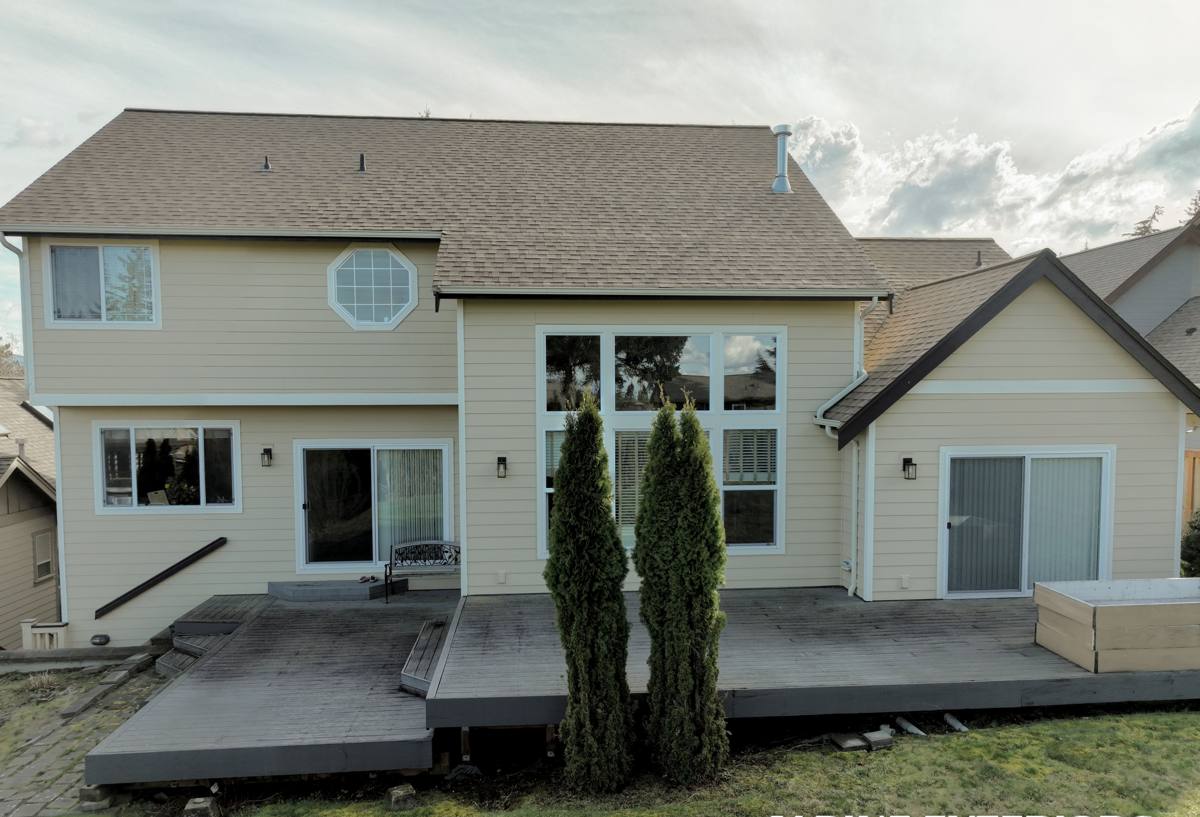
Most decks don't fail because the wood "wears out." They fail because water gets trapped somewhere it shouldn't — under a ledger board, inside a fastener hole, beneath a layer of moss that's been holding moisture against the decking for months. By the time you see soft spots or dark staining on the surface, there's a good chance the framing underneath has already been dealing with rot for a season or two. On Guemes Island, that timeline moves faster than it does in drier parts of Skagit County, which is why we treat decking here as its own category of work, not a smaller version of a mainland job.
Ferry-Access Realities: Why Local Logistics Matter
Guemes Island is reached by ferry, and that single fact changes how a deck replacement has to be planned. Material deliveries, dumpster drop-off and pickup, and crew scheduling all have to work around ferry sailings rather than around a normal drive-up job site. A contractor who hasn't worked the island before often underestimates this — they'll quote a timeline based on mainland logistics, then lose days to missed sailings, scheduling gaps, or a truck that shows up without the right load for the crossing.
We build ferry timing into the plan from the start: consolidating material deliveries, coordinating disposal hauls so they don't require extra round trips, and sequencing the job so the crew isn't stranded waiting on a boat mid-task. It's a small thing that makes a real difference in how smoothly — and how quickly — your project actually finishes.
Signs a Deck Needs Replacement, Not Just Repair
Not every tired-looking deck needs to come out. But on Guemes Island, where salt and moisture do their work quietly, it's worth knowing what actually signals structural trouble versus what's cosmetic.
- Soft, spongy, or springy decking when you walk across it, especially near the house or at board ends
- Rust streaking or a loose feel around fasteners and joist hangers
- Gaps or separation where the ledger board meets the house — a common point for hidden water intrusion
- Persistent moss or dark staining that comes back within weeks of cleaning
- Visible sagging between support posts or a railing that flexes more than it should
- Wood that probes soft with a screwdriver an inch or more into the surface
If the framing, posts, and footings are still sound, sometimes a resurface or targeted repair is the honest recommendation. We'll tell you that if it's true. But once rot has reached the ledger connection or the support structure, patching the surface just hides the problem for another season.
What a Correct Deck Replacement Actually Involves
Framing and Ledger Flashing
The ledger board — where the deck attaches to the house — is the single most common failure point on coastal decks. A correct replacement includes proper flashing behind and over the ledger, a water-resistant barrier between the ledger and the house sheathing, and fasteners rated for exterior and coastal exposure. This is the detail that gets skipped most often on budget jobs, and it's the one that causes the most expensive damage later — not just to the deck, but to the wall framing behind it.
Joist Protection
Every joist top should be protected with a self-adhering flashing tape before decking goes down. It's a small material cost that prevents water from soaking into end grain and cut edges, which is where rot almost always starts first.
Footings and Posts
We check footing depth and condition against current code, not just what was there before. On older island properties, footings were sometimes undersized or set shallow, and post bases resting directly on concrete without a standoff base are a common source of early rot in wet climates like ours.
Fasteners and Hardware
Standard galvanized hardware corrodes faster near salt air. We use fasteners and connectors rated for coastal or high-corrosion environments throughout — not just on the visible surface, but in the structural hardware you won't see once the decking is down.
Decking Material Options for Salt Air and Moss
There's no single "best" decking material for every home — it depends on your budget, how much upkeep you want to take on, and how the deck is used. Here's how the common options actually perform in this climate.
| Material | How It Handles Salt Air & Moisture | Moss & Cleaning | Upfront Cost |
|---|---|---|---|
| Pressure-treated wood | Holds up if sealed and re-stained regularly; end grain and fasteners are the weak points | Needs periodic cleaning and re-sealing to resist moss buildup | Lowest |
| Cedar | Naturally rot-resistant but still needs finish maintenance in a wet climate | Moss takes hold if left unsealed; requires ongoing care | Moderate |
| Composite decking | Doesn't absorb moisture like wood; performs well in salt air with proper fastening | Surface texture matters — some composites hold moss more than others | Higher |
| PVC/capped composite | Fully sealed surface, best resistance to moisture and salt exposure | Easiest to keep clean, least hospitable to moss | Highest |
We'll walk you through the real trade-offs for your situation rather than pushing whichever product has the best margin. If a lower-maintenance material fits your budget and how you use the deck, we'll say so. If wood is the right call for your home's look and budget, we'll build it in a way that gives it the best chance against the local climate.
Our Guemes Island Deck Replacement Process
- On-site assessment — we inspect the existing deck, ledger connection, framing, and footings to determine what's actually driving the failure
- Honest scope and material recommendation — repair versus full replacement, and which decking material fits your budget and maintenance tolerance
- Ferry-aware scheduling — material orders and disposal hauls timed to minimize delays and trips
- Demo and structural rebuild — removing the old deck down to sound framing, correcting any undersized or rotted structural elements
- Flashing, hardware, and decking installation — done to coastal-exposure standards, not the minimum code allows
- Final walkthrough — reviewing the finished deck, railing, and stairs with you before we call the job complete
What Drives the Cost
Every deck is different, but these are the factors that move the price up or down the most:
| Factor | Why It Matters |
|---|---|
| Deck size and height | More square footage and taller structures require more framing, footings, and railing |
| Decking material choice | Pressure-treated wood, cedar, composite, and PVC span a wide cost range per square foot |
| Ledger and structural condition | Rot reaching the house framing or footings adds repair scope beyond the deck itself |
| Access and logistics | Ferry scheduling, site access, and material staging affect labor time on island jobs |
| Railing and stair complexity | Custom railing styles, multiple stair sets, or grade changes add material and labor |
We provide a written estimate that breaks out these factors so you know exactly what you're paying for, not just a bottom-line number.
Protecting Your Investment After Installation
A well-built deck still needs seasonal attention in this climate. A little upkeep goes a long way toward avoiding another full replacement in ten years instead of twenty-five.
- Sweep debris and standing leaves off the deck surface regularly through fall
- Rinse or scrub moss buildup before it has a chance to hold moisture against the boards
- Check and re-seal wood decking on the manufacturer's recommended schedule
- Inspect the ledger flashing and railing connections once a year for movement or gaps
- Keep gutters and downspouts clear so runoff isn't draining directly onto or under the deck
Why It Matters to Hire a Crew That Already Works Guemes Island
A deck replacement here isn't just a building project — it's a logistics project wrapped around a building project. A crew that hasn't worked the island before will learn these lessons on your timeline and your dime: missed ferry sailings, underestimated material staging, hardware that wasn't specified for coastal exposure. We've built and replaced decks throughout Anacortes and the surrounding Skagit County islands, and we plan every Guemes Island job around the realities of getting people, materials, and equipment on and off the island efficiently — so the work goes smoothly and the deck we leave behind is built for the climate it actually has to survive.
If your deck is showing signs of wear, or you just want an honest read on whether it needs repair or replacement, we're happy to take a look. Estimates are free, there's no pressure, and you'll get a clear breakdown of what we find and what it would take to fix it right — just fill out the form below to get started.