 Anacortes Exterior
 Guemes Island Puts Windows Through a Lot
Guemes Island sits out in open marine air, reached by a short ferry crossing from Anacortes, and that exposure shapes almost every decision that goes into a good window installation out here. Homes on the island catch salt-laden wind off the water more often than homes tucked into town, and that salt air is hard on metal hardware, fasteners, and any finish that isn't built to shed it. Add Skagit County's long wet season, driving rain that comes in sideways during winter storms, and the moss and algae growth that thrives in our shade and moisture, and you have a climate that finds every weak point in a window installation within a few years, not a few decades.
None of this means island homes need exotic products. It means the basics — flashing, sealant selection, and frame material — have to be done right the first time, because a callback to the island costs more time than a callback in town, and a leak that goes unnoticed over a slow winter can do real damage to framing and sheathing before anyone spots it.
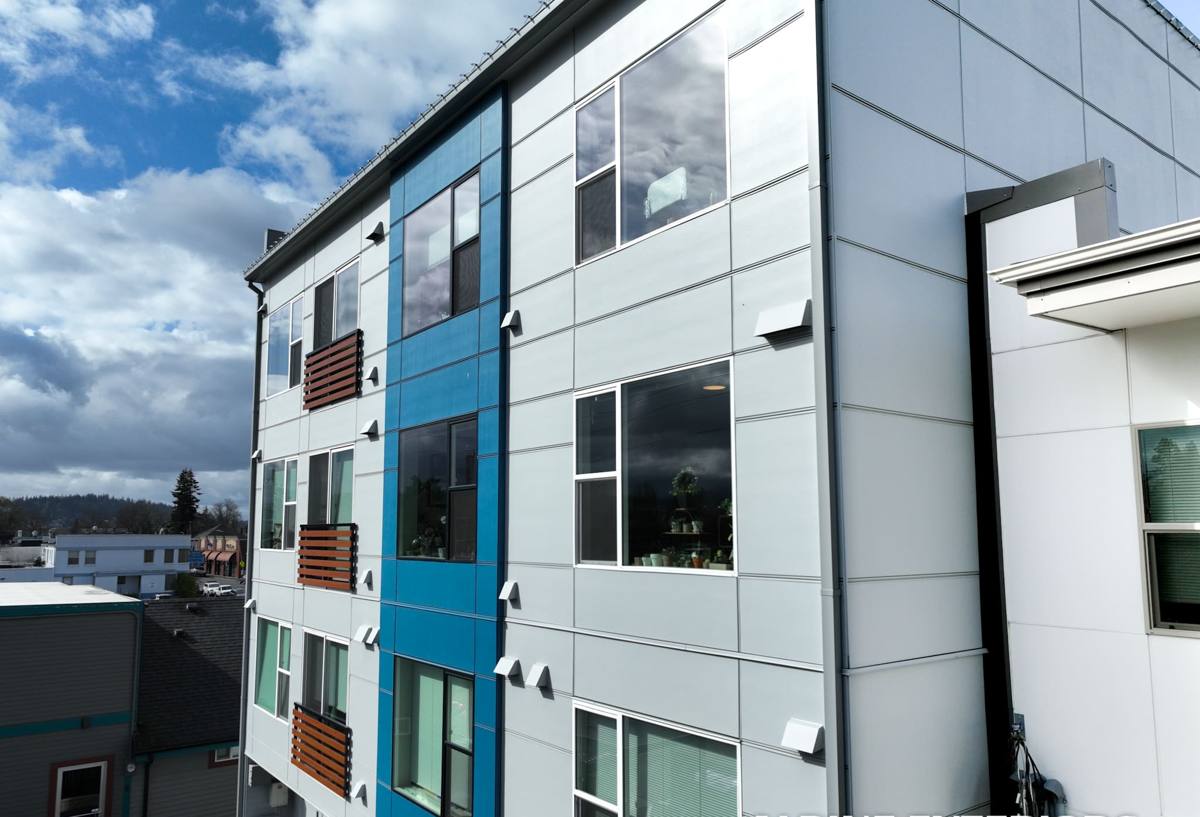
What a Correct Installation Actually Involves
Window installation is mostly a water-management problem with glass in the middle of it. A window can be expensive and still fail if the details around it are wrong. The parts that matter most, especially in a wind-driven-rain climate like ours:
- Flashing sequence — sill pan flashing, jamb flashing, and head flashing integrated with the house wrap in the correct shingle-lap order so water is directed out, never trapped behind the siding.
- Sealant, not just caulk — the right sealant at the right joints, not a bead of caulk smeared over gaps as a substitute for proper flashing.
- Square, level, and properly shimmed — a window that's out of square binds, leaks at the corners, and wears out its weatherstripping early.
- Correct reveal and fastening — following the manufacturer's fastening schedule, not generic guesswork, so the warranty stays intact and the frame performs as designed.
- Interior air sealing — low-expansion foam or backer rod and sealant on the interior side, which does as much for comfort and condensation control as anything on the exterior.
Skip any one of these steps and the window may look fine for a season or two before problems show up as soft trim, peeling interior paint, or a musty smell that traces back to moisture inside the wall.
Choosing Frame Materials for Island Exposure
There's no single "best" window material for every home, but exposure to salt air and constant moisture should weigh heavily in the decision on Guemes Island. Here's how the common options generally compare in this climate:
| Frame Material | Salt Air / Moisture Behavior | Maintenance | General Cost Position |
|---|---|---|---|
| Vinyl | Doesn't rust or corrode; performs well in salt air with no coating to fail | Low — occasional cleaning | Lower to mid-range |
| Fiberglass | Very stable in wet, salty conditions; resists warping and doesn't corrode | Low | Mid to upper-mid |
| Aluminum-clad wood | Attractive exterior finish, but relies on the cladding and seals staying intact; any breach exposes wood to moisture | Higher — needs monitoring of seals and finish over time | Higher |
| Bare wood | Handsome but the most moisture-sensitive option; needs diligent upkeep in a wet marine climate | Highest | Varies widely |
We lean toward vinyl and fiberglass for most Guemes Island projects because they hold up to salt air and repeated wetting without relying on a coating or cladding to keep moisture out. Where a homeowner wants a wood-look interior or exterior, aluminum-clad options can work, but we're upfront that they carry a higher maintenance burden in this environment — that's a trade-off, not a knock on the product, and it's one we'd rather explain honestly up front than have a customer discover later.
Glass Packages Worth Considering Here
A low-E coating and argon- or krypton-filled double glazing are standard on most quality windows now, and they earn their keep on Guemes Island by cutting heat loss and reducing interior condensation on cold, damp mornings — condensation on interior glass is common in our climate and usually points to humidity and ventilation inside the home more than a bad window, but a good glass package minimizes it. Impact-resistant or laminated glass is worth a conversation for homes with more direct wind and debris exposure, though it isn't a must for every location on the island.
Common Issues We Find on Island Homes
When we're called out to look at failing windows on Guemes Island, a handful of patterns show up again and again:
- Corroded hinges, latches, or balance hardware on older aluminum or steel-framed windows exposed to salt air.
- Rot in wood sills and jambs where an old caulk-only installation let water track behind the trim for years.
- Failed insulated glass units (visible fogging between panes) from age and seal breakdown, accelerated by constant damp conditions.
- Moss and algae staining on north- and west-facing walls that traps moisture against trim and siding around the window opening.
Most of these trace back to water intrusion that started small and went unnoticed. That's the core argument for doing the flashing and sealant details correctly the first time, rather than treating them as optional extras.
Our Process for a Guemes Island Project
Working on the island means planning around the ferry schedule and being deliberate about what gets loaded on each crossing. We treat that as part of the job, not an inconvenience passed on to the homeowner:
- On-site assessment — we look at existing window condition, framing, siding interface, and exposure direction (which walls take the most wind-driven rain) before quoting anything.
- Material staging — windows, flashing, and sealants are ordered and staged in Anacortes ahead of time so the crew and materials cross together, minimizing extra trips.
- Removal and inspection — old units come out carefully so we can check the framing and sheathing underneath for hidden rot or past water damage before anything new goes in.
- Installation to manufacturer spec — correct flashing sequence, fastening schedule, and sealant, matched to the exposure of that particular wall.
- Interior and exterior finish work — trim, interior sealing, and exterior caulking finished to match the home.
- Final walkthrough — every window operated and checked before we call the job done.
Because ferry logistics make a mid-project scramble for a forgotten part or tool expensive in time, we plan Guemes Island jobs with more buffer for materials and less reliance on "we'll grab it tomorrow." That planning is part of what a crew already familiar with the island brings to the table.
Timing Considerations for the Island
Window installation can happen in most seasons here, but a few things are worth knowing before scheduling:
- Drier stretches in late spring through early fall give the most predictable install conditions and the least risk of weather delays mid-project.
- Winter installations are done regularly, but wind and rain can push start dates around, so we build flexibility into scheduling rather than fighting a storm.
- Multi-window or whole-house projects on the island benefit from being scheduled as one mobilization rather than split into several separate trips, which keeps costs down and reduces the number of ferry crossings needed.
Keeping Windows Performing After Installation
A correct installation is most of the battle, but a little homeowner upkeep extends the life of any window on Guemes Island. A simple annual checklist:
- Rinse salt residue off exterior frames and glass a couple of times a year, especially on walls facing open water.
- Check exterior caulk lines each fall for cracking or separation before the wet season sets in.
- Clean weep holes on vinyl and fiberglass frames so water can drain rather than pool.
- Keep moss and organic debris cleared from sills, trim, and nearby siding.
- Operate hardware (locks, latches, cranks) periodically so salt air doesn't seize moving parts unnoticed.
- Watch for soft trim, peeling interior paint near the frame, or musty smells — early signs of a hidden leak.
Why Local, Island-Familiar Experience Matters
Any licensed contractor can install a window. Fewer have worked enough Guemes Island jobs to plan around ferry timing, know how exposure changes wall by wall depending on which direction a home faces the water, and recognize the early signs of salt-air wear versus ordinary age. That familiarity shows up in fewer surprises, more accurate quotes, and a project timeline that accounts for the island's real logistics instead of assuming it's just another job in Anacortes proper.
If you're weighing a window replacement or new installation on Guemes Island, we're happy to take a look and talk through what your home's exposure actually calls for. Reach out for a free, no-pressure estimate using the form below.