 Anacortes Exterior
 Why Cap Sante Siding Wears Differently Than Siding Inland
Cap Sante sits close to the water, on a rise above the harbor, and that position comes with a specific set of siding problems. Homes here get near-constant airborne salt from the marine air moving off the harbor and Guemes Channel, driving rain that comes in sideways during winter storms, and long stretches of shade and dampness that keep moss and algae established on north-facing walls almost year-round. None of that is unique to one house — it's the shared reality of living this close to Anacortes's working waterfront.
Salt residue is corrosive to fasteners and abrasive to finishes over time. Wind-driven rain finds every gap in flashing, trim, and butt joints that a calmer inland home would never test. And moss holds moisture against the wall assembly long after a rainstorm has passed, which is exactly the condition that rots wood-based siding and lets water travel behind panels that look fine from the ground. Repairing siding correctly in this neighborhood means understanding all three of those forces, not just patching the spot that's visibly damaged.
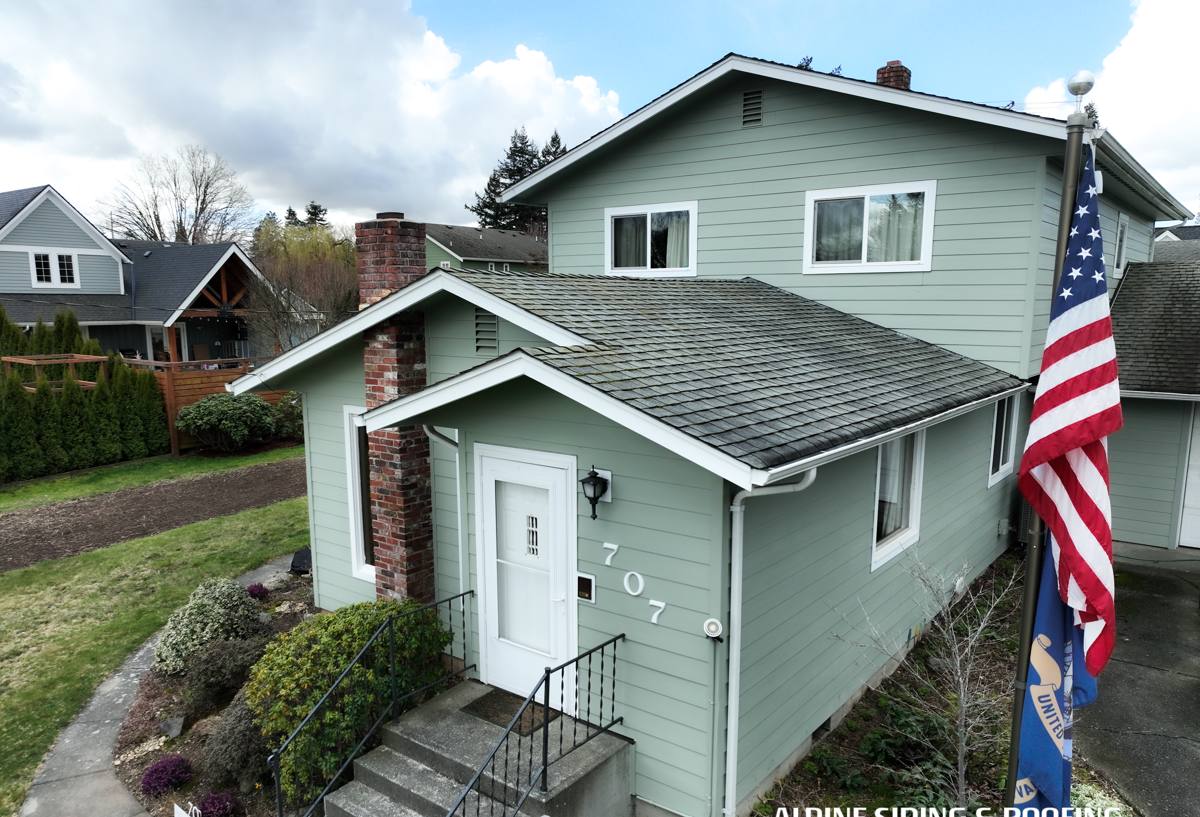
Common Signs a Cap Sante Home Needs Siding Repair
Most repair calls we get in this area start with one of the following. None of these are emergencies on their own, but each one gets worse the longer it sits exposed to salt air and rain.
- Soft or spongy spots when you press on a wall, usually near the bottom courses or under windows
- Paint or finish that's bubbling, peeling, or chalking faster on one side of the house than the others
- Persistent moss or black streaking on shaded walls that keeps coming back within a season of cleaning
- Visible gaps, cracks, or separation at butt joints, corners, and trim boards
- Staining or discoloration below window sills and at roof-to-wall transitions
- A musty smell or visible moisture inside on an exterior wall
- Fasteners that have rusted through and left streaks down the siding face
The last two are the ones that matter most. Cosmetic wear can usually wait for a scheduled repair. Anything pointing to moisture behind the siding needs attention sooner, because the sheathing and framing underneath don't get the benefit of the doubt.
What a Correct Repair Actually Involves
Start with what's underneath, not just what's visible
A repair that only replaces the damaged board and stops there is a cosmetic fix, not a real one. If water got behind the siding, we check the housewrap or building paper, the flashing at windows and penetrations, and the sheathing itself for soft spots or delamination. On a Cap Sante home with any history of moss buildup or wind-driven rain exposure, this step isn't optional — it's the difference between a repair that lasts and one that fails again in the same spot within a year or two.
Match the existing material honestly
If the home is already sided in fiber cement, matching is usually straightforward, since James Hardie's factory-finished ColorPlus products hold their color consistency well and touch-up product is designed for exactly this kind of spot repair. If the home has wood, vinyl, or another fiber cement brand, we're honest about what will and won't blend — sun-faded panels next to a new one will show a difference for a while, and we'll tell you that up front rather than promise an invisible patch.
Reseal and re-flash properly
Repairs fail most often at the details — the flashing above a window, the kickout at a roofline, the caulking at a trim joint. We rebuild those details to shed water the way they're supposed to, rather than just caulking over the old failure point.
Repair or Replace: How We Decide
Not every damaged section needs a full re-side, and not every "small" repair should stay small. Here's how we generally weigh it on Cap Sante homes:
| Situation | Usually a repair | Usually points to replacement |
|---|---|---|
| Damage extent | Isolated to one or two wall sections | Recurring problems across multiple elevations |
| Sheathing condition | Solid, dry framing underneath | Soft, rotted, or repeatedly wet sheathing |
| Material age | Newer siding with an isolated install flaw | Siding near or past its expected service life |
| Moss/algae history | First occurrence, cleared with maintenance | Chronic moss holding moisture against the wall for years |
| Match quality | Same product line still available | Discontinued product, poor color/profile match |
We'll always tell you honestly which side of that table your home falls on. A repair that's likely to fail again within a couple of years isn't a favor to you — it's a bill you'll pay twice.
Our Process for a Cap Sante Repair Call
- On-site inspection of the damaged area and a check of the surrounding wall for related issues
- Moisture check where there's any sign the problem goes beyond the surface
- A clear, written explanation of what's causing the damage — not just what it looks like
- An honest repair-vs-replace recommendation, with the reasoning behind it
- Repair work that addresses the water path, not just the visible board
- A walk-through when we're done, so you know what was fixed and what to watch going forward
We don't upsell a full re-side to a homeowner who genuinely just needs a section repaired. We also don't patch over a problem we know is going to come back. The goal is a straight answer, either way.
Why We Repair With (and Recommend) James Hardie Fiber Cement
We install James Hardie fiber cement exclusively, and that shapes how we handle repairs too. When a repair section needs new material — whether the rest of the house is already Hardie or we're discussing a partial re-side — we use Hardie product because it holds up to exactly the conditions Cap Sante deals with: it's non-combustible, it doesn't absorb and swell with moisture the way wood-based sidings can, and its factory-applied ColorPlus finish resists the fading and chalking that salt air accelerates on field-painted surfaces.
Hardie's HZ5 product line is engineered for climates with significant moisture exposure, which describes this stretch of Skagit County well. If a repair call turns into a conversation about a full re-side — because the existing material is failing broadly rather than in one spot — Hardie is what we recommend and what we'll quote, backed by a strong transferable warranty when installed to manufacturer specification.
What we won't do
We don't install vinyl, LP SmartSide, Cemplank, Allura, or primed wood siding, including as a spot-repair material on top of an existing installation of one of those products. If your home is sided in one of those materials, we'll still repair it honestly using compatible material where reasonable, and we'll tell you straight if a section has reached the point where matching material no longer makes sense.
Keeping Moss and Salt Residue From Undoing the Repair
A good repair can be shortened by the same conditions that caused the original damage. A little routine attention keeps salt air and moss from becoming next year's repair call.
- Rinse siding down periodically, especially shaded and north-facing walls, to clear salt residue and slow moss growth
- Keep gutters and downspouts clear so runoff isn't sheeting down the siding face during heavy rain
- Trim back vegetation that shades walls and keeps them damp longer after storms
- Check caulking at trim, windows, and butt joints once a year for cracking or separation
- Address small paint or finish failures before they expose bare material to moisture
- Have a professional take a look at recurring moss patches rather than just pressure-washing them away repeatedly
Why It Matters to Hire a Crew That Already Works Cap Sante
Siding repair done by someone unfamiliar with this stretch of Anacortes often treats it like any other job — patch the visible damage, caulk the gap, move on. A crew that regularly works Cap Sante knows to check for salt-driven fastener corrosion even when the siding face looks fine, to expect moss holding moisture on shaded elevations, and to flash repairs for wind-driven rain rather than just standard rainfall. That local pattern recognition is often what separates a repair that lasts from one that reopens after the next winter storm off the water.
It also means a straighter conversation. We're not guessing at what Skagit County's marine exposure does to a wall assembly — we've seen it on homes near yours, and we can tell you honestly whether a repair will hold or whether it's time to talk about something bigger.
If you've got a section of siding that's showing damage, staining, or recurring moss, we're happy to take a look. Reach out for a free, no-pressure estimate — there's a form below to get started.