 Anacortes Exterior
 Guemes Island's Climate Asks More of a Roof
Guemes Island sits out in the Salish Sea just across the channel from Anacortes, and that location matters more than most homeowners realize until they've lived under a roof there for a few winters. You're getting the same driving rain and long gray moss season that the rest of Skagit County deals with, but with more direct exposure to wind off the water and more salt air moving across the property year-round. Roofing material that holds up fine a few miles inland on the mainland can wear differently out here, especially anything with exposed steel fasteners or a lot of small joints for water and salt to work into.
None of this is exotic weather. It's the same marine environment that shapes every exterior decision in this part of Washington. But an island setting concentrates it — more wind-driven rain hitting the roof at an angle, more salt-laden air settling on metal and fastener heads, and a moss and lichen season that runs longer than most of the country ever deals with because the roof rarely gets a real dry stretch to interrupt growth.
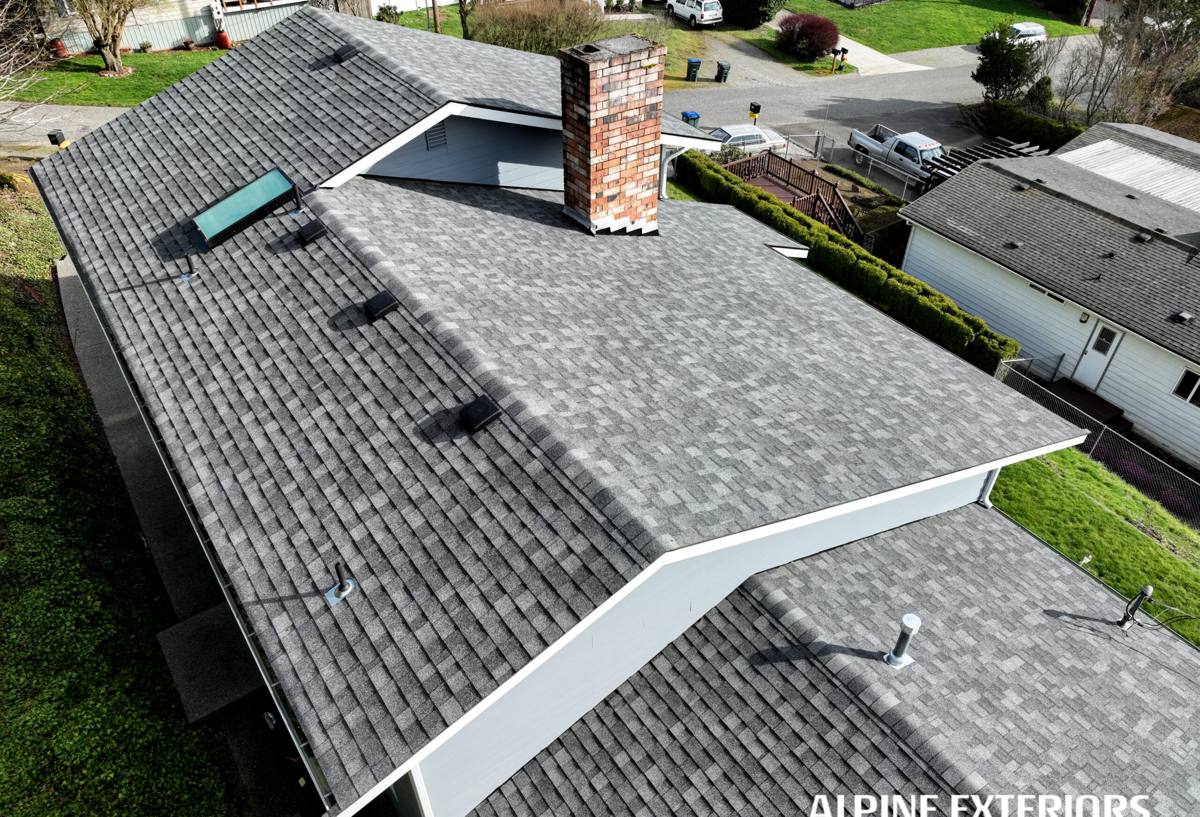
Why Metal Roofing Fits Guemes Island Homes
Metal roofing earns its reputation in this climate for a few specific reasons, not just because it looks good or lasts a long time in general terms.
- Sheds water fast. A properly installed metal roof gives driving rain almost nothing to catch on, which matters when wind is pushing water sideways instead of straight down.
- Resists moss the way shake or aging asphalt can't. Moss still needs somewhere to root and organic debris to feed on. A clean, smooth metal surface with good panel spacing and no trapped moisture gives it far less to work with.
- Handles wind uplift well when the panel system, clips, and fastening pattern are matched to the exposure the roof actually sees — which on an island can be higher than a sheltered mainland lot.
- Doesn't absorb water into the roofing material itself, unlike wood shakes or aging composition shingles, which matters when salt air keeps everything slightly damp for long stretches.
Metal isn't automatically the right call for every house or every budget, and we'll say so plainly during an estimate if a different system makes more sense for a given roof. But for the wind and salt exposure common on Guemes Island, it's usually the material that asks the least of a homeowner over the next few decades.
What a Correct Metal Roofing Job Actually Involves
The panels get the attention, but the parts you don't see are what determine whether a metal roof performs for twenty years or starts causing problems in five.
Underlayment and Moisture Barrier
Metal roofs need a high-temperature synthetic or self-adhered underlayment underneath, not the felt paper that might get used under asphalt shingles elsewhere. In a marine climate with persistent moisture, this layer is the backup plan if wind ever drives water past a seam, and it's not a place to cut corners.
Fastening System
Standing seam panels use concealed clips, not exposed screws through the panel face. Exposed-fastener panel systems, where they're used, need the correct screw type, spacing, and torque — over-driven or under-driven screws are one of the most common causes of leaks in exposed-fastener metal roofs, and salt air accelerates corrosion on any fastener that isn't rated for it.
Flashing at Every Transition
Valleys, ridges, chimneys, skylights, and wall intersections are where the vast majority of roof leaks actually start, on metal or any other material. Flashing has to be formed and layered correctly, not just caulked and hoped for.
Ventilation
A metal roof over a poorly ventilated attic can trap moisture underneath, which defeats a lot of the material's advantage. Ridge and soffit ventilation sized to the attic volume keeps condensation from becoming a hidden problem.
Fastener and Trim Material Matched to the Panel
Mixing incompatible metals (for example, the wrong fastener alloy against a given panel coating) can cause galvanic corrosion over time. In a salt-air environment this shows up faster than it would inland, so matching hardware to the panel system isn't optional.
Comparing Metal Roofing Systems for Island Exposure
| System | Best For | Trade-offs on Guemes Island |
|---|---|---|
| Standing seam (concealed fastener) | Full wind and water protection, longest service life | Higher upfront cost, but least maintenance in high-exposure, salt-air conditions |
| Exposed-fastener panel | Budget-conscious projects, outbuildings, shops | Fasteners need periodic inspection and eventual re-torquing or replacement; more vulnerable to salt corrosion over time |
| Metal shingles/shakes | Homeowners wanting a traditional look with metal performance | More seams and fasteners than standing seam; installation quality matters even more |
The Logistics of Roofing an Island Home
Working on Guemes Island isn't the same as pulling up to a mainland Anacortes job. Materials, crew, and equipment all have to cross by ferry, which means the schedule has to be planned around sailing times rather than just weather windows. A crew that hasn't worked the island before can easily underestimate how much this affects a project timeline — showing up without every panel, fastener, and flashing piece already accounted for means a wasted trip and a delayed job, not a quick run to the supply house.
It also changes how we approach material staging and weather calls. Once a roof is opened up, we want everything needed to close it back in dry and buttoned up already on site, because we're not turning around mid-storm for a forgotten box of screws. A crew that regularly works Guemes Island builds this into the plan from the estimate stage, not as an afterthought once the ferry line is already backed up.
Our Process, Start to Finish
- On-site assessment. We look at the existing roof deck, ventilation, flashing points, and overall exposure to wind and salt air before recommending a system.
- Honest scope and estimate. You get a clear breakdown of what the job involves and why, including whether a full tear-off or a re-cover makes sense for your specific roof.
- Material staging. Panels, underlayment, flashing, and fasteners are ordered and confirmed complete before the crew and materials cross to the island, so the job isn't stopped mid-way waiting on a missing piece.
- Tear-off and deck inspection. Once the old roofing is off, we check the decking for any rot or soft spots — common wherever moisture has been sitting under aging material — and address them before anything new goes down.
- Underlayment, flashing, and panel installation. Done in the sequence that keeps the roof weathertight at every stage, not just at the end.
- Final walkthrough. We go over the completed roof with you, including what maintenance to expect and what's covered under warranty.
Maintenance in a Salt-Air, High-Moss Environment
A well-installed metal roof needs far less upkeep than shake or aging asphalt, but "less" isn't "none," especially this close to the water.
- Keep gutters and valleys clear of needles and debris — trapped organic material holds moisture against the panel even on metal.
- Have fastener heads and flashing checked periodically on exposed-fastener systems; salt air is harder on hardware than on the panel itself.
- Watch for moss or algae starting in shaded, north-facing sections or areas that stay damp longest — it's rarer on metal than other materials but not impossible where debris accumulates.
- After any major windstorm, a quick visual check for lifted trim or displaced flashing is worth the five minutes.
What Drives the Cost
| Factor | Why It Matters |
|---|---|
| Roof size and complexity | More valleys, dormers, and penetrations mean more flashing labor, not just more square footage |
| Panel system chosen | Standing seam costs more upfront than exposed-fastener panels but needs less long-term attention |
| Existing roof condition | Deck repairs found after tear-off add cost but prevent problems getting sealed in under new roofing |
| Island logistics | Ferry scheduling and material staging are built into project planning, not billed as a surprise add-on |
We won't quote a number without seeing the roof, but we'll always explain what's driving the price so you're not guessing at where the money goes.
Why a Crew That Already Works Guemes Island Matters
Anyone can technically bid an island job. The difference shows up in whether the schedule holds, whether the material list is complete on day one, and whether the crew has already worked through what this specific exposure does to fasteners, flashing, and coatings over time. We work throughout Anacortes and the surrounding Skagit County islands regularly enough that Guemes Island logistics aren't a special case for us — they're just part of how we plan the job from the first estimate.
If you're weighing a metal roof for a Guemes Island home, we're glad to come take a look, walk the roof, and give you a straight answer about what it needs. Reach out for a free, no-pressure estimate using the form below.