 Anacortes Exterior
 Siding Repair Built for Guemes Island's Conditions
Guemes Island sits just a short ferry ride from Anacortes, but the exterior of a home out there earns its keep differently than a house a few miles inland. Homes on the island face steady exposure to salt-laden air off the water, wind-driven rain that finds every weak seam, and long stretches of shade and moisture that keep siding damp far longer than homes in drier parts of Skagit County. Siding repair here isn't just about patching a bad board — it's about understanding why that board failed in the first place and making sure the fix doesn't fail the same way again.
We've done repair work on both the island and the mainland side of Anacortes, and the difference in what we find is real. A crew that only occasionally makes it out to Guemes can miss the patterns that show up again and again in this specific environment. A crew that regularly works the island knows where to look first.
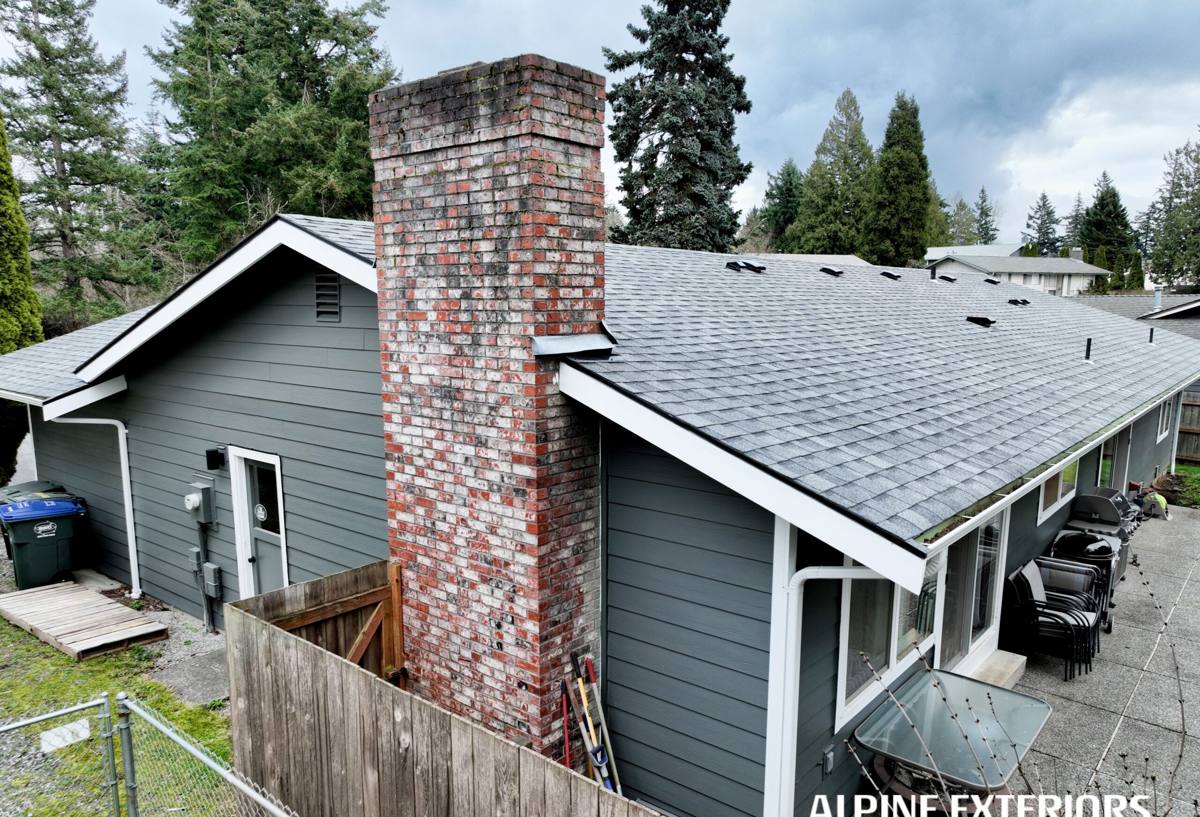
How Salt Air, Rain, and Moss Affect Island Siding
Three environmental factors drive most of the siding repair calls we get from Guemes Island homeowners:
Salt Air
Airborne salt accelerates the breakdown of paint films, caulk, and any exposed fasteners. On wood-based and composite sidings, this shows up as chalking, premature paint failure, and corrosion at nail heads and metal trim — often years before it would happen on a comparable inland home.
Driving Rain
Wind off the water doesn't just fall — it drives rain sideways into laps, butt joints, and trim intersections. Any siding installed with tight or poorly sealed joints will eventually take on moisture at those points, even if the field of the wall looks fine.
Moss and Prolonged Dampness
Tree cover and shaded, north-facing walls on many island lots mean siding stays wet longer after rain. That extended dampness is exactly what moss, algae, and mildew need to take hold, and on porous or wood-based products it can trap moisture against the surface long enough to start rot underneath.
Common Repair Needs We See on Guemes Island
- Paint and finish failure at butt joints and board edges, well ahead of the rest of the wall
- Cracked or failed caulk at trim, window returns, and siding seams
- Soft or crumbling sections where wood-based siding has taken on sustained moisture
- Moss and algae buildup on shaded walls, sometimes masking damage underneath
- Nail pops and buckling from repeated wet-dry cycling
- Corroded or streaking fasteners and metal flashing
- Hidden rot at the bottom edge of walls, around penetrations, or behind poorly flashed trim
What a Correct Siding Repair Actually Involves
A quick cosmetic patch can make a wall look better for a season and still leave the underlying problem in place. On a climate-exposed site like Guemes Island, that's a real risk — moisture problems that aren't fully addressed tend to come back larger and more expensive.
Our repair process is built around finding the actual source of the damage, not just covering it:
- Assess beyond the visible damage. We check moisture levels in and around the affected area, not just at the spot that looks bad, since water travels along studs and sheathing before it shows on the surface.
- Open it up if there's any doubt. If moisture readings or the look of the damage suggest trouble behind the siding, we pull the affected section rather than patch over uncertainty.
- Check sheathing and framing. Rot doesn't stop at the siding. We look at the wall assembly behind it before closing anything back up.
- Correct the water management, not just the surface. That means proper flashing, correctly lapped housewrap, and sealed penetrations — the details that actually keep water out going forward.
- Match the repair to the existing siding correctly. Profile, reveal, and finish need to line up so the repair doesn't stand out or create a new weak point.
Repair vs. Replace: How We Help You Decide
Not every damaged section needs a full re-side, but repeated repairs in the same area are often a sign that the whole wall's siding and water management have reached the end of their useful life. This table outlines the general factors we weigh:
| Factor | Favors Repair | Favors Replacement |
|---|---|---|
| Extent of damage | Isolated to one or two boards/areas | Spread across multiple walls or elevations |
| Underlying material condition | Sheathing and framing test dry and sound | Rot or sustained moisture found behind siding |
| Age of existing siding | Mid-life, otherwise performing well | Near or past its expected service life |
| Repeat failures | First occurrence in that spot | Same area has been patched before |
| Moss/moisture pattern | Localized to a specific detail (trim, joint) | Widespread across shaded or exposed walls |
We'll always give you a straight answer on which category your project falls into — including when a full re-side is genuinely the more cost-effective path over the next several repair cycles.
Why We Repair and Rebuild With James Hardie Fiber Cement
When a repair calls for replacing a section of siding — or when the assessment points toward a broader re-side — we install James Hardie fiber cement, and only James Hardie. It's a deliberate standard, not a default. Fiber cement is non-combustible and dimensionally stable, so it doesn't absorb and release moisture the way wood-based products do, which matters directly on a site dealing with salt air and driving rain.
Hardie's HZ5 product line is engineered specifically for climates with heavy moisture exposure, which describes Guemes Island and the broader Anacortes area well. The factory-applied ColorPlus finish is baked on under controlled conditions and holds up to UV and salt exposure far better than field-applied paint on repair patches, which helps a repaired section keep matching the rest of the wall over time instead of fading or chalking out ahead of it.
We don't install LP SmartSide, vinyl, Cemplank, Allura, primed spruce, or cedar. Each of those products has legitimate uses, but they each carry maintenance burdens, moisture sensitivities, or installation tolerances that we've decided aren't the right trade-off for the homes we work on in this climate. When we repair or replace siding, we want the material going back on the wall to outperform what came off it — not just match it.
The Ferry Factor: Why Local Logistics Matter
Getting a crew, tools, and the right materials onto Guemes Island isn't the same as pulling up to a house in town. Trips are built around the ferry schedule, and a contractor who doesn't plan for that can turn a one-day repair into a multi-day headache — or worse, show up without a needed part and lose the rest of the day getting back to the mainland for it.
Because we already work Guemes Island regularly, we plan repair visits to batch everything a job needs into as few crossings as possible: materials staged in advance, tools checked twice, and a clear plan for the scope of work before the crew ever gets on the boat. That planning keeps island projects on schedule and keeps costs reasonable, since ferry delays and repeat trips are exactly the kind of inefficiency that otherwise gets passed on to the homeowner.
Our Siding Repair Process for Guemes Island Homes
- Initial assessment: We look at the full elevation, not just the reported problem spot, and take moisture readings where needed.
- Written scope and estimate: You get a clear explanation of what we found, what needs to happen, and why — repair or replace.
- Trip planning: Materials and tools are staged ahead of time so the crossing is used efficiently.
- The repair itself: Correct flashing and water management first, then siding installed to match existing lines and finish.
- Walkthrough: We review the completed work with you before we consider the job done.
Keeping Island Siding in Good Shape Between Repairs
A few habits go a long way toward reducing how often repair work is needed on an island property:
- Rinse salt residue and moss/algae buildup off siding periodically, especially on shaded walls
- Keep gutters and downspouts clear so water isn't sheeting down siding faces
- Trim back vegetation that keeps walls shaded and damp longer than necessary
- Have caulk and trim joints inspected every couple of years — small gaps are cheap to fix and expensive to ignore
- Address any soft spots, discoloration, or paint failure as soon as they're noticed rather than waiting for the next visit
If you're dealing with damaged, aging, or failing siding on a Guemes Island home, we're glad to take a look and give you a straight assessment of what it needs. Reach out for a free, no-pressure estimate using the form below.