 Anacortes Exterior
 Building Decks for Life on Guemes Island
Guemes Island sits just across the ferry channel from Anacortes, and that short crossing changes more about deck-building than most homeowners expect. Island properties here catch salt-laden wind off Rosario Strait and the Guemes Channel, sit exposed to driving rain off the water with little windbreak, and stay damp enough through the fall and winter that moss and algae get a real foothold on any horizontal wood surface. A deck built with mainland assumptions — standard fasteners, generic sealant schedules, no allowance for wind-driven moisture — tends to show its age fast out here. A deck built for Guemes Island conditions specifically holds up for decades.
This page covers what we look at when we design and build a custom deck for a Guemes Island home: the materials that actually perform in this environment, the structural details that matter more here than elsewhere in Skagit County, and what our process looks like once you decide to move forward.
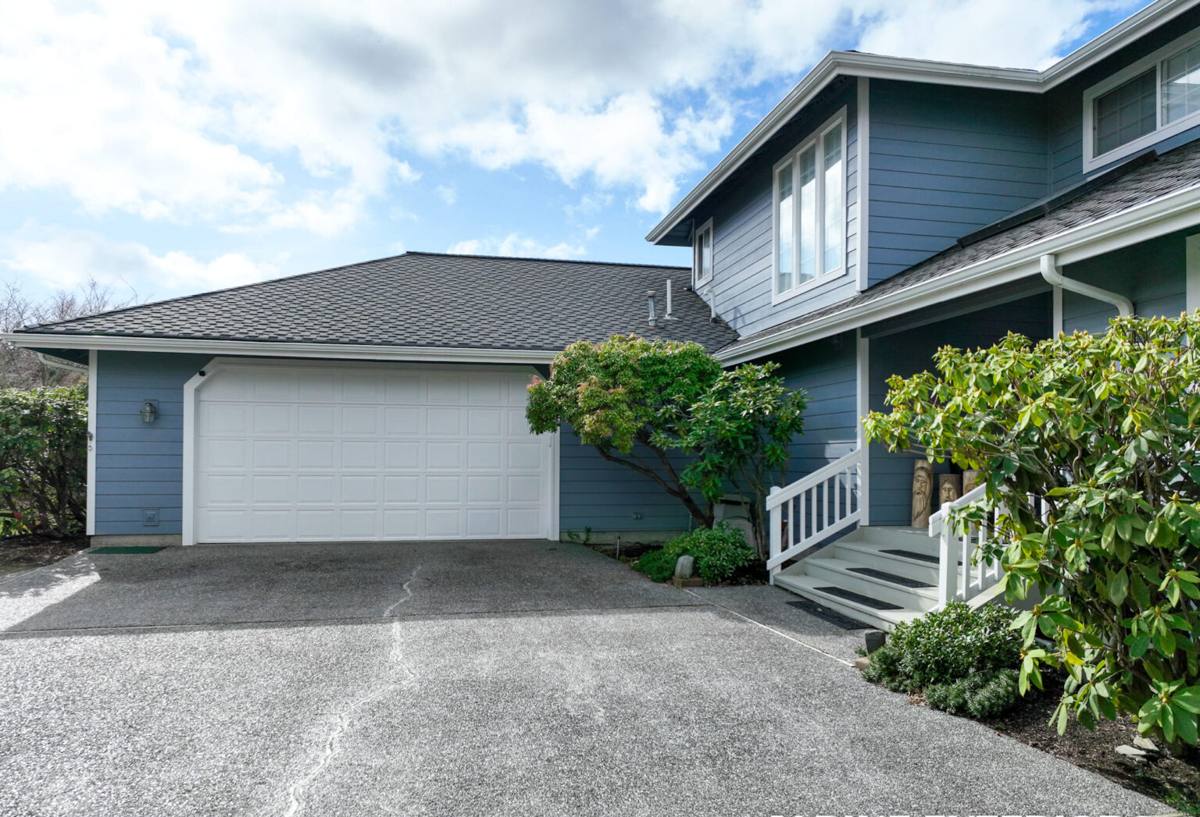
What Salt Air, Rain, and Moss Actually Do to a Deck
Salt Air and Metal Fatigue
Airborne salt from the strait accelerates corrosion on anything metal — fasteners, joist hangers, railing hardware, screws. On a mainland deck a few miles inland, standard galvanized hardware can last the life of the structure. On an island deck facing open water, that same hardware can start showing rust streaks and pitting years earlier. The failure isn't usually dramatic; it's slow, and it's often hidden under the decking boards where nobody looks until something feels loose.
Driving Rain and Trapped Moisture
Rain that comes in sideways off the water finds its way into places vertical-only rain never would — under railing base plates, into end-grain cuts on wood decking, behind ledger boards where the deck ties into the house. Once moisture gets trapped against wood or fastener steel and can't dry out between storms, rot and corrosion both accelerate. The issue isn't total rainfall so much as wind-driven rain combined with a marine humidity level that keeps everything damp longer between dry spells.
Moss, Algae, and Surface Wear
Guemes Island's tree cover and damp shoulder seasons create ideal conditions for moss and algae on any deck surface that doesn't get much direct sun or airflow. Beyond looking bad, moss holds moisture against the decking material and turns smooth surfaces slippery and dangerous, especially on stairs and near entry doors. A deck design that ignores drainage and airflow underneath will fight a losing battle against moss every year.
Choosing Decking Material for Island Conditions
There's no single "correct" decking material for every Guemes Island home — it depends on your budget, how much maintenance you want to take on, and how exposed the deck site is. Here's how the common options actually perform in this environment:
| Material | Salt Air Performance | Moss/Algae Resistance | Maintenance |
|---|---|---|---|
| Pressure-treated wood | Good with stainless or coated fasteners; needs regular sealing | Low — needs annual cleaning/treatment | High — sealing every 1-2 years |
| Cedar | Good natural rot resistance, but softens over time near salt spray | Moderate — natural oils help some | Moderate to high — periodic oiling |
| Composite decking | Excellent — no corrosion, stable in moisture | Good, varies by product; capped boards resist staining better | Low — occasional washing |
| PVC decking | Excellent — fully synthetic, won't absorb moisture | Good — smooth, non-porous surface | Low |
We install real wood decks for homeowners who want that look and are willing to keep up with maintenance, and we install composite and PVC systems from established manufacturers for homeowners who want to spend their weekends doing something other than sealing a deck. Either choice can be the right one — what matters is that the fasteners, substructure, and drainage details match the decking, not just the visible surface.
A Note on Substructure Material
Whatever decking goes on top, we treat the framing underneath as the part that actually determines the deck's lifespan. Composite and PVC decking boards can outlast a wood substructure that wasn't detailed for coastal moisture — so we don't cut corners on joists, hangers, or fasteners just because the surface material is low-maintenance.
Structural Details That Matter More Out Here
Fasteners and Hardware
We use stainless steel or heavy-duty coated fasteners rated for coastal and marine-adjacent exposure on Guemes Island decks, not standard galvanized hardware. It costs more up front and it's the single biggest factor in whether the hidden structure of your deck is still sound in fifteen years.
Ledger Attachment and Flashing
The ledger board — where the deck attaches to your house — is the single most common failure point on any deck, and it's where driving rain does the most damage if it isn't flashed correctly. We flash every ledger connection to shed water away from the house framing, not just seal it, because sealant alone degrades and fails long before proper flashing does.
Footings and Drainage
Skagit County's frost depth and soil drainage requirements set the minimum for footing depth, but on Guemes Island we also pay attention to how water moves across the site — many island lots have limited drainage runoff paths, and a footing plan that ignores standing water around posts invites long-term movement and rot at the base.
Board Spacing and Airflow
Correct gapping between boards and adequate clearance underneath the deck aren't cosmetic choices — they're what lets the structure dry out between rain events. Tight spacing looks clean on day one and traps moisture for years afterward.
Our Process for a Guemes Island Deck Project
1. On-Site Assessment
We walk the site in person, not from a satellite photo. Exposure to wind and water, existing drainage patterns, tree cover, and how the deck ties into your home all factor into the design before we talk materials or pricing.
2. Design and Material Selection
We go over decking material options honestly, including the maintenance trade-offs, and design the layout, railing style, and any built-in features around how you'll actually use the space.
3. Permitting
Deck permitting on Guemes Island runs through Skagit County. We handle the permit application and inspection scheduling as part of the project so you're not navigating that process solo.
4. Build
We build the substructure first and get it right — footings, framing, flashing, fasteners — before a single decking board goes down, since that hidden work is what determines how the deck ages.
5. Walkthrough
Once the deck is complete, we walk it with you, cover basic care for whatever material you chose, and make sure everything meets what we discussed at the start.
Working on an Island: Scheduling and Logistics
Building on Guemes Island means factoring the ferry into the schedule — crew, tools, and materials all move on the same crossing schedule as everyone else. Contractors who don't regularly work on the island tend to underestimate this, which shows up as delayed start times, missed material deliveries, and projects that stretch out longer than they should. We plan Guemes Island projects around the ferry from the start: materials staged and crew scheduled to make efficient use of each crossing, not scrambling to catch the next one.
Maintaining a Guemes Island Deck Year-Round
Whatever material you choose, a few habits go a long way toward fighting off the salt air, rain, and moss this area throws at a deck:
- Sweep debris and standing leaves off the deck surface regularly, especially in fall — trapped organic matter feeds moss growth
- Rinse salt residue off the deck surface and railings a few times a year, particularly after storms with onshore wind
- Check fastener heads and railing hardware annually for early rust or looseness, before it becomes a structural issue
- Keep gutters and downspouts near the deck clear so roof runoff isn't dumping extra water onto or under the structure
- For wood decks, reseal on the schedule appropriate to the product — don't wait until the wood visibly grays and cracks
- Trim back overhanging branches to improve sun exposure and airflow, which is one of the most effective ways to slow moss growth
- Address any soft spots, movement, or visible rot immediately rather than waiting for the next maintenance cycle
Why Local Experience on Guemes Island Matters
A deck built by a crew that hasn't worked this specific environment often looks fine for the first year or two before the gaps show — the wrong fastener grade, a ledger flashed for a drier climate, decking spaced too tight to shed moisture. We build decks throughout Anacortes and across Skagit County, and the projects on Guemes Island get treated as their own category, not a smaller version of a mainland job. That means material choices, hardware, and structural details selected for what this specific stretch of water and weather does to a deck over time, plus a work schedule that accounts for the ferry instead of fighting it.
If you're planning a new deck or replacing one that's showing its age, we're happy to come take a look and talk through honest options for your site — no pressure, no obligation. Reach out using the form below for a free estimate.