 Anacortes Exterior
 Why Storms Hit Guemes Island Roofs Differently
Guemes Island sits out in the water off Anacortes, and that position is exactly why storm damage there doesn't behave like storm damage on a sheltered mainland street. There's no row of buildings or hillside breaking the wind before it reaches a roof — gusts come off the Salish Sea largely unobstructed, and homes near the shoreline or in more open clearings take the brunt of it. Add in the salt air that comes with living this close to open water, and you've got a slow, steady corrosive effect on nails, flashing, and metal roof edges that mainland roofs simply don't deal with at the same rate.
Then there's the other side of the coin: the wooded, shaded lots common on the island hold moisture longer after a storm passes, which feeds moss and slows drying. A roof that's already carrying a moss load going into a windstorm is a roof with lifted edges and compromised granule protection — exactly the conditions that let wind and rain do more damage than they would on a clean, well-maintained surface. Skagit County's wet season doesn't spare Anacortes proper, but island properties tend to hold onto that moisture longer, which is worth knowing before storm season sets in.
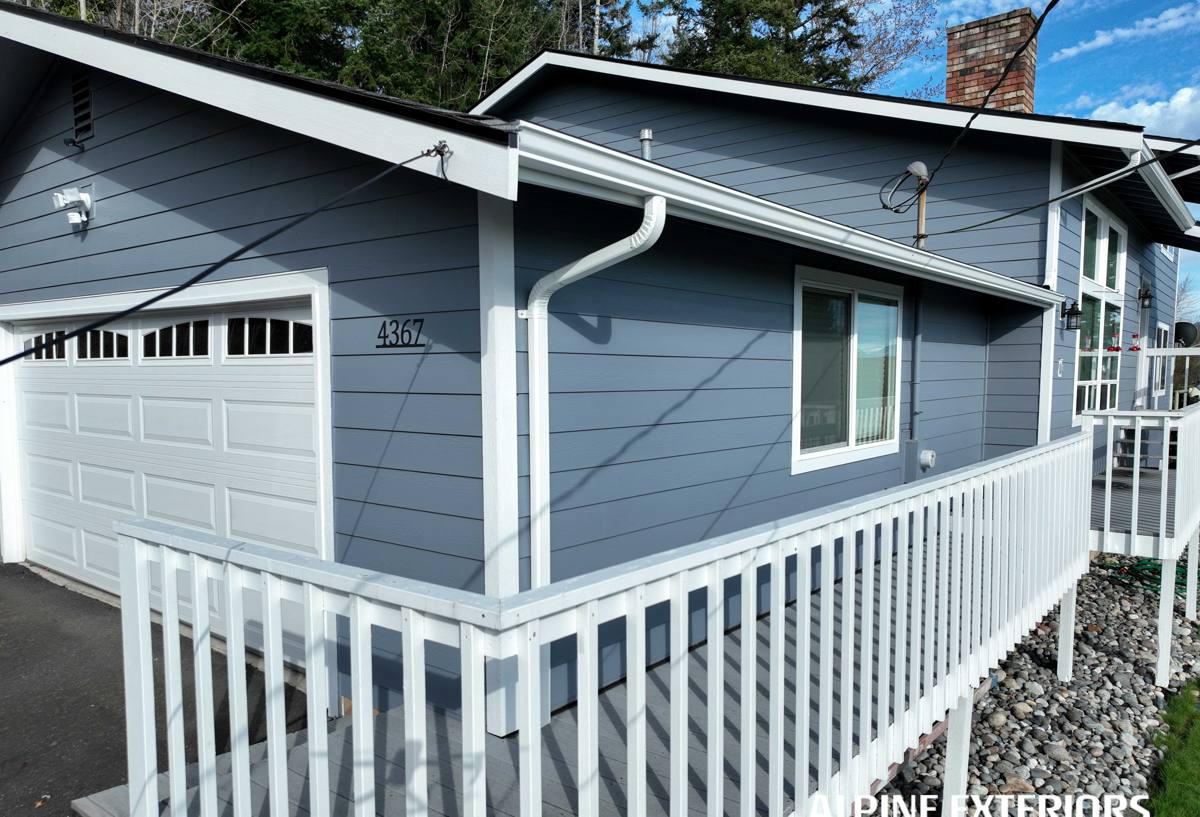
What Storm Damage Actually Looks Like on an Island Roof
Wind Damage
Lifted or missing shingles, cracked or displaced ridge cap, and creased shingles that look intact but have lost their seal are the most common finds after a windstorm. A shingle doesn't have to blow off to be damaged — a creased or partially lifted shingle will leak long before it visibly fails.
Wind-Driven Rain Intrusion
Driving rain that comes in sideways during a strong blow can push water up under shingle edges and through minor gaps in flashing that would never leak under normal rainfall. This is one of the more deceptive types of storm damage because the roof can look fine from the ground while water is already tracking into the attic or wall cavity.
Debris Impact
Fir and cedar limbs are heavy, and a lot of island lots have mature trees close to the house. Impact damage can range from a few cracked shingles to punctured decking, depending on the size of what came down and where it landed.
Compounding Moss and Moisture Damage
A storm often doesn't create damage out of nothing — it exploits weak spots that were already there. Moss that's been lifting shingle edges for a season or two gives wind and rain an opening they wouldn't otherwise have, which is why a "storm damage" repair sometimes uncovers moisture staining or soft decking that predates the storm itself.
The Ferry Factor: Why Access Changes How Repairs Get Done
Working on Guemes Island means working around the ferry schedule, and that's not a minor detail — it shapes how a storm repair actually gets handled. A contractor who doesn't normally work the island can lose half a day just getting a crew, tools, and material across, then lose it again getting back. That delay matters a lot right after a storm, when water is actively getting into a house and every extra day of exposure adds to the damage.
A crew that already works Guemes Island plans around this instead of getting surprised by it. That means grouping trips efficiently, staging materials ahead of time so a return visit isn't needed for something that should have been on the truck the first time, and being upfront about realistic timing rather than promising a same-day fix that the ferry schedule won't actually allow. It also means understanding that "emergency" on an island often means stabilizing the roof properly on the first visit — tarping and sealing it so it holds — rather than a quick patch that needs a second trip within the week.
What a Correct Storm Repair Actually Involves
A storm repair done right isn't just replacing what's visibly missing. It's a sequence:
- Full assessment, not a glance. That means checking the roof surface and the attic. Water stains, damp insulation, or daylight through the decking tell you things the shingles alone won't.
- Temporary protection first, if needed. If the home is actively taking on water, stopping that intrusion comes before anything else — a properly secured tarp or sealed section buys time to do the permanent repair right.
- Removing damaged material back to sound substrate. Cutting a repair area short to save time just means the same spot fails again next storm season.
- Checking the decking underneath. Soft, delaminated, or water-stained decking gets replaced, not covered over.
- Rebuilding flashing and underlayment correctly. Most roof leaks trace back to flashing, not the field shingles — around chimneys, vents, valleys, and wall intersections.
- Matching material as closely as possible. Exact shingle matches aren't always available, especially on an older roof, but a competent repair blends in rather than standing out as an obvious patch.
- Cleanup and haul-off. Storm debris and old roofing material don't get left for the homeowner to deal with.
Repair Approach: Matching the Fix to the Damage
Not every storm-damaged roof needs the same response. The right call depends on how much of the roof is affected, the age and condition of the existing roof, and whether the damage is isolated or a sign of broader wear.
| Situation | What's Involved | When It's the Right Call |
|---|---|---|
| Temporary tarp-over | Securing exposed decking against further water intrusion until a permanent repair can be scheduled | Active leak, repair can't happen immediately, or weather is preventing safe work |
| Targeted section repair | Removing and replacing damaged shingles, flashing, or decking in the affected area only | Damage is localized and the surrounding roof is in reasonably sound condition |
| Full roof section or full replacement | Stripping and rebuilding a larger area or the entire roof system | The roof was already near the end of its service life, or damage is spread across multiple areas |
Being honest about which category a roof falls into is part of the job. Patching a roof that genuinely needs replacement just delays the inevitable and costs more in the long run; replacing a roof that only needed a targeted repair is money that didn't need to be spent.
Our Process, Start to Finish
- Call or request an estimate. We'll ask what you're seeing — missing shingles, a leak, visible damage — and how urgent it is.
- Schedule the visit around ferry timing. If the situation is urgent, we prioritize getting a crew over promptly and bringing what's likely needed on the first trip.
- On-site inspection, roof and attic. We document what we find and explain it in plain terms before any work starts.
- Stabilize first if there's active water intrusion. Tarping or sealing happens before anything else if the home is at risk.
- Written scope and honest pricing. You'll know what's being repaired, why, and roughly what it costs before work begins.
- Repair, cleanup, and a final walk-through. We show you what was done and answer questions before we leave.
Insurance Claims and Documentation
Wind and storm damage is one of the more common insurance claims for Anacortes-area homeowners, and Guemes Island is no exception. We document the damage we find with photos and a written scope of work, which gives you something concrete to bring to your adjuster. We're not a public adjuster and won't promise a claim outcome, but we can describe what we saw and what caused it in terms that hold up when you're working through a claim. If damage turns out to be pre-existing wear rather than storm-related, we'll tell you that too — it affects both your claim and the right repair decision.
What To Do in the First 24 to 48 Hours After a Storm
- Check the attic (not just the ceiling) for damp insulation, staining, or daylight — attic damage often shows up before ceiling stains do
- Look at the roof from the ground with binoculars rather than climbing up yourself right after a storm
- Note and photograph any debris, missing material, or obvious damage you can see safely
- Move furniture or belongings away from any active drip or ceiling stain
- Call for an inspection promptly — the gap between damage and repair is when moisture problems compound
- Avoid walking on a wet or wind-damaged roof; loose shingles and soft decking are a fall hazard
Why It Matters to Hire a Crew That Already Works This Island
Storm damage repair on Guemes Island isn't just a smaller version of the same job in Anacortes proper. It takes knowing how the ferry schedule affects response time, understanding how salt air and prolonged shade change the way a roof ages, and being willing to make the trip for a job that isn't always convenient to reach. A contractor who's already familiar with the island doesn't need to learn these things on your roof — they show up prepared, do the repair correctly the first time, and don't disappear before the job is actually finished.
If you've got storm damage on a Guemes Island roof, or you want an honest assessment of what a recent windstorm did to your home, we're happy to take a look. Request a free, no-pressure estimate using the form below and we'll walk you through exactly what we find.