 Anacortes Exterior
 Siding Built for Guemes Island, Not Just "the Pacific Northwest"
Guemes Island sits a short ferry ride off Anacortes, but it might as well be a different climate zone when it comes to what siding has to survive. Waterfront and near-waterfront homes take salt-laden air off the water almost year-round. Tree cover across much of the island keeps large sections of siding shaded and slow to dry after rain. And Skagit County's wet season delivers weeks of driving rain, sometimes sideways off Rosario Strait or Guemes Channel, straight into wall assemblies that were never detailed for it. A siding job that looks fine on paper in a showroom can fail early out here if it wasn't specified and installed for this specific combination of exposure, moisture, and shade.
We install siding on Guemes Island regularly, so this isn't a page built from general Pacific Northwest talking points. It reflects what actually goes wrong on island homes, and what a correctly installed, correctly specified siding system needs to do differently.
What the Island Climate Actually Does to Siding
Salt Air and Wind-Driven Moisture
Homes closer to the water deal with salt air that accelerates corrosion on fasteners, flashing, and any exposed metal trim. Combined with wind-driven rain, salt air also tends to work its way into small gaps and seams faster than it would on a sheltered inland lot. Siding materials, fasteners, and trim all need to be chosen with that in mind, not just for general Western Washington weather.
Shade, Moss, and Slow Drying
A lot of Guemes Island properties sit under conifer canopy or are tucked into wooded lots. That shade keeps north- and west-facing walls damp longer after every rain event, which is exactly the condition moss and algae need to establish. Siding that can't shed water quickly or that traps moisture behind it will grow moss and hold moisture against the wall assembly for extended periods, which is a slow but real path to rot in the sheathing behind the cladding.
Driving Rain and Long Wet Stretches
Skagit County's rainy season isn't just volume, it's duration. Long stretches of steady, wind-pushed rain test every seam, joint, and penetration in a siding system. Poor flashing details or gaps in the water-resistive barrier that might never show a problem in a drier climate will eventually leak here, especially on exposed elevations facing open water.
Why We Only Install James Hardie Fiber Cement on Island Homes
We install exclusively James Hardie fiber cement siding, and we don't install LP SmartSide, vinyl, Cemplank, Allura, primed spruce, or cedar. That's not a marketing position, it's a standard we hold because of what we've seen these products do (and not do) in coastal, high-moisture conditions like Guemes Island's.
- Vinyl expands and contracts significantly with temperature swings, and salt air combined with UV exposure accelerates fading and brittleness over time. It also does nothing to resist moisture that gets behind it.
- Wood-based products (cedar, primed spruce, engineered wood like LP SmartSide) are organic materials. In a shaded, damp, salt-exposed environment, they need more diligent maintenance and are more vulnerable to moisture intrusion, rot, and pest damage if that maintenance slips even for a season or two.
- Other fiber cement brands (Cemplank, Allura) are legitimate fiber cement products, but we've standardized on one manufacturer, one factory finish system, and one warranty structure so we can guarantee consistent installation quality and stand behind the work without juggling multiple product specs.
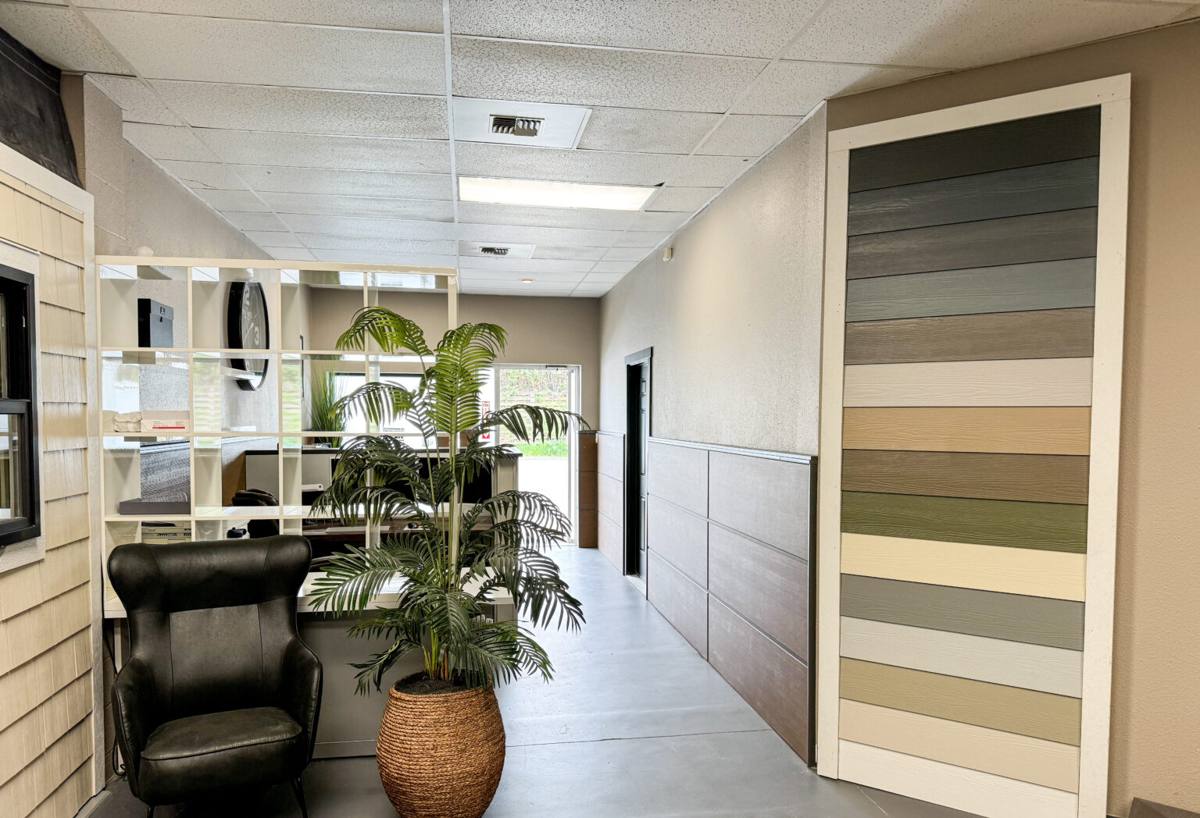
James Hardie fiber cement is non-combustible, dimensionally stable in wet-dry cycling, and available in HardieZone engineered product lines built for specific climate exposures. The ColorPlus factory finish is baked on under controlled conditions, which gives it more consistent, longer-lasting color and moisture resistance than field-applied paint on wood siding, an important factor when a house sits under tree cover and doesn't get a lot of direct sun to help it dry and cure.
What a Correct Siding Installation Involves Here
Fiber cement siding is only as good as the assembly behind it. On a site like Guemes Island, with more moisture exposure and slower drying conditions than a typical inland lot, the details matter more, not less.
Drainage Plane and Rain Screen Gap
A properly installed water-resistive barrier behind the siding, combined with a drainage gap (rain screen), lets any moisture that gets past the cladding drain and dry out instead of sitting against the sheathing. On shaded, damp walls this is one of the most important details in the entire assembly.
Flashing at Every Penetration
Windows, doors, deck ledgers, vents, and any other wall penetration need proper flashing integrated with the water-resistive barrier, not caulk used as a substitute for flashing. Caulk fails over time; correctly lapped flashing doesn't rely on a sealant bead to keep water out.
Fastening and Clearances
James Hardie specifies fastener type, spacing, and minimum clearances from grade, decks, roofing, and other siding terminations. Those clearances exist specifically to keep the bottom edge of the siding from sitting in standing water or splash-back, which is a common failure point on island homes with landscaping or grade that slopes toward the foundation.
Joint and Seam Treatment
Butt joints and trim seams need to be treated per the manufacturer's detail, including any required caulking product and factory-matched touch-up paint at cut edges, so the factory finish's moisture resistance isn't compromised at every seam.
Our Process for a Guemes Island Job
Working on Guemes Island isn't the same logistically as a job in town, and treating it like one is how projects run into avoidable delays.
- Site visit and assessment. We look at sun exposure, tree cover, wall orientation relative to weather and water, existing moisture damage, and current siding condition before we ever talk product.
- Material staging. Because everything, crew, tools, and full material loads, has to cross on the ferry, we plan deliveries and staging around ferry schedules and capacity so the job isn't stalled waiting on a second or third trip.
- Tear-off and sheathing check. Once old siding comes off, we inspect the sheathing and water-resistive barrier underneath. On older island homes this is often where hidden moisture damage from years of slow drying shows up, and it needs to be addressed before new siding goes on, not covered over.
- Installation to manufacturer spec. Rain screen, flashing, fastening, and finish work are done to James Hardie's published installation requirements, which is also what keeps the manufacturer's warranty valid.
- Final walkthrough. We go over the finished work with the homeowner, including any maintenance notes specific to that home's sun and moisture exposure.
Comparing Siding Options for an Island Home
| Factor | James Hardie Fiber Cement | Vinyl | Cedar / Wood-Based |
|---|---|---|---|
| Salt air resistance | Strong, non-organic material, factory finish | Moderate, can fade and become brittle over time | Weak without diligent, ongoing maintenance |
| Moisture behavior in shaded, damp areas | Dimensionally stable, resists moss growth when installed with proper drainage | Doesn't rot but traps moisture behind it if installed poorly | Prone to moisture uptake, rot risk if maintenance slips |
| Fire resistance | Non-combustible | Combustible, can melt/deform near heat | Combustible |
| Maintenance burden | Low, occasional wash and caulk check | Low, but limited repair options once faded or cracked | High, regular refinishing needed |
| Warranty structure | Strong transferable manufacturer warranty | Varies widely by product tier | Typically no manufacturer warranty on the wood itself |
Maintenance Checklist for Island-Exposed Siding
- Rinse salt air residue off exterior walls periodically, especially on water-facing elevations
- Check and clear gutters and downspouts before the wet season so water isn't overflowing onto siding
- Inspect caulking at trim, windows, and joints annually for cracking or gaps
- Trim back vegetation and tree limbs that keep walls shaded and slow to dry
- Watch for early moss or algae growth on north- and west-facing walls and address it before it spreads
- Confirm siding maintains proper clearance from grade, decking, and landscaping as plantings grow in
Why It Matters That We Already Work on Guemes Island
A crew that's never worked on the island will underestimate the logistics, the ferry schedule, material staging, limited daily crossings, and that shows up as delays, half-finished jobs sitting exposed to weather longer than they should, or rushed details to make a ferry deadline. A crew that already works here plans around that from the first estimate, understands Skagit County permitting for island properties, and isn't guessing at how the local climate treats different siding materials over time. That familiarity is the difference between a siding job that's installed correctly the first time and one that turns into a callback.
If you're planning a siding project on Guemes Island, we're happy to come take a look, walk the exposure and condition of your home with you, and put together a straightforward, no-pressure estimate using the form below.