 Anacortes Exterior
 Sedro-Woolley Siding Faces a Different Kind of Wear
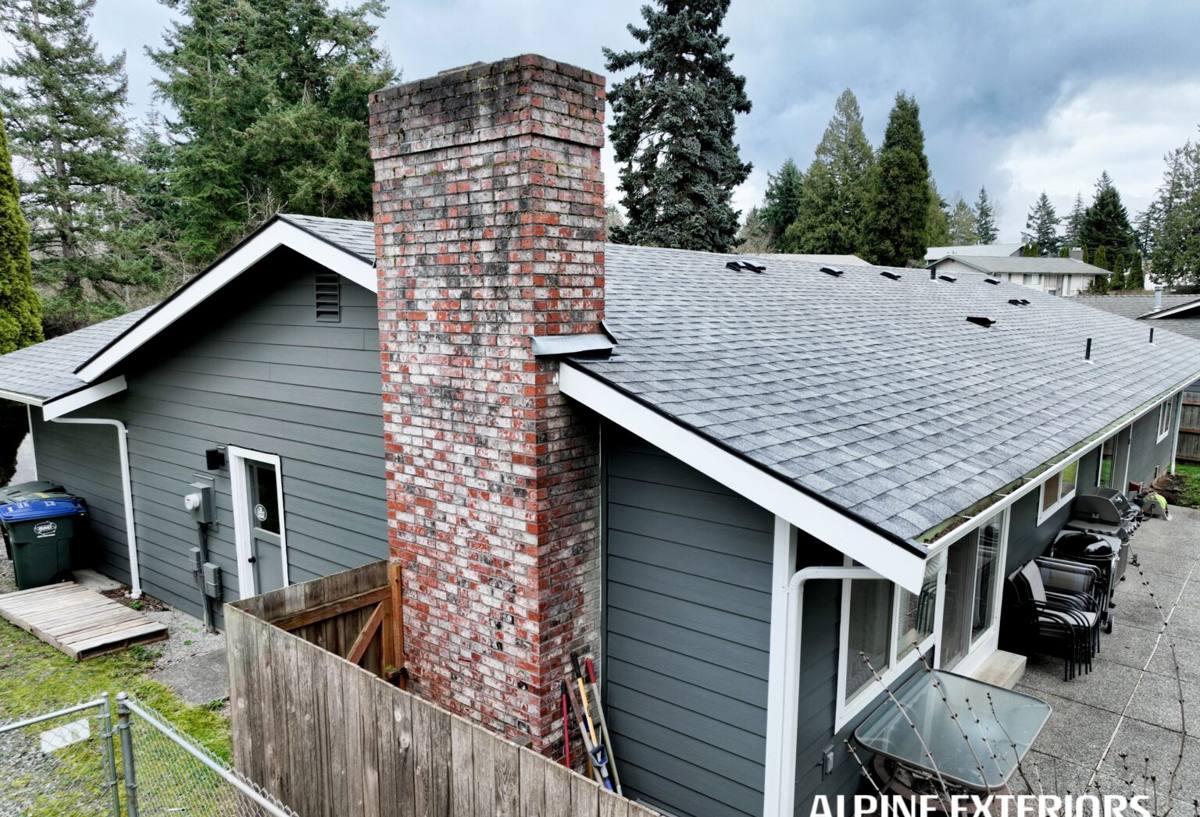
Sedro-Woolley sits back from the water in the Skagit Valley, but that doesn't mean the siding on local homes has it easy. Tree cover is heavier here than along the coast, humidity lingers longer in the shaded lots and river-bottom neighborhoods, and rain driven off the foothills tends to sit against north- and west-facing walls instead of drying off quickly. Add in the broader Skagit County pattern of long wet seasons and periodic marine air pushing in off Puget Sound, and you get a climate that's genuinely hard on exterior materials, even when a home never sees a drop of ocean spray.
The result is siding that looks fine from the street but is quietly failing underneath: swollen seams, soft trim boards, and green-black streaking that keeps coming back no matter how many times it gets pressure washed. Understanding why that happens is the first step to replacing siding the right way instead of just repeating the same mistake with new material.
Why Moss, Moisture, and Shade Matter More Here
The Moss Season Is Longer Than People Think
In a lot of the Skagit Valley, moss and algae growth isn't a two-month problem — it's closer to eight or nine months of the year once you're under any real tree canopy. Moss doesn't just sit on the surface. It holds moisture directly against the siding material, and depending on what that material is, sustained dampness can mean swelling, softening, or slow paint failure.
Driving Rain and Wall Orientation
Wind-driven rain in this part of Washington tends to load up on certain exposures — usually west and northwest walls — far more than others. Those walls need siding, flashing, and trim details that can actually shed water, not just resist it in a lab test. A siding system that performs fine on a protected south wall can still fail on the exposed side of the same house.
Slower Drying Cycles
Coastal towns get more wind to help surfaces dry between storms. Inland valley locations like Sedro-Woolley often get less air movement at the wall surface, especially around mature landscaping and closely spaced homes. That means whatever moisture does get in has more time to do damage before the next dry stretch.
Signs Your Siding Has Reached the End of the Road
Not every siding problem means a full replacement — some issues are legitimately just maintenance. But there's a point where patching stops making sense and a full tear-off is the more honest recommendation. Signs worth taking seriously include:
- Soft or spongy spots when you press on the siding, especially near the bottom courses or under windows
- Visible swelling, delaminating, or bubbling of the panel or board surface
- Paint that fails again within a year or two of repainting, even with quality paint
- Moss or algae that returns within weeks of cleaning, particularly on shaded walls
- Gaps opening up at seams, corners, or trim joints that weren't there a few years ago
- Visible warping or bowing when you sight down the wall from the corner of the house
If you're seeing two or more of these, especially together, it's worth having someone look at the wall assembly — not just the siding surface — before deciding what to do next.
What a Correct Siding Replacement Actually Involves
A siding replacement that's done right is not just "new material over the old wall." The material is the visible part, but most of the long-term performance is decided by what happens underneath it.
Full Tear-Off and Inspection
Old siding comes off, not gets covered over. That's the only way to actually see the sheathing, framing, and any hidden rot or moisture damage that's been building for years — which is common in homes that have had wet siding sitting against the wall for a long time.
Repair Before Cover
Any soft or damaged sheathing gets cut out and replaced before anything new goes on. Covering damaged wood with new siding just hides a problem that will keep spreading behind the wall.
Weather-Resistive Barrier and Flashing
A proper weather-resistive barrier goes on correctly lapped, and flashing gets installed at every window, door, and horizontal trim transition — the actual points where water finds its way in. This is the detail work that separates a siding job that lasts twenty-plus years from one that starts failing in five.
Correct Fastening and Clearances
Fiber cement siding has manufacturer-specified nailing patterns, gaps, and ground clearances for a reason. Skipping them to save time is one of the more common causes of early siding failure, and it's not something you can see just by looking at the finished wall.
Why We Install Only James Hardie Fiber Cement
We don't install vinyl, LP SmartSide, or other engineered wood siding products, and it's worth being straightforward about why. Vinyl expands and contracts with temperature swings and can crack or warp over time, particularly on sun-exposed walls. Engineered wood siding products use wood fiber with a resin binder, which means they're still vulnerable to moisture intrusion at cut edges and seams if installation isn't precise — a real risk in a climate where wall assemblies stay damp for long stretches of the year.
James Hardie fiber cement siding is non-combustible, doesn't support moss growth the way wood-based products can, and holds its factory-applied ColorPlus finish far longer than field-applied paint. Hardie also makes climate-engineered HZ product lines specifically formulated for different regional exposure levels, which matters in a county where a home three miles from the water and a home sitting in a shaded valley lot face genuinely different conditions. It's not the cheapest material on the market, and we're upfront about that. It's what we've standardized on because it holds up to what this specific climate does to a house, and it comes with a strong transferable warranty when installed to the manufacturer's specification.
Our Process, Start to Finish
- Assessment: We look at the current siding, sheathing condition, and problem exposures on your specific home — not a generic estimate over the phone.
- Scope and estimate: You get a clear, written breakdown of what's being removed, repaired, and installed, with no vague allowances hiding in the fine print.
- Tear-off and repair: Old material comes off, damaged sheathing or framing gets addressed, and the wall is prepped properly before anything new goes on.
- Weather barrier and flashing: This is the step that decides whether the job lasts — done according to spec at every window, door, and trim transition.
- Hardie installation: Panels or lap siding installed to the manufacturer's fastening, clearance, and caulking requirements.
- Final walkthrough: We go over the finished work with you before calling the job done.
What Affects the Cost of a Sedro-Woolley Siding Replacement
Every home is different, but the same handful of factors drive most of the cost variation we see on siding replacement jobs in this area.
| Factor | Why It Matters |
|---|---|
| Extent of hidden moisture damage | Rotted sheathing or framing found during tear-off has to be repaired before new siding goes on — this is the biggest source of scope changes |
| Home size and wall complexity | More corners, dormers, and trim details mean more labor and material cuts |
| Access and site conditions | Tree cover, tight lot lines, and multi-story walls affect staging and safety requirements |
| Siding profile and finish | Lap, panel, and shingle-style Hardie products have different material and labor costs |
| Trim and detail work | Window and door trim, fascia, and corner detailing add labor time beyond the flat wall area |
We don't publish flat per-square-foot pricing because the hidden-damage factor genuinely varies house to house — a home that's had wet siding against it for a decade often needs more sheathing repair than one that's simply due for an update. That's exactly why the in-person assessment matters more than a phone quote.
Why a Crew That Already Works Sedro-Woolley Matters
Siding failure patterns aren't identical from one Skagit County neighborhood to the next. A crew that's worked walls shaded by mature trees in the valley, walls exposed to wind off the river corridor, and walls closer to the marine air near Anacortes has already seen how differently those conditions treat a house. That experience shows up in small decisions — where extra flashing attention goes, which wall gets the moisture-resistant detailing prioritized, how much clearance to leave at grade — that a crew unfamiliar with the area might not think to adjust for.
Before hiring anyone for a siding replacement, it's worth asking a few direct questions:
- Do you fully tear off old siding, or install over it?
- Who inspects and repairs sheathing damage, and is that priced separately or included?
- What's your flashing and weather-barrier detail at windows and trim transitions?
- Are you a certified installer for the siding product you're proposing?
- What warranty applies to the material, and what applies to your labor?
- Can you show me the specific Hardie product line recommended for this exposure?
A contractor who answers these clearly and specifically, rather than with vague reassurance, is generally the one who's actually done the work before.
Getting Started
If your siding is showing soft spots, recurring moss, or paint that won't hold anymore, it's worth having someone take an honest look before those problems spread further into the wall. We offer free, no-pressure estimates for Sedro-Woolley homeowners — fill out the form below and we'll walk the property with you and give you a straight answer on what your siding actually needs.