 Anacortes Exterior
 Windows Built for Sedro-Woolley's Weather, Not Just the Showroom Floor
Sedro-Woolley sits inland along the Skagit River, away from the immediate salt spray you get closer to the water in Anacortes, but it still lives under the same marine-influenced weather pattern that defines Skagit County: long stretches of driving rain, high humidity, and a moss season that seems to start earlier and last longer every year. Windows here don't fail because they're old in the abstract sense — they fail because moisture finds its way into places it was never sealed against, and because single-pane or aging double-pane glass simply can't keep up with the temperature swings between a damp December and a dry August afternoon.
Energy-efficient window replacement in this area is about more than a lower heating bill, though that's real. It's about stopping the slow water intrusion that rots sills and framing, cutting down on interior condensation that feeds mold and mildew, and choosing materials that hold up to years of wet-dry cycling without warping, fogging, or staining.
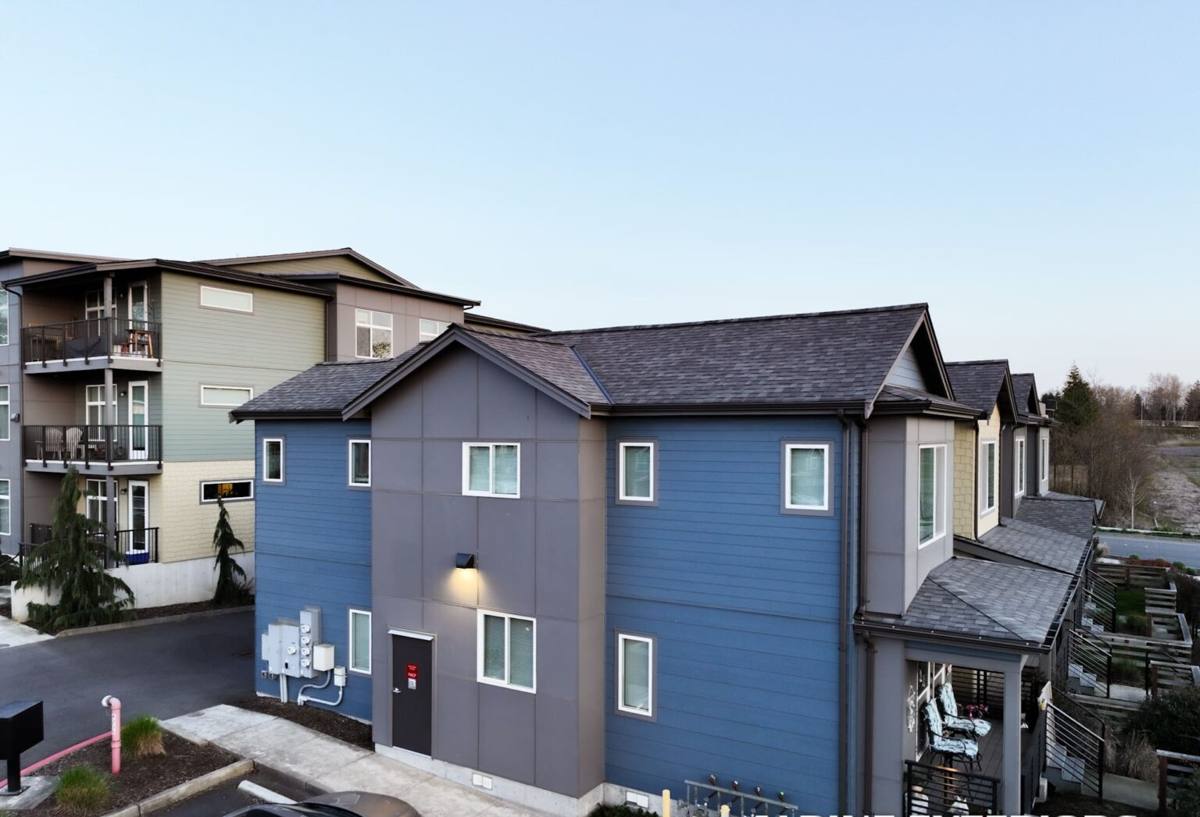
What This Climate Actually Does to Windows Over Time
Every region has its own failure patterns, and Skagit County's are pretty consistent once you've seen enough of them:
- Moss and algae growth on north-facing frames and sills, especially under eaves or tree cover, which holds moisture against the frame far longer than sun-exposed windows.
- Driving rain intrusion around poorly flashed or improperly sealed units, showing up as staining, soft drywall, or a musty smell near the window well.
- Interior condensation on cold mornings, a sign that the glass package or frame is losing the fight against outdoor humidity and indoor heat.
- Seal failure in older double-pane units, visible as fogging or a hazy band between the panes — the gas fill has escaped and the insulating value is largely gone.
- UV and weathering on vinyl and wood trim during the drier summer stretches, which accelerates cracking and color fade if the original install skimped on trim details.
None of these are dramatic on their own, but they compound. A window that's losing its seal is also more likely to be letting in wind-driven rain, and a frame sitting in constant shade and moisture is the one that grows moss fastest and rots soonest.
Signs Your Current Windows Are Underperforming
Homeowners often assume window problems will announce themselves clearly. Usually they don't — they show up as small, easy-to-dismiss annoyances first. Worth checking for:
- Drafts you can feel near the frame, even with the window latched shut
- Condensation or fog between the glass panes (not just on the interior surface)
- Difficulty opening, closing, or latching — often a sign the frame has swollen or shifted
- Visible moss, black staining, or soft wood at the sill or bottom corners
- A noticeable temperature difference standing near the window versus the middle of the room
- Rooms that are harder to heat in winter or that overheat quickly in direct summer sun
- Rising heating bills without a clear cause elsewhere in the home
Any one of these alone might not justify replacement. Several together, especially paired with a home older than 20-25 years, usually means the windows are working against you rather than for you.
Choosing the Right Window for This Climate
Frame material matters as much as glass in a climate this wet. Each option has real trade-offs, and the "best" choice depends on the home, the budget, and how much upkeep the homeowner wants to take on.
| Frame Material | Energy Performance | Moisture Resistance | Maintenance | Typical Cost |
|---|---|---|---|---|
| Vinyl | Good to very good | Excellent — won't rot or corrode | Low | $ |
| Fiberglass | Very good to excellent | Excellent — very stable in wet/dry cycling | Low | $$$ |
| Wood (clad exterior) | Good, with strong interior appearance | Good if cladding and seals are maintained | Moderate to high | $$$ |
| Aluminum | Fair unless thermally broken | Good, but prone to condensation without a thermal break | Low | $$ |
For most Sedro-Woolley homes, vinyl and fiberglass are the practical workhorses — both shrug off the constant moisture cycling without the upkeep that wood-clad units demand. Wood-clad windows still have their place where the homeowner wants a specific interior wood look and is willing to stay on top of exterior seal maintenance. Aluminum without a thermal break is one of the few products we steer people away from in this climate; it conducts cold straight through the frame and tends to sweat on the interior during our wetter months, which is exactly the condensation problem we're trying to solve.
Frame Color and Sun Exposure
Darker vinyl frames absorb more heat, which can affect long-term warping on south- and west-facing exposures. It's a smaller factor than frame material or glass package, but worth discussing during your estimate if a particular elevation gets strong afternoon sun.
Glass Packages: U-Factor, SHGC, and Gas Fills Explained
The glass package does more of the energy work than most homeowners expect. Three numbers matter most:
- U-factor — measures how well the window resists heat loss. Lower is better for our climate, where keeping heat in matters more months of the year than keeping it out.
- SHGC (Solar Heat Gain Coefficient) — measures how much solar heat passes through the glass. Moderate SHGC values generally suit Skagit County well, since we want some passive solar gain on clear days without overheating south-facing rooms in summer.
- Gas fill — argon is standard between panes in most quality double- and triple-pane units, improving insulation over plain air fill at modest added cost.
Low-E (low-emissivity) coatings are worth having on essentially every window in this region — they reduce heat loss in winter and block excess solar heat in summer, and the cost premium over clear glass is usually small relative to the lifetime benefit.
Double-Pane vs. Triple-Pane
Triple-pane windows offer a real but incremental improvement in insulation over a quality double-pane unit. In a marine climate like ours — wet and moderate rather than extremely cold — double-pane with a good Low-E coating and argon fill often delivers most of the practical benefit at a lower cost. Triple-pane makes more sense for north-facing rooms, homes with unusually high heating costs, or homeowners planning to stay long enough for the extra investment to pay back over time. We'll walk through the actual difference room by room rather than recommending the upgrade across the board.
What a Correct Installation Actually Involves
Most window failures we're called to diagnose in this area trace back to installation shortcuts, not product defects. A correct job includes:
- Proper opening inspection — checking the rough opening and surrounding framing for existing rot or moisture damage before the new unit ever goes in.
- Flashing integration — tying the window's flashing correctly into the home's weather-resistant barrier so water sheds outward and downward, never behind the siding.
- Correct fastening and shimming — securing the frame square and true without over-compressing it, which can cause seal failure or operational problems later.
- Insulation of the gap — filling the space between the window frame and rough opening with an appropriate low-expansion product, not packed too tight and not left hollow.
- Exterior and interior sealing — a continuous, properly tooled sealant joint on the exterior, with backer rod used where gaps are too wide for sealant alone.
- Final operational check — every window opens, closes, locks, and seals correctly before we consider the job finished.
Skip any one of these steps and you can end up with a window that looks fine and tests fine on day one, but starts leaking or fogging within a few wet seasons. In a climate that gets as much driving rain as ours, there's very little margin for a rushed flashing detail.
Our Process, Start to Finish
We keep the process straightforward and honest about what's actually needed for your home:
- On-site assessment — we look at your current windows, note any existing moisture or rot issues, and measure every opening.
- Product walkthrough — we go over frame material, glass package, and options in plain terms, matched to your budget and how the room is used.
- Written estimate — a clear scope and price before any work begins, no pressure to decide on the spot.
- Removal and disposal — old units removed carefully, with attention to any lead paint concerns in older homes, and hauled off responsibly.
- Installation — flashing, fastening, insulation, and sealing done to the standard above, not shortcuts to save an afternoon.
- Final walkthrough — we test every window with you before we call the job done.
Why Hiring a Crew That Already Works in Sedro-Woolley Matters
Window replacement done by a crew that doesn't regularly work this specific area tends to default to generic assumptions — generic glass packages, generic flashing details, generic advice that might be right for a drier climate but isn't quite right here. A crew that works Sedro-Woolley and the surrounding Skagit County area routinely sees the local housing stock, understands which permitting jurisdiction applies to your address, and has already worked through the moss, moisture, and rain patterns specific to this part of Washington on other homes nearby.
That familiarity also means faster, more accurate estimates, fewer surprises once the old windows come out, and a contractor who's still local and reachable if a question comes up after the job is done — not a company that was passing through the area for one project.
A Few Things Worth Checking Before You Commit
- Does the estimate specify frame material, glass package (U-factor, SHGC, gas fill), and installation method — or just a vague product name?
- Is flashing and weather barrier integration explicitly included, not treated as an afterthought?
- Does the contractor discuss your home's specific exposure (shade, prevailing wind, rain direction) rather than a one-size-fits-all recommendation?
- Is there a clear warranty on both the product and the labor/installation, and do you understand who honors which?
- Will the crew check for existing rot or moisture damage in the opening before installing, not just after a problem shows up?
If you're weighing whether your Sedro-Woolley home's windows need replacing or just some targeted repair and resealing, we're happy to take an honest look and tell you which one actually makes sense. Reach out for a free, no-pressure estimate using the form below.