 Anacortes Exterior
 Storm Damage Roofing for Sedro-Woolley Homes
Sedro-Woolley sits inland from Anacortes along the Skagit River, tucked between farmland and the foothills of the Cascades. That location doesn't spare it from rough weather. Winter storms that move in off the Sound still bring heavy wind gusts and long stretches of driving rain up the valley, and the surrounding tree cover means moss and organic debris are a constant presence on area roofs. Add in the freeze-thaw swings that happen more often inland than right on the water, and you have a climate that works roofing materials hard year-round.
We're based in Anacortes and have worked roofs across Skagit County long enough to know that storm damage here rarely looks like the dramatic, obvious kind you see in disaster coverage. More often it's a lifted shingle tab, a bent piece of flashing, or a soft spot in the decking that started as a small leak months before anyone noticed a stain on the ceiling. This page covers what storm damage actually looks like on a Sedro-Woolley roof, what a correct repair involves, and how our process works from the first call to the final inspection.
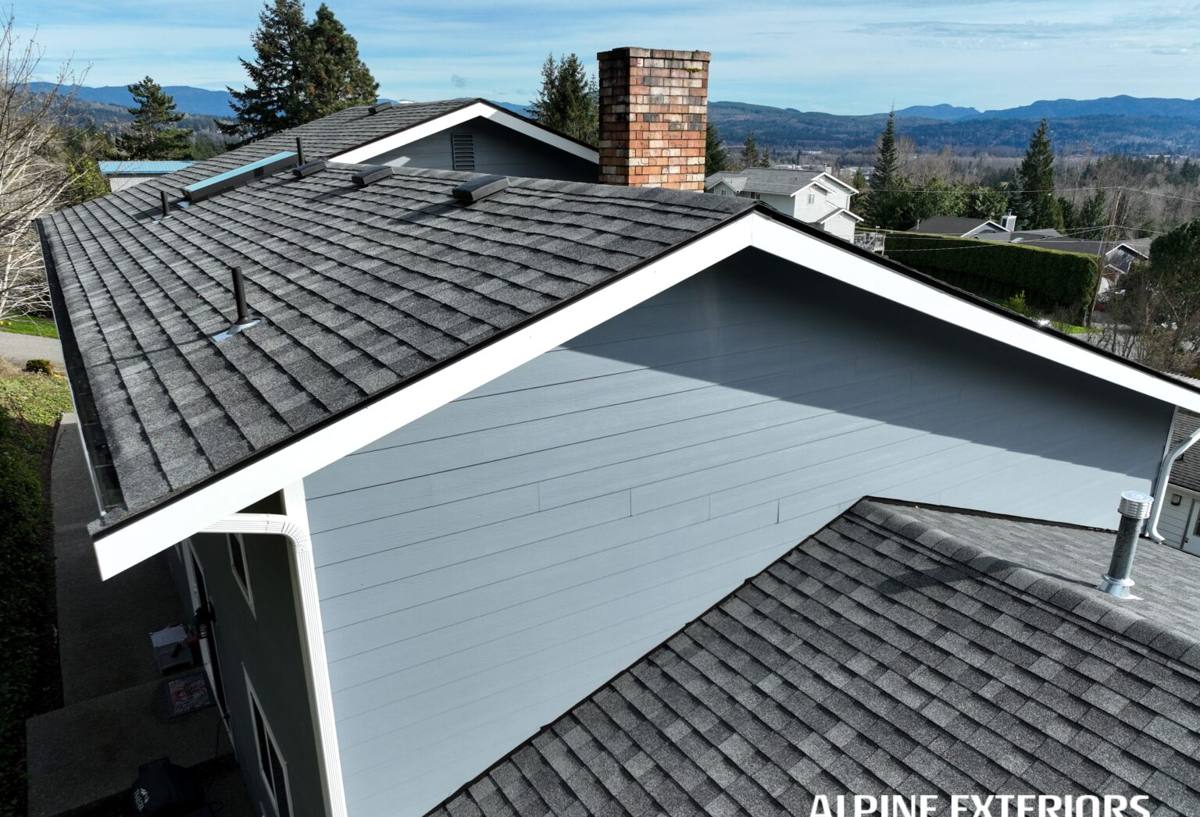
What Storm Damage Actually Looks Like Here
Wind is the biggest driver of storm damage in this part of Skagit County. Gusts that funnel through the valley can lift shingle edges, work fasteners loose, and peel back ridge caps without tearing anything off completely — which means the roof can look fine from the ground while it's actually letting water in. Driving rain compounds the problem by finding any gap wind has created and pushing water sideways under shingles and flashing instead of just running off the surface.
Moss adds a slower kind of damage that tends to show up after a storm even though the storm isn't really the cause. Moss holds moisture against the roofing material, and during a heavy rain event that trapped moisture has nowhere to go. Shingles that were already thinned by years of moss growth are far more likely to crack, curl, or tear loose in the next windstorm than a clean, well-maintained roof.
Common Storm-Related Issues We Find
- Lifted or missing shingle tabs, usually on the windward side or near roof edges
- Bent, loosened, or corroded flashing around chimneys, vents, and valleys
- Granule loss from wind-driven rain and debris abrasion
- Soft or spongy decking where trapped moisture has been sitting under moss or debris
- Clogged gutters and downspouts from wind-blown branches and needles, causing water to back up under the roof edge
- Small punctures or bruising from tree limbs and wind-carried debris
Why This Matters More in a Skagit County Winter
A small gap in flashing or a handful of missing granules doesn't seem urgent on its own. The problem is timing. Sedro-Woolley doesn't get one storm and then a dry stretch to recover — it gets a string of wet weather systems back to back for months. Every one of those systems pushes more water into whatever opening the last storm created. What starts as a minor repair in October can turn into damaged decking, wet insulation, or interior drywall damage by February if it's left alone.
Salt-laden air moving inland from the Sound also plays a role, accelerating corrosion on exposed metal flashing, fasteners, and gutter hardware faster than it would in a drier inland climate. Combined with moss growth from the surrounding tree cover, Skagit County roofs need more frequent attention than roofs in drier parts of the state — not because the materials are worse, but because the conditions are tougher.
What a Correct Storm Damage Repair Involves
A repair that only patches the visible symptom tends to fail again in the next storm. A repair done right addresses the cause underneath it. Here's what we actually check and do on a storm damage call.
- Full roof inspection, not just the reported problem area. Wind damage is rarely isolated to one spot — we check the whole roof plane, edges, valleys, and penetrations before quoting anything.
- Decking assessment. If shingles have been compromised long enough for water to reach the wood underneath, the decking gets checked for soft spots, delamination, or rot before any new material goes down.
- Flashing repair or replacement. Flashing is where most storm leaks actually originate, even when the shingles get the blame. We re-seat, re-seal, or replace flashing as needed rather than just caulking over a gap.
- Matching materials where possible. For partial repairs, we try to match existing shingle profile, weight, and color as closely as the market allows so the repair blends in rather than standing out as a patch.
- Moss and debris clearing. Any moss or organic buildup near the repair area gets cleared so it isn't trapping moisture against the new work.
- Gutter and drainage check. A repair means little if clogged gutters are still backing water up under the roof edge, so we check drainage as part of the job.
- Final walk-through. We show you what we found, what we fixed, and flag anything else worth watching so there are no surprises later.
Damage Type, What to Look For, and Typical Fix
| Damage Type | What It Looks Like | Typical Repair Approach |
|---|---|---|
| Wind-lifted shingles | Curled edges, tabs that flap in wind, gaps between shingles | Re-seal or replace affected shingles, check fastener pattern |
| Flashing failure | Rust streaks, visible gaps at chimneys/vents, leaks near penetrations | Remove and re-flash with corrosion-resistant material |
| Moss-weakened shingles | Thin, brittle, or cracking shingles under moss growth | Moss removal, spot shingle replacement, treatment to slow regrowth |
| Soft decking | Spongy feel underfoot, sagging between rafters, interior stains | Cut out and replace affected decking before re-roofing that section |
| Debris impact | Punctures, bruised shingles, dented metal flashing | Localized replacement of damaged material |
Our Process, Start to Finish
We keep the process straightforward because storm damage is stressful enough without an unclear repair timeline.
1. Initial Contact and Scheduling
You describe what you're seeing — a stain on the ceiling, missing shingles you noticed after a windstorm, a neighbor's roof damage that has you checking your own. We schedule a visit as soon as reasonably possible, prioritizing active leaks.
2. On-Site Inspection
We inspect the roof in person, not just from a photo or a drone pass. That means checking the attic side too, where the earliest signs of a leak — dark staining, damp insulation, daylight through the decking — often show up before anything is visible from outside.
3. Written Estimate
You get a clear breakdown of what we found, what needs repair versus what's just cosmetic, and what it will cost. We explain the reasoning so you understand what you're paying for, not just a bottom-line number.
4. The Repair
Work gets done efficiently, with the roof kept protected against further weather at every stage — we don't leave a roof open to the next rain system overnight if it can be avoided.
5. Follow-Up
We walk the completed work with you and answer any questions about maintenance going forward, particularly around moss control given how much of an issue it is in this area.
Insurance Claims and Storm Damage
Some storm damage repairs are covered by homeowners insurance, particularly sudden wind or impact damage; gradual damage from long-term neglect or moss buildup typically is not. We're not an insurance company and won't promise a claim outcome, but we can provide a clear, documented assessment of the damage and its likely cause, which is what your adjuster will need to evaluate the claim. If you're unsure whether your situation is claim-worthy, it's worth having us look before you call your insurer, so you know what you're dealing with.
Why a Crew That Already Works Sedro-Woolley Matters
Roofing companies that only pass through Skagit County occasionally tend to treat every roof the same, regardless of climate. A crew that regularly works Anacortes, Sedro-Woolley, and the surrounding area knows the difference moss makes over time, knows which flashing details hold up against sustained wind-driven rain, and isn't guessing at what "normal wear" looks like in this specific climate versus actual storm damage.
There's also a practical side: familiarity with local permitting requirements, established relationships with material suppliers who stock what this region's roofs actually need, and the ability to respond quickly when a storm passes through and multiple homes in the area need attention at once. That local presence is part of what you're paying for when you hire a crew that already works here, not just a general contractor working outside their usual territory.
Signs You Should Have Your Roof Inspected After a Storm
- Shingles or shingle pieces found in the yard after high wind
- Visible gaps, lifted tabs, or missing shingles from the ground
- New or worsening water stains on ceilings or walls
- Granules collecting in gutters or at downspout outlets
- Sagging or soft spots visible in the roofline
- Daylight visible through the roof deck from inside the attic
- Increased moss growth or standing debris on roof surfaces after wet weather
Any one of these on its own doesn't necessarily mean major damage, but it's worth having a second set of eyes on it before the next storm system rolls through.
Maintenance Between Storms
Given how much of Sedro-Woolley's roof damage traces back to moss and moisture rather than a single dramatic event, the most effective thing a homeowner can do is stay ahead of it. Keeping gutters clear, trimming back overhanging branches that drop needles and debris, and having moss treated before it thickens all reduce how much damage any given storm can do. A roof that's already compromised by moss and clogged drainage will take storm damage a well-maintained roof simply sheds.
If you're dealing with storm damage on a Sedro-Woolley roof, or just want an honest opinion on what a recent windstorm may have done, we're happy to take a look. Use the form below to request a free, no-pressure estimate and we'll get back to you to schedule a visit.