 Anacortes Exterior
 Roofing in Conway's Corner of Skagit County
Conway sits low in the Skagit River delta, close enough to Skagit Bay and Puget Sound that the air carries salt, and flat enough that fall and winter storms move through with little to slow them down. Homes here take on a different kind of weathering than roofs twenty miles inland. If you're planning a new roof, it's worth understanding what that combination of salt air, driving rain, and a long moss season actually does to a roof system over time — and what a correctly installed roof looks like in response.
This page focuses on one job: full new roof installation for homes in and around Conway. Not a general overview of roofing services, but the specific decisions that matter when the roof going on has to survive this particular stretch of Skagit County year after year.
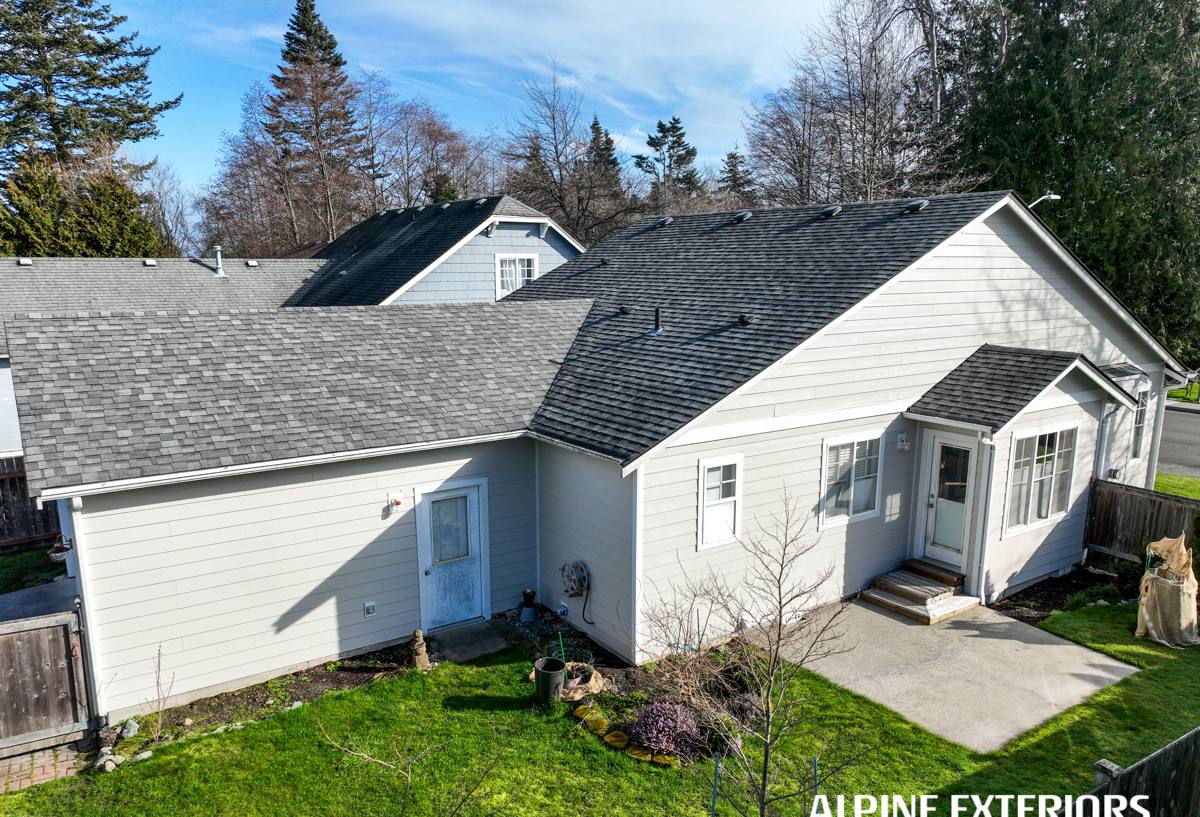
What Conway's Climate Actually Does to a Roof
Three conditions define roofing performance out here, and they compound each other.
Salt-Laden Marine Air
Being close to tidal water and open delta means metal components — fasteners, flashing, vent stacks, any exposed hardware — are exposed to airborne salt more or less constantly. Untreated or poorly coated metal corrodes faster here than it would in a drier, more inland part of the county. This is a materials-selection issue, not just a maintenance one: the fasteners and flashing metals we spec for a Conway roof are chosen with that exposure in mind from the start.
Driving, Wind-Pushed Rain
Skagit County gets a lot of rain in general, but the open, low terrain around Conway lets wind push rain sideways during winter storms rather than letting it fall straight down. Wind-driven rain finds its way under shingles, around poorly lapped flashing, and through fastener holes that aren't sealed correctly. A roof that would hold up fine in a sheltered, wooded lot inland can leak here if the underlayment and flashing details aren't built for lateral water pressure, not just gravity.
A Long, Wet Moss Season
Mild temperatures and extended damp periods mean moss and algae have most of the year to establish themselves, not just a few weeks. Once moss gets a foothold under shingle tabs, it holds moisture against the roofing material long after the surrounding air has dried out, and it can lift shingle edges enough to let wind and rain underneath. A new roof installation is the best point to build in moss resistance — trying to add it after the fact is far less effective.
What a Correct Installation Involves
A new roof is only as good as what's underneath the shingles or panels. The visible surface gets all the attention, but the layers below it are what actually keep water out.
Tear-Off and Deck Inspection
We remove the old roofing down to the deck rather than layering over it. That lets us actually see the plywood or plank sheathing underneath — soft spots, old water staining, and rot don't show up until the old material is off. Any damaged decking gets replaced before anything new goes down; installing new roofing over a compromised deck just hides a problem instead of fixing it.
Underlayment and Ice-and-Water Barrier
Given how much of the year Conway roofs stay damp, we don't treat underlayment as a formality. A synthetic underlayment with strong water resistance goes down across the full roof, with self-adhering ice-and-water barrier at the vulnerable points — eaves, valleys, around chimneys and skylights, and any low-slope transitions where water tends to sit or back up.
Ventilation
Proper intake and exhaust ventilation keeps the attic space closer to outdoor temperature and moisture levels, which matters in a climate this damp — poor ventilation traps humidity in the attic, which can lead to condensation, wood rot, and premature aging of the roofing material from underneath. We size and balance ventilation to the specific roof, not a one-size-fits-all vent count.
Flashing Details
Flashing is where most roof leaks actually start, not in the field of the roof. Every penetration — plumbing vents, chimneys, skylights — and every valley and wall intersection gets flashed with corrosion-resistant metal, properly lapped so water sheds over each layer rather than into it. This is exactly where wind-driven rain finds weak installations, so we don't shortcut it.
Choosing the Right Roofing Material for Conway
There's no single "best" roofing material — the right choice depends on budget, the home's structure, and how much long-term maintenance the homeowner wants to take on. Here's how the common options stack up against Conway's specific conditions.
| Material | Performance in Salt Air / Driving Rain | Moss Resistance | Typical Lifespan |
|---|---|---|---|
| Architectural asphalt shingles | Good, with proper flashing and corrosion-resistant fasteners | Moderate — improves significantly with zinc/copper strips | 25–30 years |
| Standing seam metal | Excellent when coatings and fastener hardware are marine-rated | High — moss struggles to hold on smooth metal | 40–50+ years |
| Cedar shake | Requires diligent maintenance in this level of moisture | Low without regular treatment and cleaning | 20–30 years with upkeep |
| Composite/synthetic shake or slate | Good; engineered for moisture resistance | Moderate to high depending on product | 30–50 years |
For most Conway homes, architectural asphalt shingles remain the most cost-effective choice when installed correctly with the right accessory metals. Standing seam metal is worth serious consideration for homeowners planning to stay long-term, given how well it sheds moss and handles marine exposure. We're straightforward about the trade-offs of each — cedar shake, for example, can look great, but it demands a maintenance commitment that not every homeowner wants to take on in a climate this wet, and we'll say so plainly rather than talk anyone into more upkeep than they're prepared for.
Building in Moss Resistance From Day One
Since moss has most of the year to work in Conway's climate, we build resistance into the installation rather than treating it as an afterthought:
- Zinc or copper control strips installed near the ridge, which release trace metal ions that inhibit moss and algae growth as rain washes over them
- Shingle products with algae-resistant granules where the budget allows
- Attention to roof airflow and shading factors, since roof sections under heavy tree cover stay damp longer and need more attention
- Clean, correctly lapped valleys and flashing so debris and moisture don't collect in the first place
- A clear homeowner recommendation on how often to have moss buildup checked and gently removed, since even a moss-resistant roof benefits from periodic attention
None of this eliminates the need for occasional maintenance, but it substantially reduces how much moss takes hold and how fast, compared to a roof installed without these details in mind.
Our Installation Process
Homeowners generally want to know two things: what's going to happen, and how disruptive it's going to be. Here's the sequence for a typical new roof installation.
- On-site assessment. We inspect the existing roof, attic ventilation, and deck condition, and talk through material options based on the home's exposure and your budget.
- Written estimate and material selection. You get a clear scope of work and pricing before anything is scheduled, with no surprise add-ons sprung on you mid-job.
- Permitting. New roof installations typically require a building permit in Skagit County; we handle that process as part of the job.
- Tear-off and deck repair. Old roofing comes off, the deck is inspected, and any damaged sheathing is replaced.
- Underlayment, flashing, and ventilation installation. The layers that actually keep water out go in first, sized and detailed for this climate.
- Roofing material installation. Shingles, panels, or shakes go on to manufacturer specifications, with moss-resistance measures built in.
- Cleanup and final walkthrough. We clear debris and nails from the property and walk the finished roof with you before calling the job done.
Signs Your Conway Home May Need a New Roof
Roof replacement is a bigger decision than a repair, so it's worth knowing what actually points to a full new install rather than a patch:
- Shingles that are cupping, curling, or losing granules across large sections rather than one isolated spot
- Persistent moss coverage that keeps returning shortly after cleaning
- Soft or spongy spots on the roof deck, or visible sagging
- Daylight visible through the attic roof boards
- Water stains on ceilings or in the attic that reappear after rain
- A roof approaching or past the manufacturer's expected service life for its material
- Repeated repairs in different spots each storm season, rather than one recurring issue
If you're only seeing one or two of these and they're localized, a repair may still make sense. A full replacement becomes the more honest recommendation once damage is spread across the roof or the underlying structure is compromised.
Why Working With a Crew That Knows Conway Matters
A roofing crew that mostly works drier, more sheltered inland areas can still do competent work — but they may not default to marine-grade fasteners, may under-spec ventilation for this level of ambient moisture, or may not think to recommend moss-control strips unless asked. Crews who regularly work Conway, and the wider Anacortes and Skagit County waterfront, build those decisions in automatically because they've seen what happens when they're skipped: corroded fasteners a few years early, moss creeping back within a season, flashing that held fine in a dry test but failed in the first real wind-driven storm.
That local pattern recognition is hard to fake and hard to shortcut. It's the difference between a roof that's technically installed to code and one that's actually built for the conditions it will face every winter.
Cost Factors to Understand
Every roof is different, so we don't quote pricing without seeing the home, but the main cost drivers for a Conway new roof installation are generally consistent:
| Factor | Why It Affects Cost |
|---|---|
| Roof size and complexity | More valleys, dormers, and penetrations mean more flashing labor and material |
| Material choice | Asphalt shingles cost less upfront than metal or composite products, though lifespan differs |
| Deck condition | Rotted or damaged sheathing discovered during tear-off adds repair costs |
| Ventilation upgrades | Older homes sometimes need added intake or exhaust venting to meet current standards |
| Moss-resistance measures | Control strips and algae-resistant shingle products add a modest amount to material cost |
| Accessibility and pitch | Steep or hard-to-access roofs take longer and require more safety equipment |
Broadly speaking, homeowners should expect a range depending on these factors rather than a flat per-square number quoted sight unseen — anyone offering a firm price without inspecting the roof and attic first is skipping a step that matters.
Get a Straightforward Estimate
If your Conway home's roof is showing its age, or you just want an honest opinion on whether repair or replacement makes more sense, we're glad to take a look. Use the form below to request a free, no-pressure estimate, and we'll walk the roof, answer your questions plainly, and give you a clear picture of what the job actually involves.