 Anacortes Exterior
 Composite Decking Built for Sedro-Woolley's Weather
Sedro-Woolley sits in the Skagit River valley, tucked between the foothills and the flats that run out toward Anacortes and the Salish Sea. It's a different pocket of climate than the waterfront, but it shares the same weather systems that bring salt-tinged marine air rolling in off Anacortes and Fidalgo Island, along with the driving rain and long gray stretches that define a Skagit County winter. Add mature tree cover, low winter sun angles, and yards that stay shaded and damp for months at a time, and you get conditions that are hard on any wood deck: moss on the boards, algae in the shade, and slow rot working from the inside of joists and fasteners out.
Composite decking was built to handle exactly this kind of environment. It doesn't absorb water the way wood does, it doesn't need annual staining or sealing, and it resists the moss and mildew growth that shows up fast on a shaded Sedro-Woolley deck. That said, composite isn't maintenance-free or foolproof — it still has to be installed correctly for this climate, with the right substructure, ventilation, and fastening details. A lot of the composite deck problems we get called out to look at aren't material failures; they're installation shortcuts that only show up after a wet Skagit County winter or two.
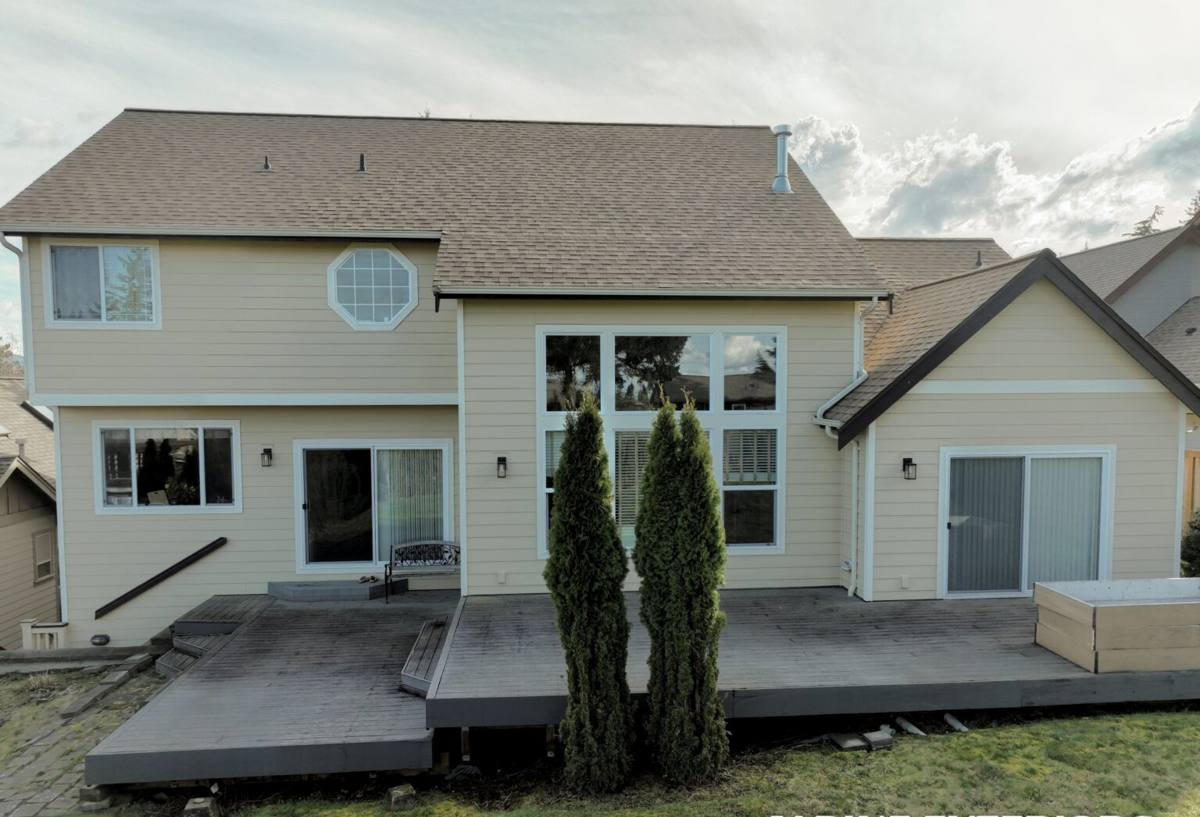
What Sedro-Woolley's Climate Actually Does to a Deck
Moss and Algae
Shaded, tree-covered lots hold moisture on deck surfaces long after a storm has passed. On wood, that moisture feeds moss and algae directly into the grain, making the surface slick and eventually breaking down the fibers underneath. Composite boards, especially capped composite, give moss and algae far less to grab onto and are much easier to rinse clean.
Driving Rain and Wind-Driven Moisture
Storms coming through the valley don't always fall straight down — wind pushes rain sideways under railings, against ledger boards, and into any gap in the framing that isn't properly flashed or sealed. This is where most rot starts on older decks, and it's a detail that matters just as much with composite decking, because the boards may resist moisture but the wood substructure underneath still needs full protection.
Freeze-Thaw and Temperature Swings
Skagit County doesn't get brutal winters, but Sedro-Woolley does see enough freeze-thaw cycling each year to expand and contract any trapped moisture in a deck's structure. Composite boards handle this fine on their own, but fasteners, hidden clips, and any wood components need to be rated and installed to move with the seasons rather than crack or work loose.
What a Correct Composite Deck Install Involves
Framing and Substructure
Composite decking is heavier than wood in most product lines, and manufacturers publish specific joist spacing requirements for their boards — often tighter than standard wood deck framing, especially for diagonal installs or boards run at an angle. Skipping this and using generic joist spacing is one of the most common shortcuts we see, and it leads to bounce, sagging, and premature board stress.
Fasteners and Hidden Hardware
Most composite systems use hidden fastener clips rather than face screws, both for appearance and because face-screwing composite can create moisture entry points over time. Those clips and screws need to be stainless steel or otherwise rated for coastal-influenced, high-moisture climates — standard galvanized hardware corrodes faster here than in drier parts of the state.
Ventilation and Drainage Underneath
Composite boards don't breathe the way wood does, which makes airflow underneath the deck even more important. Proper joist tape, correct board spacing, and clear ventilation paths keep moisture from pooling against the underside of the decking or against ledger connections — the number one spot we find hidden rot on older builds in this area.
Ledger Board and House Connection
Where the deck attaches to the house is the single highest-risk point for water intrusion on any deck, composite or wood. Correct flashing at the ledger, proper standoff spacing, and sealing around every lag bolt or structural screw are non-negotiable in a climate that sees this much sustained rain.
Composite vs. Other Decking Materials
| Material | Moisture Resistance | Moss/Algae Resistance | Maintenance |
|---|---|---|---|
| Pressure-treated wood | Moderate — absorbs water, prone to swelling and checking | Low — moss and algae take hold quickly in shade | Annual cleaning, staining, and sealing |
| Cedar or other natural wood | Moderate — better rot resistance than treated pine but still absorbs moisture | Low to moderate | Regular sealing to preserve color and prevent rot |
| Uncapped composite | Good — moisture resistant core | Moderate — surface can still hold algae without a cap | Occasional cleaning |
| Capped composite / PVC-capstock | Very good — sealed outer layer sheds water | High — smooth cap resists moss and algae buildup | Simple periodic washing |
We don't install every product on the market, and that's on purpose. Lower-grade uncapped composite can perform fine in drier climates but tends to show more surface staining and algae growth in a shaded, wet environment like Sedro-Woolley's. We steer homeowners toward capped composite or capstock products for this area specifically because of how the local climate behaves, not because every other option is bad in general.
Board Types and Why the Cap Matters Here
"Composite decking" covers a range of products, and the differences matter more in a wet climate than a dry one.
- Capped composite: A plastic or PVC shell wraps the composite core, sealing out moisture and giving moss and algae almost nothing to bond to. This is our default recommendation for shaded, tree-covered Sedro-Woolley lots.
- Uncapped composite: The wood-plastic blend is exposed on all sides. It resists rot better than solid wood but can still absorb some surface moisture and show algae staining faster in constant shade.
- Grooved-edge boards: Designed for hidden fastener clips, these give a clean, screw-free surface but require the groove to stay clear of debris — pine needles and leaf litter build up in grooves fast under mature trees and hold moisture against the board edge.
- Solid vs. scalloped/hollow profiles: Solid boards are heavier and generally perform better in freeze-thaw conditions since there's less internal cavity to trap moisture; hollow-core boards are lighter and less expensive but need careful end-capping to keep water out of the cavities.
Our Process, Start to Finish
- On-site assessment: We look at sun exposure, tree cover, existing structure (if replacing an old deck), and how water currently moves across the yard and house wall.
- Structural evaluation: Any deck attaching to the home gets a full check of the ledger connection, footings, and existing framing before we plan the new build or re-deck.
- Material selection: We walk through board options and cap types with the actual shade and moisture conditions of your lot in mind, not a one-size-fits-all recommendation.
- Framing and structural work: Joist spacing, blocking, and hardware are set to the manufacturer's specifications for the specific composite product chosen.
- Flashing and waterproofing: Ledger flashing, joist tape, and fastener sealing are done before a single deck board goes down — this step is invisible once finished but determines how the deck holds up over the next decade.
- Decking installation: Boards are laid with correct spacing for expansion and drainage, using hidden fasteners rated for our climate.
- Final walkthrough: We go over basic care and answer questions before we consider the job done.
Living With Composite Decking in a Moss-Prone Climate
Composite cuts down maintenance dramatically compared to wood, but "low maintenance" isn't "no maintenance," especially under Sedro-Woolley tree cover. A simple seasonal routine keeps a composite deck looking and performing the way it should for the long haul.
- Sweep off leaves, needles, and debris regularly, especially from board grooves and against railing posts where moisture collects.
- Rinse the deck surface with a garden hose and soft-bristle brush a few times a year, more often in heavily shaded yards.
- Keep gutters and downspouts clear so runoff isn't dumping extra water directly onto or under the deck.
- Trim back overhanging branches where possible to let more light and airflow reach the deck surface.
- Check the underside periodically for debris buildup against joists that can trap moisture against the framing.
- Address any loose fasteners, railing wobble, or soft spots near the ledger board right away rather than waiting for the next dry season.
Cost Factors to Expect
Every deck is different, but the same handful of factors drive most of the price difference between projects in this area.
| Factor | Why It Affects Cost |
|---|---|
| Board grade and cap type | Capped and capstock boards cost more up front than uncapped composite but need less long-term upkeep in a wet climate |
| Deck size and layout | Multi-level decks, angles, and curves add labor and material cutting time |
| Substructure condition | Replacing rotted framing or footings on an older deck adds cost but is not optional for a safe rebuild |
| Height and railing requirements | Elevated decks need code-compliant railing and often additional structural support |
| Site access | Tree cover, slope, and tight side-yard access on some Sedro-Woolley lots can affect equipment access and labor time |
We'll always walk a homeowner through where their money is actually going rather than giving a number with no explanation behind it.
Why Local Experience in Sedro-Woolley Matters
A crew that mostly builds decks in drier parts of the state can still do competent framing, but they won't necessarily plan for the specific combination of shade, moss pressure, and driving rain that Skagit County throws at a deck year-round. We work across the Anacortes area regularly, which means we've seen how composite decking actually performs here over time — which fastener grades hold up, which board profiles shed moss, and which ledger details fail first when a valley winter sets in. That local pattern recognition is the difference between a deck that looks good on installation day and one that still looks good in year eight.
If you're planning a new composite deck or replacing an aging wood one in Sedro-Woolley, we're happy to take a look and put together a straightforward, no-pressure estimate. Use the form below to get started.