 Anacortes Exterior
 Conway's Climate Is Harder on Siding Than Most Homeowners Realize
Conway sits low in the Skagit River delta, close enough to Skagit Bay that salt-laden air moves through the area regularly, and open enough that homes catch wind-driven rain with little tree cover or terrain to break it up. That combination — salt air, driving rain, and a long stretch of damp, low-sun months that favor moss and algae growth — is a tougher test for exterior siding than what a home a few miles inland in a more sheltered spot might face. Add in the region's overall wet season, which in Skagit County can stretch from fall through spring, and siding here needs to hold up to sustained moisture exposure, not just the occasional storm.
Vinyl siding can warp or bow under sustained wind pressure and doesn't take well to the freeze-thaw swings that show up on cold, clear nights after a wet stretch. Wood-based products, including primed spruce and cedar, absorb moisture at cut edges and fastener points, which is exactly where Conway's rain and humidity do the most damage over time. This is the environment James Hardie fiber cement siding was engineered to handle, and it's why we don't offer our Conway customers anything else.
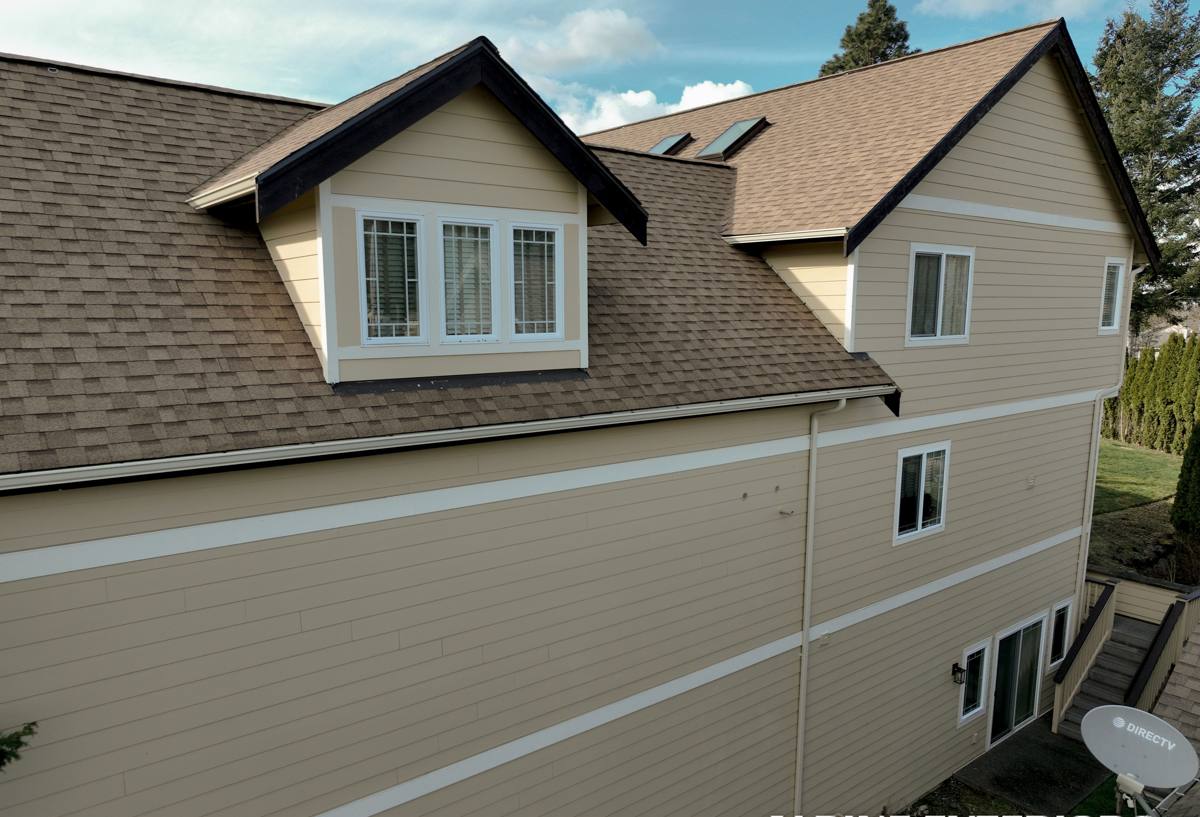
Why James Hardie Fits Conway Homes Specifically
James Hardie siding is fiber cement — a mix of cement, sand, and cellulose fibers that doesn't absorb water the way wood-based siding does and won't warp, crack, or rot from repeated wetting and drying cycles. That matters directly in Conway, where homes go through that wet-dry cycle constantly during the rainy months.
Built for This Climate Zone
James Hardie engineers its products by climate zone, and homes here fall into the HZ5 category, which accounts for the Pacific Northwest's combination of moisture, moderate temperatures, and coastal exposure. That's different from a one-size-fits-all siding product — the formulation and installation guidance are matched to what this specific climate does to a house over the years.
A Finish That Resists Moss and Salt Air
James Hardie's ColorPlus factory finish is baked on in a controlled setting rather than applied on-site, which gives it better adhesion and more consistent coverage than field-applied paint. That matters for two reasons in Conway: a tighter finish resists the kind of surface staining that comes from constant moisture and shaded, damp conditions, and it holds color better against salt air, which tends to dull and chalk lesser finishes faster than people expect.
Non-Combustible Construction
Fiber cement doesn't feed a fire the way wood siding can. That's a genuine safety advantage regardless of climate, and it's one more reason it's the standard we install rather than treating fire resistance as an upgrade option.
What a Correct James Hardie Installation Actually Involves
The material only performs as well as the installation behind it. Fiber cement siding installed without attention to manufacturer specifications can trap moisture just as easily as any other product — the siding isn't a substitute for good building practices, it's a system that depends on them. For a Conway home, that system needs to account for the amount of wind-driven rain the walls will see over the life of the siding.
- A weather-resistant barrier installed correctly behind the siding, lapped and sealed to shed water downward and out
- Proper flashing at windows, doors, and any roof-to-wall intersections, since these are the points where wind-driven rain finds its way in first
- Correct fastener type, spacing, and depth — over- or under-driven nails are one of the most common causes of early siding failure
- A minimum clearance between the bottom of the siding and grade, decks, or roofing, so splashback and standing moisture don't sit against the board
- Field-cut edges primed or sealed before installation, since a raw cut edge is the one place ColorPlus factory protection doesn't already cover
- Proper joint and butt-seam treatment, with gaps caulked per manufacturer specification rather than left tight or over-caulked
Skipping any one of these doesn't show up on day one. It shows up two or three wet seasons later, when moisture that should have been shed instead found a way behind the boards.
What Drives the Cost of a Conway Siding Project
Every home is different, so we won't quote a number without seeing the house, but the factors that move a project's cost are consistent. Knowing them ahead of time makes the estimate conversation more useful.
| Factor | Why It Matters |
|---|---|
| Home size and wall complexity | More corners, gables, and trim details mean more cutting, fitting, and labor time |
| Condition of the existing sheathing | Moisture-damaged sheathing found during tear-off has to be repaired or replaced before new siding goes on |
| Siding profile chosen | Lap siding, shingle-style panels, and board-and-batten each have different material and labor requirements |
| ColorPlus vs. primed product | Factory-finished ColorPlus costs more upfront but eliminates a field-painting phase and holds up longer against this climate |
| Full tear-off vs. new construction | Removing and disposing of old siding adds labor and cost that a new build doesn't have |
| Access and site conditions | Rural lots, outbuildings, and property layout in the Conway area can affect staging and scaffolding needs |
Our Process for a Conway Siding Project
1. On-Site Assessment
We walk the exterior, check for signs of existing moisture intrusion, and look at how the home is exposed to prevailing wind and rain given its orientation and surroundings. This tells us where extra attention to flashing and detailing will matter most.
2. Tear-Off and Sheathing Check
Old siding comes off and the sheathing underneath gets inspected before anything new goes up. This is the point where hidden moisture damage — often from a previous installation that didn't manage water correctly — gets found and addressed, rather than sealed behind new siding and left to keep spreading.
3. Weather Barrier and Flashing
A proper weather-resistant barrier goes on first, with flashing integrated at every penetration and transition. This is the layer that actually keeps water out if anything gets past the siding itself, and it's not optional.
4. Installation to Manufacturer Spec
James Hardie siding goes on following the manufacturer's fastening, clearance, and joint-treatment requirements — the same items covered above. This is also where an HZ5-rated, ColorPlus-finished product gets the labor practices to match its engineering.
5. Final Inspection and Walkthrough
We check seams, caulking, clearances, and trim before calling the job finished, and walk the property with the homeowner so everyone's looking at the same thing.
Why Hiring a Crew That Already Works in Conway Matters
Siding installation isn't identical everywhere in Skagit County. A crew that regularly works Conway and the surrounding delta area already understands how exposed the area is to wind off the bay, how the wet season here tends to run longer than in more sheltered inland spots, and what that means for flashing, clearances, and material choice before they ever step on site. That's different from a crew learning those conditions for the first time on your home.
There's also a practical side: permitting and inspection processes run through Skagit County, and a contractor who's been through that process locally knows what's expected and won't slow your project down figuring it out. Familiarity with the area's flood-prone, low-lying terrain near the river delta also matters when it comes to setting proper clearance between siding and grade — a detail that's easy to get wrong if you're not used to building in this kind of setting.
Maintenance in This Climate
James Hardie siding is low-maintenance, not no-maintenance. In an area with Conway's moss season and salt air, a little attention goes a long way:
- Rinse the exterior periodically to clear salt residue and organic buildup before it takes hold, especially on north-facing or shaded walls
- Keep gutters clear so overflow doesn't run down the siding face and create the kind of constant dampness that encourages moss and algae
- Trim back vegetation that shades siding and keeps it from drying out between rain events
- Have caulking and trim joints checked periodically — caulk is the one component that wears out well before the siding itself does
None of this is heavy upkeep. It's the difference between siding that looks the way it should for decades and siding that starts showing its age early because moisture had somewhere to sit.
Get a Straight Answer for Your Conway Home
If you're weighing a siding replacement or repair on a Conway property, we'll walk the exterior, look at what your home's exposure actually calls for, and give you a straightforward assessment — no pressure, no upsell. Reach out for a free estimate using the form below.