 Anacortes Exterior
 Windows Built for Conway's Corner of Skagit County
Conway sits low near the Skagit River delta, close enough to Puget Sound and Skagit Bay that homes here take on a specific mix of weather most inland Washington houses never deal with. Salt-laden air off the water, long stretches of driving rain, and a moss season that seems to start earlier every year all work on window frames, seals, and sills year-round. If you're planning a window replacement in this part of Skagit County, the job needs to account for that environment specifically, not just follow a generic install checklist.
We've worked on homes throughout the Anacortes area, including the Conway community, and we've seen firsthand what happens when windows are chosen or installed without that local context in mind. This page covers what actually matters for a window replacement out here: the moisture and salt exposure, the materials that hold up, and the installation details that separate a window that lasts twenty-plus years from one that starts failing in five.
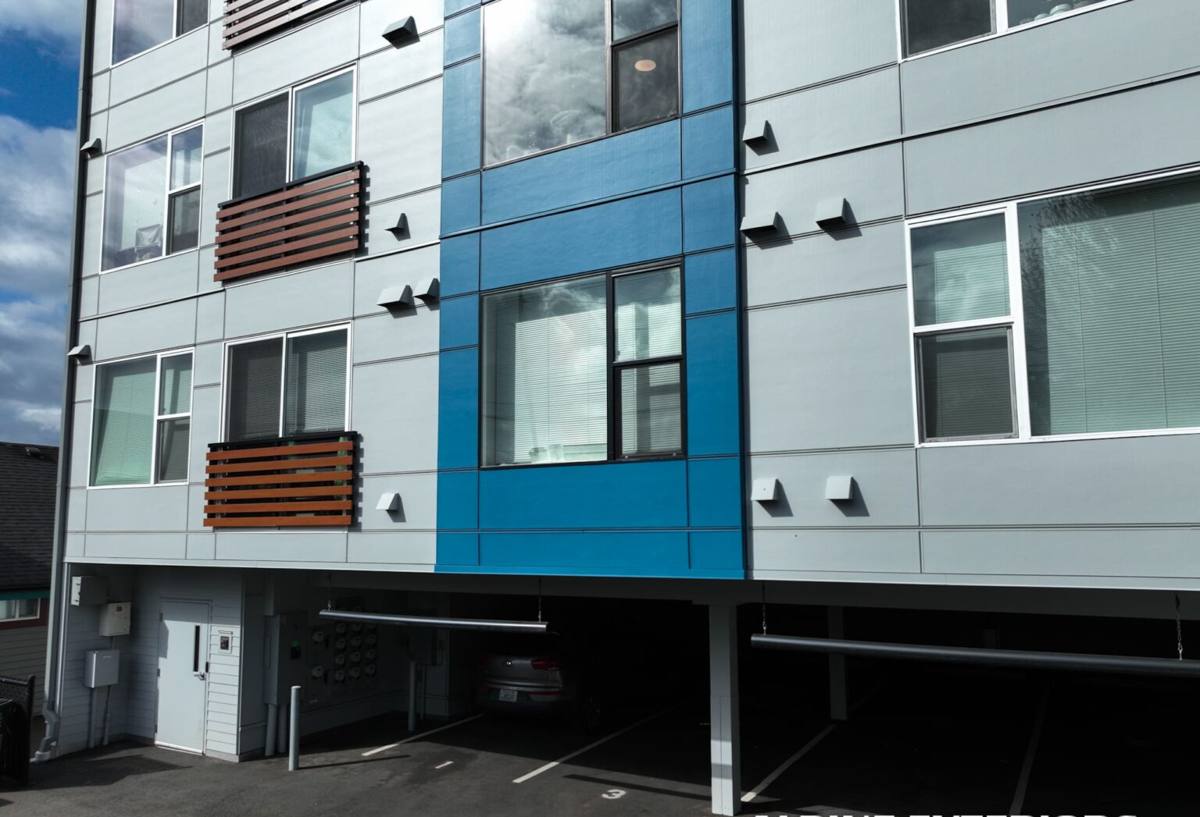
What Conway's Climate Does to Windows Over Time
Salt Air and Metal Components
Proximity to Skagit Bay and the Sound means airborne salt is a constant, low-level presence. It doesn't take a storm to cause damage — steady exposure slowly corrodes unprotected metal hardware, fasteners, and some window frame components. Aluminum-clad and vinyl products vary quite a bit in how well their hardware and finishes resist this kind of corrosion, which is one reason product selection matters more here than in a drier, inland part of the state.
Driving Rain and Wind-Driven Moisture
Rain in this part of Washington rarely falls straight down. Wind off the water pushes it sideways into wall assemblies and window openings, which puts real stress on flashing, sealant, and the water management details around each unit. A window that's watertight in a still, dry test but poorly flashed on installation day will eventually leak — usually not on day one, but after a season or two of wind-driven storms find the weak point.
Moss, Mildew, and Prolonged Dampness
The long wet season here supports moss and mildew growth on siding, trim, and anything that stays damp for extended periods. Around windows, that usually shows up as dark streaking on sills and trim, or moss creeping into gaps where old caulking has failed. It's rarely a structural emergency by itself, but it's often the first visible sign that moisture is finding its way in — and a signal that it's worth having the window and its surrounding trim looked at before it becomes something bigger.
Signs a Conway-Area Home Needs Window Replacement
- Fogging or condensation between glass panes (a sign the seal has failed and the insulating gas has escaped)
- Drafts you can feel near the frame even when the window is fully latched
- Wood sills that feel soft, spongy, or show visible rot at the corners
- Difficulty opening, closing, or locking the window smoothly
- Visible moss, black staining, or persistent damp patches on the sill or trim
- Noticeably higher heating bills with no other explanation
- Peeling paint or swollen trim immediately around the window frame
Any one of these on its own might not mean the window needs full replacement — but a few together, especially on a home that's had the same windows for 20+ years, usually means it's time for an honest look.
Choosing the Right Window Materials for This Environment
Not every window product performs the same way under salt air and constant moisture. We look at frame material, hardware quality, and glazing options with the local climate specifically in mind, not just what's cheapest or most common.
| Factor | Why It Matters in Conway |
|---|---|
| Frame material | Vinyl resists corrosion well and needs little upkeep; quality fiberglass offers strong stability but at a higher cost; wood needs more diligent maintenance in this level of moisture exposure |
| Hardware finish | Corrosion-resistant hardware matters more here than inland due to steady salt air exposure |
| Glazing (glass package) | Double or triple-pane with quality seals resists the condensation and fogging that damp climates accelerate |
| Weatherstripping | Good seals block wind-driven rain from finding a way past the sash |
| Flashing and installation method | Often matters more than the window itself for long-term water management |
We're upfront about trade-offs. Wood-frame windows, for example, can look great and perform well, but they demand more regular maintenance in a climate this wet — repainting, sealing, and periodic inspection — than vinyl or fiberglass alternatives. We'll walk you through what each option actually means for your home and your maintenance appetite, rather than just pushing whatever's easiest to install.
What a Correct Installation Actually Involves
The window unit itself is only part of the equation. Most window failures we see in this region trace back to installation shortcuts, not product defects. A correct job includes:
- Removing the old window and inspecting the rough opening for hidden rot or water damage before anything new goes in
- Repairing or replacing any damaged framing or sheathing discovered during removal
- Installing proper flashing that directs water away from the opening and down the exterior wall, not into it
- Using appropriate sealants rated for exterior, wet-climate use
- Ensuring the window is level, plumb, and square before final fastening
- Insulating the gap between the window frame and rough opening correctly — not overpacked, not left empty
- Finishing trim and sill details so water sheds away from the unit
Skipping any of these steps might not show up as a problem right away. It tends to show up two or three winters later, when wind-driven rain finds the gap that wasn't flashed correctly, or when a poorly sealed frame lets in enough moisture to start rot in the surrounding wall.
Our Process for Conway Window Replacement Projects
1. On-Site Assessment
We start with a walk-through of the home, checking the current condition of each window, the surrounding trim and siding, and any signs of existing moisture damage. This tells us whether we're looking at a straightforward swap or if there's framing repair to plan for.
2. Honest Recommendations
Based on the assessment, we'll recommend window materials and configurations that make sense for the home's exposure — a window facing prevailing wind and rain off the water may warrant a different spec than one on a sheltered side of the house.
3. Careful Removal and Prep
Old windows come out carefully, with the opening inspected and any hidden damage addressed before the new unit ever goes in. This step is where a lot of long-term problems get caught early instead of covered up.
4. Precise Installation
New windows are set level and square, flashed and sealed to shed water properly, and insulated correctly around the frame.
5. Final Check and Cleanup
We test operation, check seals, and make sure the job site is left clean before we consider the work finished.
Why a Local Crew Matters for This Kind of Work
Window replacement isn't just a product installation — it's a decision about how a home handles water and weather for the next couple of decades. A crew that regularly works homes in and around Anacortes and the Conway area already understands how this specific stretch of Skagit County behaves: which directions catch the worst of the wind-driven rain, how quickly moss and mildew take hold on damp trim, and which materials hold up against steady salt air instead of just looking good on install day.
That local familiarity shows up in small decisions — flashing details, sealant choices, hardware recommendations — that a crew unfamiliar with the region might not think twice about. It's the difference between a window that's technically installed correctly and one that's installed correctly for this specific climate.
Maintaining Your New Windows in a Wet Climate
A quality installation goes a long way, but a little upkeep extends the life of any window in this environment:
- Rinse frames periodically to clear salt residue, especially on sides facing the water
- Check and clean weep holes so water can drain properly out of the frame
- Inspect caulking and sealant annually, particularly after a hard winter
- Remove moss or algae buildup on sills and trim before it spreads
- Keep gutters and downspouts clear so runoff doesn't pool near window openings
Get a Free, No-Pressure Estimate
If your Conway-area home has windows showing their age — drafts, fogging, sticking sashes, or moss creeping into the trim — it's worth having a local crew take a look before those issues turn into bigger repairs. We're happy to walk your home, answer questions honestly, and put together a clear estimate with no pressure to commit. Use the form below to get started.