 Anacortes Exterior
 Windows Built for Conway's Wet, Salt-Tinged Climate
Conway sits in the low, flat farmland of the Skagit River delta, close enough to Skagit Bay and the Salish Sea that salt-laden air is a fact of life, not an occasional nuisance. Add in driving rain off Pacific storms and a moss season that can stretch from October well into spring, and you've got a climate that is genuinely hard on window installations. This isn't the dry-side weather that lets a mediocre install slide for a decade before anyone notices a problem. Around here, a poorly sealed window frame starts telling on itself within a season or two.
We're based in Anacortes and work throughout Skagit County, and Conway comes with its own set of considerations: older farmhouses with settled framing, newer construction on low ground where moisture management around openings really matters, and a mix of full sun exposure and deep shade depending on where a house sits relative to tree lines and outbuildings. A window installation here has to account for all of it, not just the size of the rough opening.
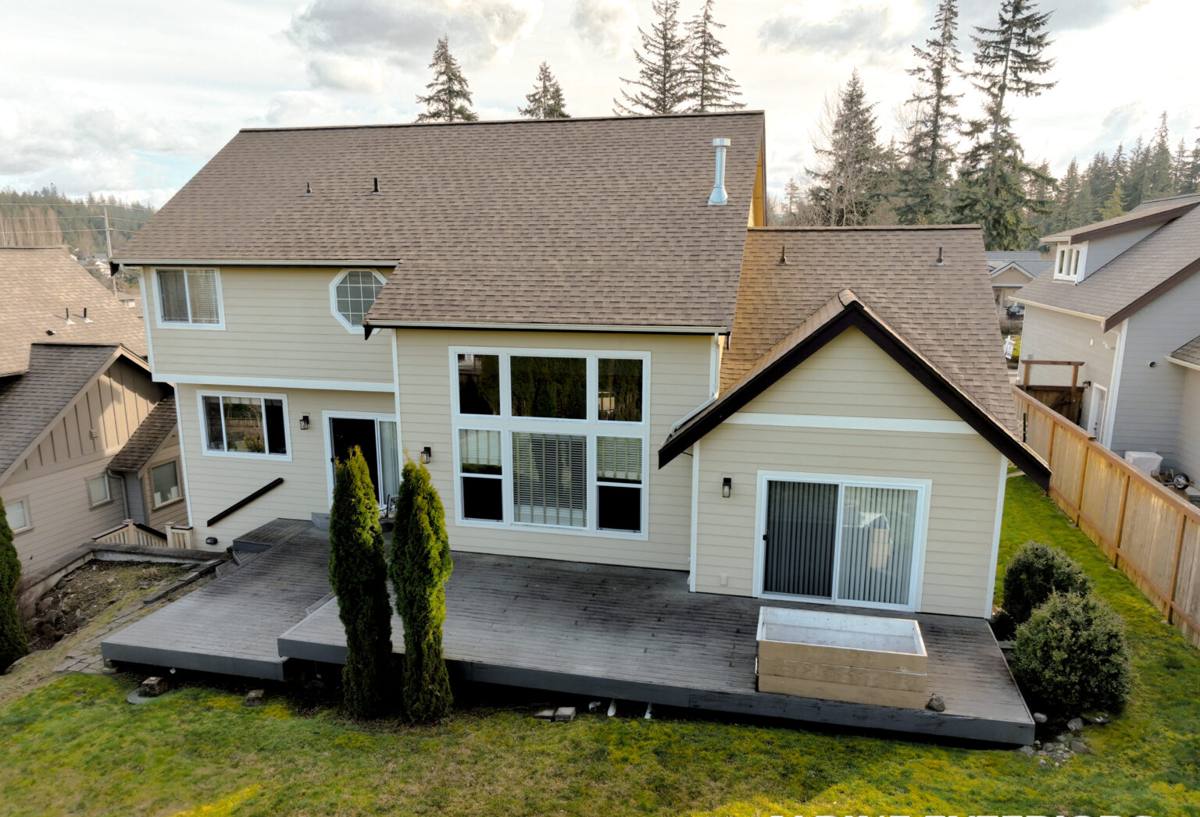
How the Weather Here Wears Down a Window Over Time
Understanding the failure pattern helps explain why installation quality matters more than most homeowners assume. The three big stressors in this area are moisture, salt, and biological growth, and they compound each other.
- Driving rain pushed by wind doesn't fall straight down — it hits window assemblies at an angle and gets forced into any gap in the flashing or sealant. Over time, water that should shed off the surface instead works its way behind the trim and into the wall cavity.
- Salt air accelerates corrosion on hardware, fasteners, and some aluminum components, and it can degrade certain sealants and finishes faster than a purely inland location would see.
- Moss and algae thrive in the long wet stretches typical of this region, especially on north-facing or shaded elevations. They hold moisture against sills and lower frame components far longer than a dry surface would, which speeds up rot in wood components and can stain vinyl and fiber-cement trim.
None of this means windows can't hold up in Conway — plenty do, for decades. It means the installation details that get skipped in easier climates (proper flashing sequencing, correct sealant selection, adequate sill pitch) are the details that actually decide whether a window lasts here.
Signs It's Time to Replace Rather Than Repair
Not every window problem calls for full replacement, but there are signs worth taking seriously before they turn into structural repair work:
- Fogging or a hazy film between panes of a double- or triple-pane unit — this means the seal has failed and the insulating gas or air gap is compromised
- Soft, spongy, or visibly rotted wood at the sill or lower corners of the frame
- Paint or finish bubbling and peeling specifically around the window, not the surrounding wall
- Persistent moss or dark staining at the bottom corners that keeps coming back after cleaning
- Drafts you can feel with a hand near the frame on a windy day, even with the window latched
- Difficulty opening, closing, or latching that has gotten worse over the past year or two
- Visible daylight or gaps between the frame and the siding or trim
A single symptom might just need caulking or a hardware adjustment. Several of these together, especially soft wood or a failed seal, usually mean the unit and its surrounding flashing need to come out and be done properly.
What a Correct Window Installation Actually Involves
A window installation is really a water management project that happens to have glass in the middle of it. Getting the visible parts right — trim, caulk lines, a level sash — is the easy part. The parts that determine whether the job lasts are the ones you can't see once it's finished.
Flashing and Water Management
Every opening needs a flashing sequence that directs water down and out, layered so each piece overlaps the one below it — sill pan first, then side flashing, then head flashing integrated with the house wrap or building paper above the opening. Skipping the sill pan or reversing the shingle-lap order is one of the most common causes of hidden rot we find when we remove an old window in this area. It's invisible from the outside until the wall cavity behind it is already damaged.
Fit, Shimming, and Sealant Selection
The window has to be shimmed square and plumb in the opening, not just wedged in and screwed down. An out-of-square frame stresses the sash, wears hardware faster, and can crack seals prematurely. On the sealant side, not every caulk or sealant is rated for the temperature swings and constant moisture exposure this climate delivers — we use products chosen for exterior, marine-adjacent conditions rather than whatever is cheapest off the shelf.
Insulation and Air Sealing
The gap between the window frame and the rough opening needs to be filled with a low-expansion foam or backer rod and sealant, not stuffed with fiberglass batting alone. Fiberglass batting doesn't stop air movement, which means it doesn't stop the moisture that air carries with it — a particular problem in a climate this humid.
Choosing Materials That Hold Up Here
Material choice matters more in Conway's climate than it would somewhere dry. Here's how the common options actually compare for this environment, in plain terms:
| Material | Moisture Behavior | Maintenance | Best Fit |
|---|---|---|---|
| Vinyl | Doesn't rot or corrode; handles humidity well | Low — occasional cleaning | Most homes; strong value for this climate |
| Fiberglass | Very stable in temperature and moisture swings | Low | Larger openings or homes wanting a longer-life frame |
| Wood | Handsome but vulnerable to rot without diligent upkeep | High — regular repainting/sealing | Homes prioritizing a traditional look and willing to maintain it |
| Aluminum | Prone to corrosion in salt air unless properly coated | Moderate | Limited use; generally not our first recommendation here |
| Wood-clad (wood interior, clad exterior) | Exterior clad resists weather; interior still needs some care | Moderate | Homeowners wanting wood look inside without full wood maintenance outside |
We don't push one brand or product line as the only answer — the right choice depends on the home's exposure, your maintenance appetite, and budget. What we won't do is install a frame material poorly suited to this much sustained moisture just because it's less expensive up front, without being upfront about the trade-off.
Our Process, Start to Finish
- On-site assessment. We look at the existing windows, the condition of the framing behind them where visible, sun and wind exposure, and drainage around the foundation before recommending anything.
- Honest scope and estimate. You get a clear picture of what's needed — full replacement, frame repair plus new sash, or targeted fixes — and why, in plain language.
- Careful removal. Old units come out without unnecessary damage to surrounding siding or trim, and we check the sheathing and framing underneath for rot or prior water damage before anything new goes in.
- Correct flashing and prep. Sill pan, side and head flashing, and air sealing are done to sequence — not shortcuts, regardless of whether it's visible in the finished product.
- Precision installation. Windows are shimmed square, fastened per manufacturer spec, insulated, and sealed with products rated for this climate.
- Finish and cleanup. Trim, caulking, and touch-up work are finished cleanly, and the site is left tidy.
- Walkthrough. We show you the finished work and how the windows operate before we consider the job done.
Why a Crew That Already Works in Conway Matters
Conway's low, flat terrain and mix of older rural properties and newer homes means the common problems repeat in patterns a crew learns from experience — which sills tend to hold water, which orientations grow moss fastest, where flashing tends to have been skipped in older construction. A crew that's replaced windows on farmhouses and newer builds throughout this part of Skagit County isn't guessing at how the climate behaves; they've already seen how it plays out over years, not just at the moment of installation.
There's also a practical side: rural properties can mean longer driveways, septic and well considerations, or access that isn't as straightforward as a standard in-town lot. A local crew plans for that instead of being surprised by it on install day.
What Affects the Cost
Window installation pricing varies enough by project that we won't quote a number without seeing the home, but the main cost drivers are consistent:
- Frame material — vinyl is typically the most budget-friendly, fiberglass and wood-clad cost more, full wood units more still
- Window count and size — larger and custom-sized openings cost more than standard sizes
- Condition of the existing opening — if there's hidden rot or damaged framing once the old window is out, that adds labor and material
- Replacement vs. new construction install — installing into an existing opening is generally more economical than a full new-construction opening with new exterior trim
- Number of stories and access — second-story or hard-to-access windows take more time and equipment
Broadly speaking, straightforward single-window replacements tend to run in the low-to-mid thousands range depending on material and size, with whole-house projects scaling from there — but the only reliable number is one based on an actual look at your home.
Get a Straight Answer for Your Home
If you're dealing with a drafty, foggy, or rotting window in Conway, or you're just planning ahead before the next wet season sets in, we're happy to take a look and give you an honest read on what your home actually needs — no pressure, no upsell. Use the form below to request a free estimate.