 Anacortes Exterior
 Conway sits low in the Skagit River delta, close enough to Skagit Bay and the Sound that salt-laden air is a regular part of the weather, and low enough that drainage and standing moisture are facts of life for anyone who owns property here. A deck built to a generic national spec doesn't hold up well in that combination. A deck built for Conway specifically — with the right material choices, the right substructure, and the right drainage plan — does. This page covers what that actually looks like, not the marketing version.
What Conway's Climate Does to a Deck Over Time
Three things wear on decks here more than in a typical inland town, and they compound each other rather than acting alone.
Salt Air and Metal Fasteners
Being close to Skagit Bay and the broader Puget Sound means airborne salt reaches structures here more than homeowners often expect, even at a few miles' distance. Salt accelerates corrosion on any exposed metal — deck screws, structural hardware, railing brackets, hinges. Once a fastener starts corroding, it weakens exactly where a deck depends on it most: the connections holding the frame together.
Driving Rain and Water Intrusion
Storms coming off the Pacific don't just drop rain straight down here — they push it sideways, into ledger connections, under railing posts, and into any gap that a calmer climate would never test. A deck built assuming rain falls politely and drains away on its own tends to develop hidden rot in the spots that aren't visible from a casual walk-across.
Moss, Algae, and a Long Wet Season
Skagit County's wet season runs long, and low-lying, tree-shaded lots around Conway hold moisture even longer than more exposed sites. That means moss and algae growth on deck boards isn't a once-a-year nuisance — it's closer to a year-round maintenance item, and on the wrong surface material it becomes a genuine slip hazard, not just a cosmetic one.
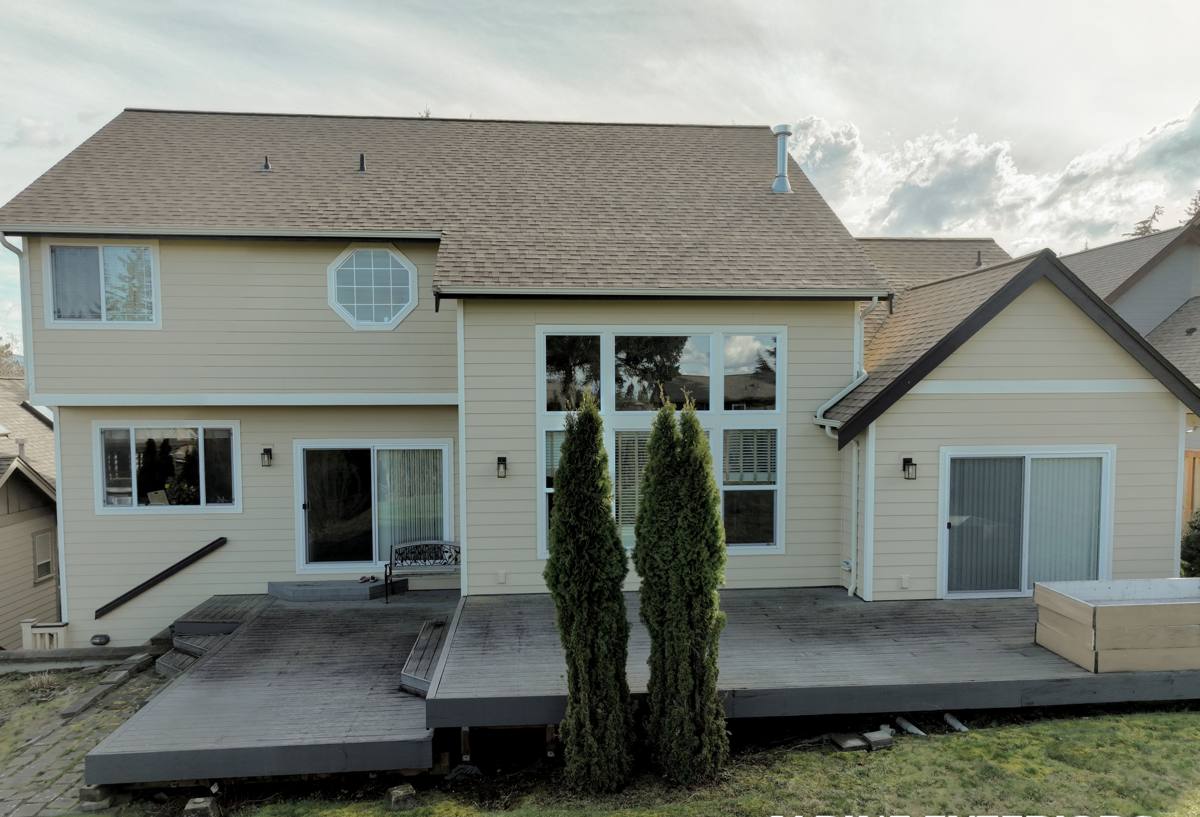
Choosing Decking Material for Conway's Weather
There's no single "best" decking material — there's a best material for a given budget, look, and tolerance for maintenance. Here's how the common options actually perform in this specific climate.
| Material | Rain & Moisture Behavior | Moss/Algae Resistance | Maintenance Load |
|---|---|---|---|
| Pressure-treated wood | Resists rot chemically, but end cuts and fastener holes are vulnerable if not sealed | Low — porous surface holds moisture, needs regular cleaning | Annual cleaning and periodic sealing/staining |
| Cedar | Naturally rot-resistant heartwood, but softer and can cup or split if not maintained | Low to moderate | Regular sealing to preserve both appearance and water resistance |
| Capped composite | Cap layer sheds water and resists staining well | Higher, but not immune — still needs periodic cleaning | Low — occasional washing, no sealing or staining |
| Uncapped composite | More prone to moisture absorption at cut edges than capped versions | Moderate | Low to moderate, with more attention to edge sealing |
Our standard for Conway projects leans toward capped composite or properly detailed cedar for most homeowners, simply because both hold up to this specific mix of rain and organic growth with less ongoing labor than uncapped wood products. That's not a knock on pressure-treated lumber — it's a legitimate, lower-cost option — it just asks more of the homeowner in upkeep to perform well here long-term.
What's Underneath Matters More Than What's On Top
The decking surface is what you see and walk on, but the framing underneath is what actually determines whether a deck lasts fifteen years or needs major repair in five. This is where a lot of corner-cutting happens, because it's invisible once the boards go down.
Ledger Attachment and Flashing
The ledger board — where the deck ties into the house — is the single most common failure point on decks in wet coastal climates. Without proper flashing that sheds water away from the house band board, water gets trapped behind the ledger and rots the connection from the inside, long before it's visible from outside. We flash every ledger connection as if the deck's structural integrity depends on it, because it does.
Footings in Soft, Low-Lying Ground
Conway's location in the river delta means soil conditions can be softer and hold more moisture than higher ground further from the river. Footings need to be sized and set to local frost depth and soil-bearing requirements, not just poured to whatever depth is fastest. Undersized or shallow footings in soft ground are a common cause of decks that develop noticeable sag or movement within a few years.
Hardware and Fastener Selection
Given the salt air here, we default to stainless steel or high-grade coated fasteners and structural connectors rated for coastal exposure, not standard interior-grade hardware. The cost difference is modest; the difference in how long the connections hold up is not.
Design Choices That Make Sense in Conway
Drainage and Slope
Every deck surface should have a slight slope away from the house so water sheds instead of pooling. On low-lying lots, we also look at where the deck drains to — a deck that dumps water toward a foundation or a low spot in the yard just relocates a moisture problem instead of solving it.
Railings and Wind Exposure
Open, unobstructed lots near the delta and closer to the water can see stronger, more sustained wind than a tree-sheltered inland lot. Railing posts and connections need to be sized for that, and we account for it in the design rather than defaulting to minimum code requirements everywhere.
Covered vs. Open Decks
A partial roof or pergola-style cover over some or all of a deck cuts down significantly on how much direct rain exposure the boards see, which slows both wear and moss growth. It's not the right call for every yard or budget, but it's worth discussing if you want to get more usable, dry days out of the space year-round.
Our Process, Start to Finish
- On-site assessment — we walk the property, check drainage patterns, sun and wind exposure, and existing structure if it's a rebuild
- Design and material selection — honest recommendations based on your budget and how much maintenance you actually want to take on, not a one-size pitch
- Permitting — we handle the permit application and any required engineering review with the county
- Framing and structural work — footings, ledger flashing, and framing built to hold up to this specific climate, not a generic minimum
- Decking, railing, and finish work — surface material installed to manufacturer spec, with attention to drainage and edge sealing
- Final walkthrough — we go over the finished deck with you, including what maintenance it actually needs going forward
Cost Factors for a Conway Deck Project
We won't quote a number without seeing the site, but these are the factors that consistently move price on deck projects in this area.
| Factor | Why It Matters Here |
|---|---|
| Size and footprint | Larger decks mean more framing, more footings, and more decking material |
| Material choice | Composite costs more upfront than treated lumber but generally costs less in maintenance over time |
| Height and substructure | Taller decks or decks over soft, low-lying ground need more substantial footings and framing |
| Railing style | Cable, glass, and custom metal railings cost more than standard wood or composite balusters |
| Site access and soil conditions | Delta-area soil sometimes requires deeper or reinforced footings, which adds labor and material |
| Roof or cover addition | A partial or full cover structure adds cost but reduces long-term weather exposure |
Keeping a Conway Deck Ahead of Moss Season
Even a well-built deck needs some seasonal attention in this climate. The goal isn't constant work — it's a short list of things done at the right time of year.
- Sweep debris out of board gaps regularly — trapped leaves and needles hold moisture against the wood or composite surface
- Wash the deck surface at least once or twice a year to remove early moss and algae growth before it establishes
- Check railing posts and connections annually for movement or corrosion at the hardware
- Inspect the ledger flashing area where the deck meets the house for any signs of staining or softness
- Reseal or restain wood decking on the manufacturer's recommended schedule — don't wait until it's visibly gray and dry
- Keep an eye on drainage after heavy storms to confirm water is still shedding away from the house as designed
Why Hiring a Crew That Already Works in Conway Matters
Generic deck-building guidance is written for average conditions — a builder following it by the book, without local judgment, will still put up a structurally sound deck that simply isn't matched to what this specific climate and soil throw at it over time. A crew that has actually built and repaired decks in and around Conway knows which ledger details are worth the extra time here, when a footing needs to go deeper because of soft ground, and which hardware grade is worth the small upcharge given the salt air off the bay.
That local experience shows up in decisions that don't get discussed in a sales pitch — how much slope a given lot's drainage actually needs, whether a shaded corner of the yard needs a different material recommendation than a sunnier one, how a railing post gets reinforced on a more wind-exposed site. Those are the calls that decide whether a deck is still solid and low-maintenance in fifteen years or already showing soft spots and corroded hardware in five.
If you're planning a new deck or replacing one that's showing its age, it's worth having someone look at your specific lot before you start comparing materials or prices. We offer free, no-pressure estimates for deck projects in Conway and the surrounding Skagit County area — use the form below to get a time on the schedule.