 Anacortes Exterior
 Board & Batten in a Delta Climate
Conway sits low in Skagit County's river delta country, close enough to tidal water and open farmland that wind gets a clear run at every wall on a house. That combination — salt-laden air moving in off the water, driving rain that hits siding at an angle instead of straight down, and a long, damp shoulder season that lets moss and algae get a foothold — is hard on exterior materials that aren't built for it. Board and batten siding, with its bold vertical lines and deep shadow reveals, is one of the most popular looks for the farmhouse and modern-rustic styles common in this part of the county. It's also one of the least forgiving profiles when it's installed with shortcuts, because every batten seam is a potential water path if the assembly underneath isn't done correctly.
This page is about that one service — board and batten siding — for that one type of setting: a low-lying, wind-exposed, moisture-heavy property in and around Conway. The physics don't change from house to house here, and neither does what a correct installation has to account for.
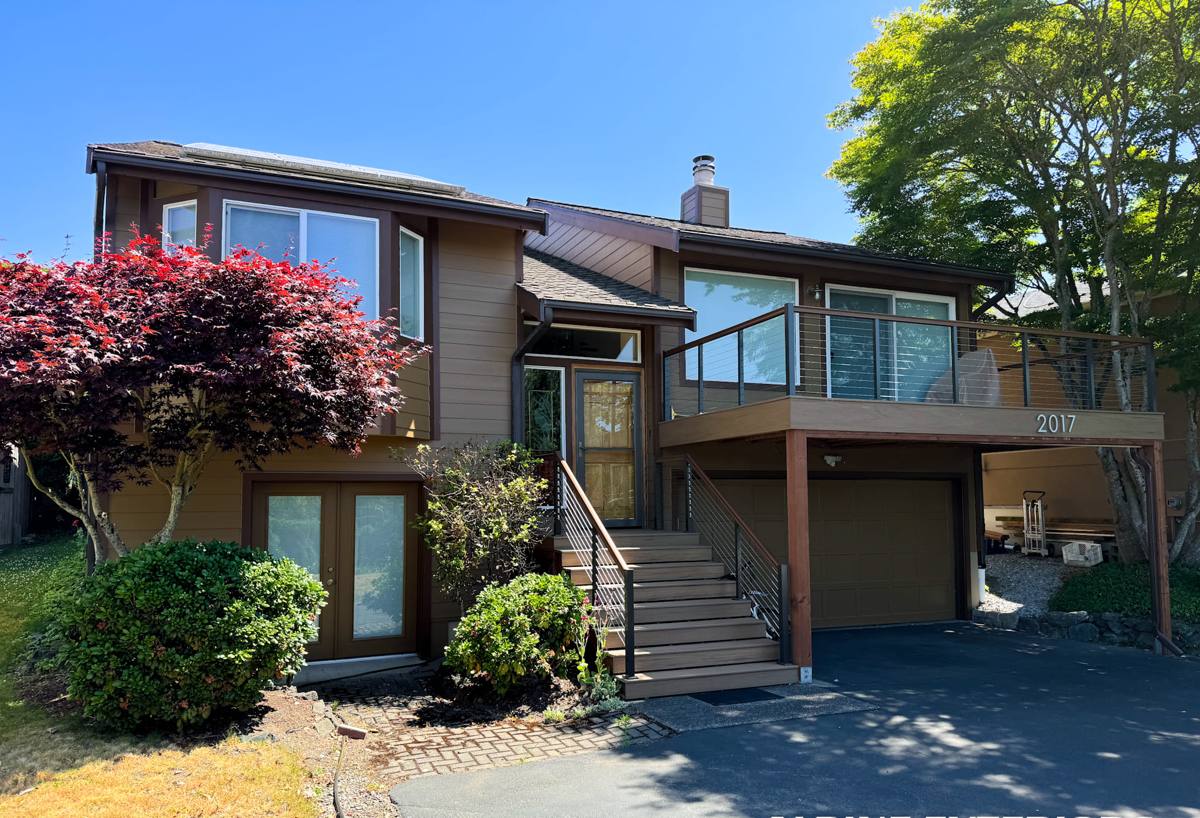
What Conway's Weather Actually Does to a Board & Batten Wall
Wind-Driven Rain
Flat, open delta terrain doesn't slow wind down the way a forested hillside does. Rain arrives sideways more often than it falls straight, which means it gets pushed up under laps, into batten seams, and behind trim edges that would stay dry on a more sheltered lot. A board and batten assembly has more vertical seams per square foot than a horizontal lap profile, and every one of those seams is a spot where wind-driven water is testing the installation.
Salt Air
Proximity to tidal water means airborne salt settles on siding, trim, and especially fasteners over time. Salt accelerates corrosion in anything that isn't rated for coastal exposure — cheap or mismatched fasteners are usually the first thing to fail, often years before the siding material itself shows any wear.
Moss and Algae Season
Skagit County's wet months run long, and low-lying, shaded, or north-facing walls stay damp for extended stretches. That's exactly the environment moss and algae need to establish. On wood or wood-composite siding, sustained moisture plus organic growth is a slow path to rot. On fiber cement, it's a cosmetic issue that a rinse and a little routine care handle — but only if the underlying assembly was built to shed water in the first place.
What a Correct Board & Batten Installation Actually Involves
The finished look of board and batten is simple — wide vertical panels with narrower battens covering the seams — but what's underneath it does the real work. A board and batten wall that's built to hold up in Conway's climate includes:
- A drainage plane and rainscreen gap behind the siding, so any water that does get past the surface has somewhere to go instead of sitting against the wall sheathing
- Correct panel and batten spacing, engineered to allow for material movement without opening gaps or over-compressing seams
- Batten placement over solid backing, not just decorative strips fastened into panel gaps
- Proper flashing at every horizontal transition — window and door heads, water tables, roof-to-wall intersections — so water is directed out and down, not into the wall assembly
- Coastal-rated fasteners, sized and spaced to manufacturer specification, resistant to the corrosion that salt air accelerates
- Factory-finished panels wherever possible, so field-cut edges are the only exposed surfaces needing sealant, rather than entire faces relying on paint for protection
Skip any one of these and the wall may look identical for the first year or two. The failures that come from cutting corners on board and batten don't usually show up immediately — they show up as staining, soft spots at the base of battens, or fastener bleed-through several seasons later, after the damage is already done.
Why We Install Only James Hardie for Board & Batten Work
We standardized on James Hardie fiber cement across every job we do, and board and batten is one of the profiles where that decision matters most. Hardie's vertical siding system — HardiePanel Vertical Siding paired with HardieTrim battens — is engineered specifically for this look, rather than being a horizontal product adapted after the fact. A few specifics that matter in a climate like this one:
- Non-combustible, moisture-resistant material. Fiber cement doesn't absorb water the way wood or wood-composite panels do, which matters directly for a wall type with more vertical seams exposed to wind-driven rain.
- ColorPlus factory finish. The color is baked on at the factory under controlled conditions, which holds up better against sun and salt exposure than field-applied paint, and means touch-up is limited to cut edges rather than full faces.
- HZ5 engineering for the Pacific Northwest. Hardie's HZ product line is formulated for wetter, more humid climate zones like ours, rather than being a one-size-fits-all product.
- A strong, transferable warranty backed by a manufacturer with decades of track record in fiber cement, not a newer or less-tested product category.
We don't install vinyl, LP SmartSide, Cemplank, Allura, primed spruce, or cedar board and batten. Each of those products has legitimate uses and reasonable arguments in its favor, but every one of them asks a homeowner to accept a trade-off — ongoing paint maintenance, moisture sensitivity at cut edges, or a shorter proven lifespan in exactly the kind of wind-driven-rain, salt-air, moss-prone environment Conway sits in. We'd rather install one product correctly, every time, than offer several and let each one's weak point become the homeowner's problem five or ten years down the road.
Board & Batten Material Comparison for This Climate
| Material | Behavior in Wind-Driven Rain | Salt Air / Coastal Exposure | Maintenance Load |
|---|---|---|---|
| James Hardie fiber cement | Engineered drainage assembly, low water absorption | Corrosion-resistant fastening system available; factory finish holds up well | Occasional rinse; touch-up limited to cut edges |
| Cedar / primed spruce | Absorbs moisture at seams; prone to swelling and checking | Salt accelerates finish breakdown | Repainting/refinishing on a recurring cycle |
| Vinyl | Can allow water intrusion behind panels at seams if not detailed carefully | Can become brittle over time with UV and temperature swings | Low, but limited repair options if damaged |
| LP SmartSide / engineered wood | Wood-based core is moisture-sensitive if edges aren't sealed and maintained | Edge sealing critical near salt exposure | Requires diligent edge and seam maintenance |
Our Process, Start to Finish
- On-site assessment. We look at wall orientation, wind exposure, existing moisture damage, and how water currently moves around the structure.
- Tear-off and sheathing inspection. We remove old siding and check the sheathing underneath for rot or damage before anything new goes up — a step that's especially important on older homes in this area.
- Water-resistive barrier and rainscreen installation. This is the layer that does the real work of keeping the wall dry, installed before a single piece of siding goes on.
- Flashing at every penetration and transition. Windows, doors, and roof lines get detailed first, not patched around afterward.
- HardiePanel and HardieTrim battens installed to spec, with correct fastener type, spacing, and gapping for material movement.
- Final inspection and cleanup. We walk the finished wall with the homeowner before calling the job done.
What Maintenance Looks Like After Installation
A correctly installed Hardie board and batten wall in this climate is low-maintenance, not no-maintenance. Homeowners should expect to:
- Rinse siding periodically to keep moss and algae from establishing, especially on shaded or north-facing walls
- Check caulking at trim and penetration points every year or two and re-caulk if it's cracked or pulling away
- Watch for any staining at the base of battens or panel bottoms, which can signal a drainage issue worth a quick look
- Keep gutters and downspouts clear so roof runoff isn't dumping extra water onto siding below
Cost Factors for a Conway Board & Batten Job
| Factor | Why It Affects Cost |
|---|---|
| Existing sheathing condition | Rot or damage found during tear-off adds repair scope before new siding can go on |
| Wall height and complexity | Multi-story walls, dormers, and cut-ins take more labor and material waste |
| Trim and batten detailing | Corner treatments, window trim, and batten spacing choices affect material quantity |
| Color and finish selection | Standard ColorPlus colors versus custom or premium finishes |
| Access and site conditions | Setback, landscaping, and staging room affect labor time |
We give straight, itemized estimates rather than a single number with no explanation, so homeowners can see exactly what's driving the price.
Why It Matters to Hire a Crew That Already Works This Area
Board and batten installation done right isn't complicated in theory, but it's detail-heavy in practice, and the details that matter shift depending on where the house sits. A crew that regularly works Conway and the surrounding Skagit County delta already knows to plan for wind-driven rain angles, to spec coastal-rated fasteners without being asked, and to recognize early moss and moisture patterns on walls exposed to this particular mix of wind, water, and dampness. That local pattern recognition is the difference between a wall that's built for this specific climate and one that's built to a generic spec sheet.
Questions Worth Asking Before You Hire
- Does the crew install a rainscreen/drainage gap behind board and batten, or panel it directly to the wall?
- What fastener type and spacing do they use, and is it rated for coastal/salt exposure?
- Is the material factory-finished, or does the whole wall depend on field-applied paint?
- How do they flash windows, doors, and roof transitions before siding goes on?
- Can they walk you through their tear-off and sheathing inspection process before quoting a final price?
If you're weighing board and batten siding for a home in the Conway area, we're glad to take a look and put together a straightforward, no-pressure estimate — just fill out the form below and we'll get in touch.