 Anacortes Exterior
 Building New in Conway: Windows Need to Be Right the First Time
Conway sits low in the Skagit River delta, close enough to Skagit Bay and Puget Sound that salt-laden air, wind-driven rain, and long stretches of gray, damp weather are just part of daily life. When you're framing a new home or an addition out here, the windows you choose and how they're installed set the tone for the next 20-30 years of performance. Get it right during new construction and you rarely think about your windows again. Get it wrong and you're chasing leaks, fogged glass, and rotting trim within a decade.
New-construction windows are different from replacement windows in one key way: they have a nailing flange built into the frame, installed before the siding goes on, so the window becomes part of the building's water管理 system rather than something inserted into an existing wall. That distinction matters most in a place like Conway, where flat farmland offers little wind break and rain tends to arrive sideways off the water.
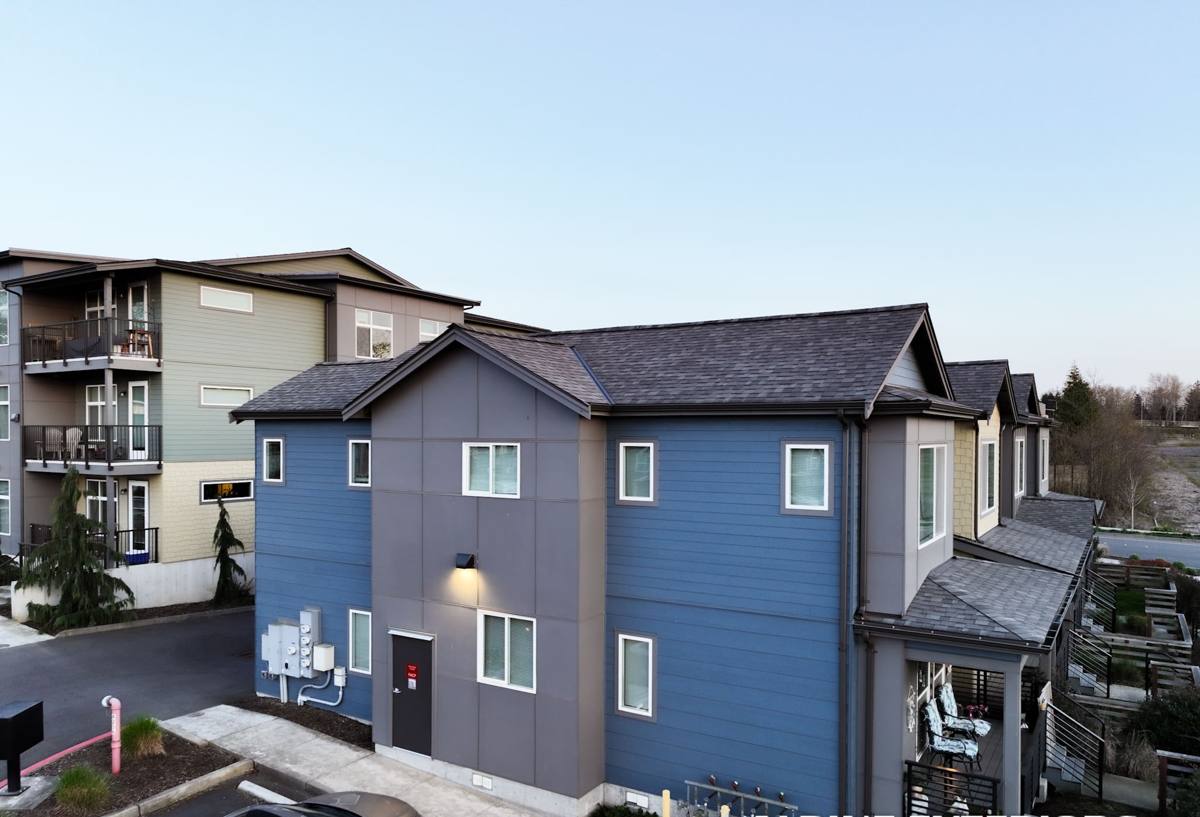
What Conway's Climate Actually Does to Windows
Skagit County's exterior work has to account for a few specific stresses that new-construction windows in this delta area face more than most:
- Salt air corrosion — proximity to Skagit Bay means airborne salt can accelerate corrosion on lower-grade hardware, screws, and unprotected metal flashing over time.
- Driving, wind-blown rain — with open farmland and few natural windbreaks, rain doesn't just fall here, it gets pushed sideways into wall assemblies and window openings.
- Long moss and mildew season — persistent damp conditions for much of the year mean any gap in flashing or sealant becomes a standing invitation for moisture intrusion and organic growth around frames and trim.
- Ground moisture and humidity — the delta's high water table and agricultural surroundings keep ambient humidity elevated, which affects how quickly caulk, sealants, and wood trim dry out after wetting.
None of this means new-construction windows fail here more often than elsewhere — it means the installation details that are optional in a dry climate are not optional in Conway.
What a Correct New-Construction Installation Actually Involves
The window unit itself is only part of the equation. What separates a window that performs for decades from one that leaks in year three is almost entirely in the sequencing and flashing detail:
Flashing and Water Management Layers
Before the window ever goes in, the rough opening needs a sloped sill pan so any water that does get past the window has somewhere to go besides into the framing. The weather-resistive barrier (WRB) on the wall has to be cut and integrated in the correct shingle-lap order — sill pan first, then window flange taped to the WRB, then head flashing lapped over the top so water always sheds outward and downward, never backward into the wall.
Sealant Placement, Not Just Sealant Use
Caulk and sealant are applied at specific points — not as a blanket fix. Back-bedding the flange in sealant at the sides and top (never the bottom, which needs to stay open as a drainage path) is standard practice we follow on every install, because a fully sealed bottom flange traps water inside the wall instead of letting it drain.
Shimming and Fastening
Windows need to be shimmed plumb, level, and square at the manufacturer's specified fastening points — under-shimming leads to frame racking and seal failure over time, especially as a new structure settles through its first year or two.
Frame Material Comparison for New Construction
Homeowners building new in Conway usually choose between vinyl, fiberglass, and wood-clad frames. Each has real trade-offs worth understanding before you commit, especially given the salt air and moisture load this area sees.
| Frame Material | Moisture/Salt Air Behavior | Maintenance | Typical Fit |
|---|---|---|---|
| Vinyl | Won't rot or corrode; performs well in salt air and rain exposure | Low — occasional cleaning only | Cost-conscious builds, rentals, most standard new construction |
| Fiberglass | Excellent dimensional stability, holds paint well, resists moisture-driven warping | Low to moderate | Higher-end new builds, larger window spans |
| Wood-clad | Attractive interior wood look, but exterior cladding seams are a moisture-entry risk if not detailed correctly | Higher — seams and joints need periodic inspection | Custom homes prioritizing interior wood aesthetics |
We install all three, but our standard advice for delta-area builds like Conway is to be honest about maintenance burden: wood-clad units look great, but in a climate with this much sustained moisture, the exterior cladding seams need to be inspected and re-sealed on a schedule — it's not a install-and-forget product the way vinyl or fiberglass can be.
Our Process for New-Construction Window Jobs
- Rough opening review — we check every opening against the window schedule and manufacturer specs before a single unit is set, catching framing errors while they're still cheap to fix.
- Sill pan and WRB integration — sloped pan flashing installed and tied into the wall's water-resistive barrier before window placement.
- Window set and shim — units are set plumb, level, square, and fastened per manufacturer spec at every required point.
- Flange taping and head flashing — sides and top taped and flashed in correct shingle-lap order; bottom left to drain.
- Interior and exterior seal check — every unit tested for operation and visually checked for gaps before siding crews close the wall.
- Final walkthrough — we document flashing details before they're covered by siding or trim, since that's the one point in a build where the work is easy to verify and impossible to inspect later.
Mistakes We Regularly See (and Correct) on New Builds
Most window failures in this region trace back to a handful of repeat issues, not bad window products:
- Flange fully caulked on all four sides, trapping water with nowhere to drain
- No sill pan flashing, relying on caulk alone to keep the sill dry
- WRB lapped in the wrong order, directing water behind the flange instead of over it
- Under-shimmed units that rack out of square as the structure settles
- Fasteners driven at the wrong points, voiding the manufacturer's water infiltration warranty
Every one of these is invisible once siding and trim go on — which is exactly why the installation crew's habits matter more than the window brand on the label.
Energy Performance and Condensation in a Wet, Mild Climate
Anacortes and Skagit County don't see extreme cold, so the biggest energy and comfort issue in new builds is usually condensation and air infiltration rather than raw insulation value. A properly sealed, properly flashed new-construction window with a reasonable U-factor for the Pacific Northwest keeps interior humidity from condensing on cold glass during our long wet winters, which is what actually prevents the mold and mildew staining homeowners associate with "bad windows." Low-E glass coatings also help manage solar heat gain during the brighter, drier summer stretch without sacrificing winter comfort.
Maintenance After Move-In: A Simple Homeowner Checklist
A correctly installed new-construction window needs very little upkeep, but a little attention keeps it that way through Conway's long moss season:
- Rinse frames and sills a couple times a year to clear salt residue and organic buildup
- Check exterior caulk lines at the top and sides annually — the bottom should stay open, not sealed
- Keep gutters and downspouts clear so roof runoff isn't sheeting directly across window heads
- Watch for moss or dark staining at trim joints — an early sign moisture is sitting somewhere it shouldn't
- Operate every window through a full open-close cycle each season so weatherstripping doesn't set or crack
Why Local Installation Experience Matters in Conway
Conway is a small community, and building codes, inspection expectations, and even typical wind exposure vary block by block between here, greater Anacortes, and the rest of Skagit County. A crew that already works this specific stretch of the delta knows which walls take the worst of the wind-driven rain, how local inspectors expect flashing documented, and which flange-and-sealant habits actually hold up through a full wet season rather than just looking good on install day. That local pattern recognition is the difference between a window that's technically installed and one that's installed correctly for this exact climate.
If you're framing new construction or planning an addition in Conway, we're happy to walk the plans or the framed openings with you and give straight answers about window selection and flashing details before anything gets closed in. Reach out for a free, no-pressure estimate — the form below gets you started.