 Anacortes Exterior
 Composite Decking Built for Conway's Climate
Conway sits low in the Skagit River valley, close enough to Skagit Bay and the Sound that salt-laden air reaches it regularly, and flat enough that rain doesn't drain off the land the way it does on higher ground. That combination — salt air, driving rain off the water, and long stretches of gray, damp weather — is hard on any exterior wood surface, and it's especially hard on a deck, which sits horizontal and takes on water, debris, and shade all at once. A deck built the same way you'd build one in a drier inland town won't hold up the same way here. We've installed and repaired composite decking across Skagit County long enough to know which details matter in this specific setting, and which corners get cut on jobs that don't account for local conditions.
This page is about one thing: composite decking done right for homes in and around Conway, given what this area's climate actually does to a deck over time.
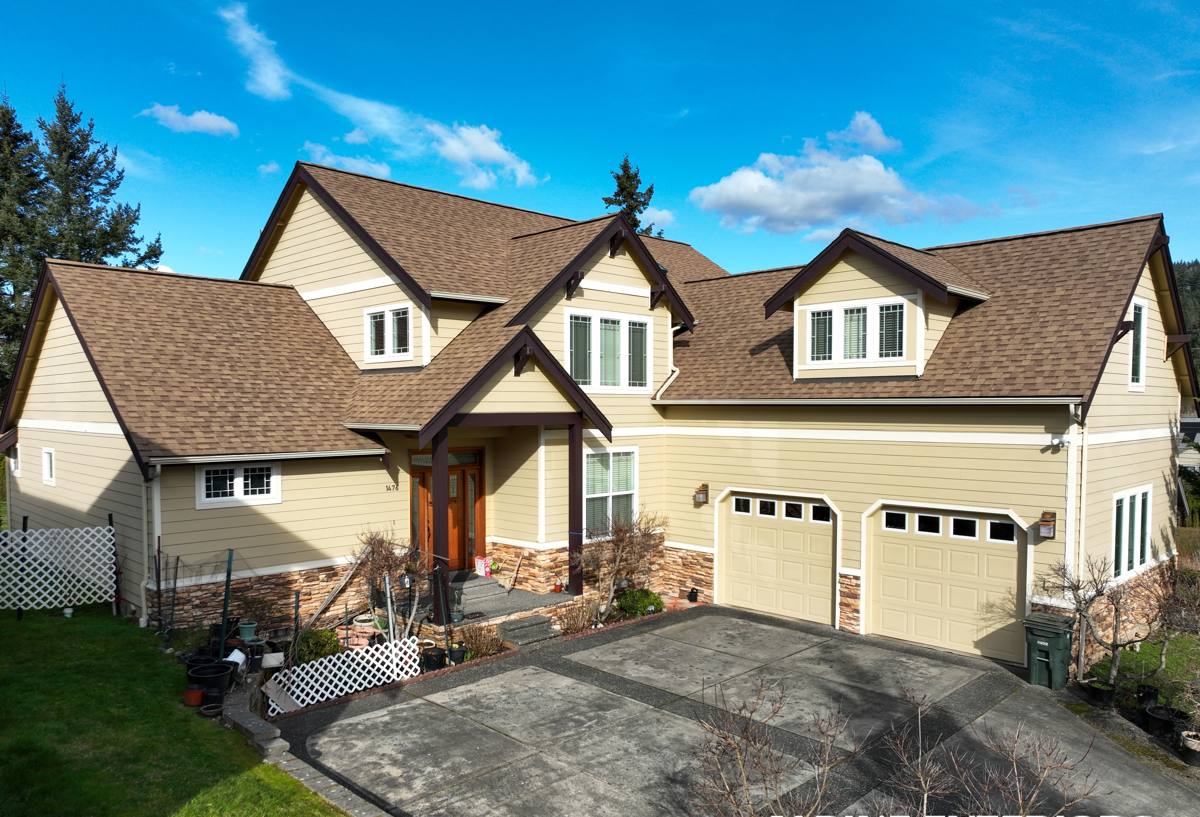
What Conway's Climate Actually Does to a Deck
Homeowners often assume composite decking is "maintenance-free" everywhere, full stop. It's low-maintenance compared to wood, but the environment still matters:
- Salt air accelerates corrosion on any exposed metal — screws, joist hangers, post bases, railing brackets. Standard hardware corrodes faster here than it would forty miles inland.
- Driving rain, especially wind-driven rain off the water, gets pushed sideways into ledger connections, stair stringers, and any gap where flashing was skipped or done halfway.
- Moss and algae take hold wherever a deck stays damp and shaded for long stretches — under tree cover, on the north side of a house, or anywhere airflow underneath the deck is blocked. Composite boards resist rot, but the surface film that moss and algae leave behind still makes boards slick and needs to be dealt with.
- Low, flat terrain around Conway means ground moisture and slow-draining soil are common. A deck's substructure needs real ground clearance and drainage planning, not just posts set in whatever grade happens to be there.
None of this makes composite decking a bad choice for Conway — quite the opposite, composite is a strong fit for this climate when it's installed with these conditions in mind. But the installation has to actually account for them.
What a Correct Composite Deck Installation Involves
Framing and Ledger Attachment
The ledger board — where the deck attaches to the house — is the single most common failure point on any deck, composite or wood. In a high-rain area like this, that connection needs proper flashing that sheds water away from the house framing, not just a bead of caulk. We flash every ledger attachment and check the house sheathing behind it before we ever set a board, because water intrusion at the ledger is a structural problem, not a cosmetic one.
Fasteners and Hardware
Given the salt air moving inland off the water, we use stainless steel or heavily coated, corrosion-rated fasteners and structural hardware throughout — hangers, hidden fastener clips, post bases, and lag bolts. Standard galvanized hardware can start showing surface corrosion within a few seasons in this environment; it's not worth saving a small amount up front on hardware that holds the whole structure together.
Drainage and Airflow Underneath
Composite boards don't rot, but the joists, beams, and ledger underneath them are still usually wood, and wood framing under a low, shaded deck in a wet climate needs airflow to dry out between rain events. We plan ground clearance, joist tape, and skirting/venting so moisture doesn't sit trapped underneath the deck all winter. This is also what keeps moss from establishing itself in the shaded underside and creeping up onto the walking surface.
Board Spacing and Slope
Correct board spacing lets water pass through and off the deck instead of pooling, and the whole surface should have a slight slope away from the house. On a flat property like much of the land around Conway, that slope has to be built in deliberately — the ground itself won't do the work for you.
Choosing the Right Composite Board for This Environment
Not all composite decking is built the same way, and the differences matter more in a wet, salty, shaded climate than they would somewhere dry.
| Board Type | How It Performs Here | Trade-offs |
|---|---|---|
| Capped composite (full cap) | Best resistance to moisture absorption, staining, and surface mold/algae growth; holds up well under sustained damp shade | Higher upfront cost than uncapped boards |
| Capped composite (partial/three-side cap) | Good moisture resistance on the visible faces; cut ends need to be sealed or capped at install to avoid water uptake | Requires more careful installation to protect exposed cut edges |
| Uncapped composite | More prone to surface moisture absorption and algae staining in shaded, damp spots | Lower cost, but higher long-term cleaning burden in this climate |
| PVC decking | Fully synthetic, essentially immune to moisture absorption and rot | Different look and feel than wood-composite blends; higher material cost |
For most Conway properties — especially any deck with shade from trees or the house itself, or facing prevailing weather off the water — we recommend fully capped composite as the baseline, and we'll walk through the trade-offs honestly rather than push whatever has the best margin.
Our Installation Process
- On-site assessment — we look at sun exposure, shade patterns, drainage, existing ledger condition, and ground clearance before recommending anything.
- Design and material selection — board style, color, and railing system chosen based on your home and the site conditions, not just a catalog picture.
- Permitting — we handle the paperwork required for Skagit County jurisdiction where applicable, so the deck is built to code and won't cause problems at resale.
- Demolition of the old deck (if replacing), with an honest look at the ledger and framing underneath before we build over it.
- Framing and flashing — corrosion-rated hardware, proper ledger flashing, and ground clearance built to handle this area's rain and moisture.
- Decking, fascia, and railing installation — hidden fasteners where the product allows, correct spacing, and slope built into the frame.
- Final walkthrough — we go over care and cleaning specific to your deck's sun/shade exposure before we consider the job done.
Maintenance in a Moss-Prone, Salt-Air Environment
Composite decking cuts out sanding, staining, and sealing — but it isn't a zero-maintenance surface, especially here. A short seasonal routine keeps a composite deck looking and performing the way it should:
- Sweep off leaves, needles, and organic debris regularly, especially in fall — trapped debris holds moisture and feeds moss and algae growth.
- Rinse the deck surface and rails periodically to clear salt residue and airborne grime, particularly after windy weather off the water.
- Clean visible moss or algae film with a composite-safe cleaner and a soft-bristle brush — avoid pressure washing at close range, which can damage the board surface.
- Check railing hardware and fastener heads once a year for early signs of corrosion, and address it before it spreads.
- Keep gutters and downspouts near the deck clear so runoff isn't dumping extra water onto or under the deck surface.
- Trim back overhanging branches where practical to reduce shade and debris load on the deck.
Cost Factors for a Conway Composite Deck
Every project is different, but the same handful of factors drive most of the cost difference between one composite deck and another in this area:
| Factor | Why It Affects Cost |
|---|---|
| Board tier (uncapped vs. capped vs. PVC) | Material cost rises with moisture and stain resistance |
| Substructure condition | Existing ledger, posts, or footings needing repair or replacement add labor |
| Deck size and shape | Multi-level decks, curves, and stairs all add framing and cutting time |
| Railing system | Composite, aluminum, and cable rail systems vary widely in material cost |
| Site access and grading | Low, flat, or hard-to-access lots can add equipment or labor time |
| Permitting requirements | Height, guardrail, and footing requirements vary by structure and lot |
We'll always give you a real, itemized number for your specific property rather than a rough per-square-foot guess that changes once we're on site.
Why Hire a Crew That Already Works in Conway
A contractor who mostly works dry, inland jobs can still build a deck that looks fine on installation day. The difference shows up two or three winters later — in a ledger connection that never got proper flashing, hardware that's already rusting, or a shaded corner where moss has taken over because there was no airflow plan underneath. We work Anacortes and the surrounding Skagit County communities regularly, including Conway, and we build every deck assuming it has to survive a wet marine climate for decades, not just pass a walkthrough. That means corrosion-rated hardware as the default, real flashing at every ledger, and a drainage and airflow plan built into the frame before the first board goes down.
If you're considering composite decking for a home in Conway, we're happy to come take a look at your site, walk through board options honestly, and give you a straightforward, no-pressure estimate — just fill out the form below.