 Anacortes Exterior
 Siding Repair in Conway: A Different Set of Problems Than a City Job
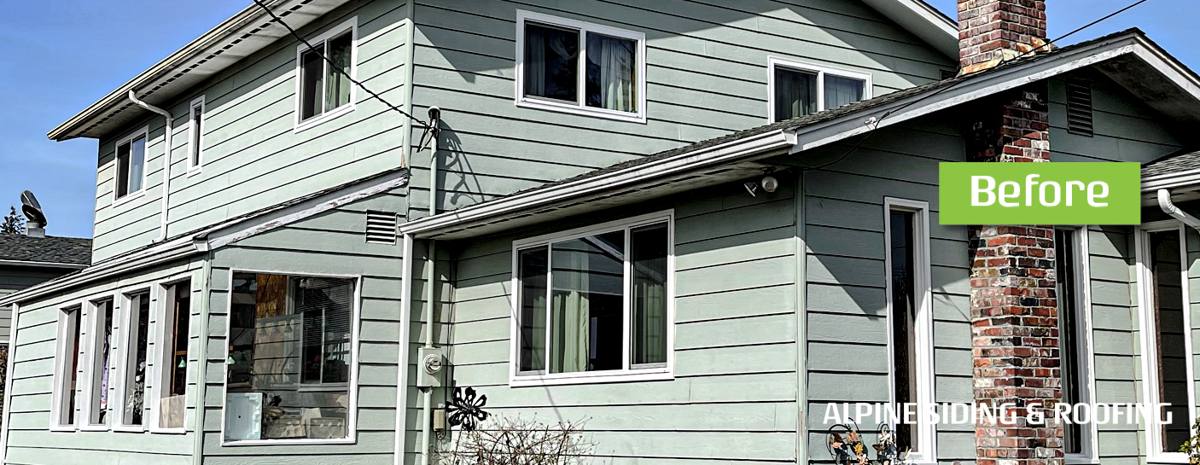
Conway sits low, close to the Skagit River delta, with open exposure to weather moving in off Puget Sound and Skagit Bay. That combination of low elevation, damp ground, and steady marine air means siding here takes on moisture in ways a home fifteen minutes inland simply doesn't deal with. When we get a call for siding repair out in Conway, we're not just looking at a cracked board or a gap at a trim joint — we're looking at how the whole wall assembly has been handling years of wet, humid, shaded conditions.
That context matters because a repair that would hold up fine on a sun-exposed wall in a drier part of Skagit County can fail fast in Conway if it doesn't account for how moisture actually moves through the siding system here.
Why Conway Homes Wear the Way They Do
Salt Air and Driving Rain
Proximity to the water means airborne salt is a constant, low-grade stressor on exterior materials — it accelerates corrosion on fasteners, flashing, and any exposed metal trim, and it works its way into hairline cracks in siding faster than plain rainwater would. Add wind-driven rain, which is common in this part of Skagit County during fall and winter storms, and you get water forced sideways into laps, seams, and butt joints that were never designed to handle rain hitting them at an angle.
Moss and Shade
Conway's tree cover and the general dampness of the lowland keep siding surfaces wet longer after a storm than they would stay wet in a more open, sun-exposed neighborhood. That extended dampness is exactly what moss and algae need to establish. Once moss gets a foothold on a north-facing wall or under an eave, it holds moisture directly against the siding surface around the clock, which is a much bigger problem than the occasional soaking a south wall gets.
Ground Moisture and Low Clearance
Because the area sits low relative to the river and tidal influence, homes here often have less natural grade fall away from the foundation than you'd find on a hillside lot. That means splash-back, standing water near the base of walls, and generally higher ambient moisture at the bottom courses of siding — which is usually the first place we find rot, staining, or fastener corrosion when we inspect a Conway home.
Signs Your Siding Needs Attention Before It Becomes a Bigger Job
Most siding repair calls we get in Conway start with something a homeowner noticed while doing yard work or washing windows. Catching these early is what keeps a repair a repair, instead of turning it into a full wall replacement.
- Soft or spongy spots when you press on the siding, especially near the bottom few courses
- Visible moss, algae, or persistent green-black staining on shaded or north-facing walls
- Rust streaks running down from nail heads or trim fasteners
- Bubbling, peeling, or bulging paint or factory finish in specific spots rather than uniformly
- Gaps opening up at butt joints, corner boards, or where siding meets window and door trim
- A musty smell or visible staining on interior walls that back up to an exterior wall
- Warped, cupped, or visibly separating boards, particularly on walls that get little direct sun
Any one of these on its own might be minor. Several showing up in the same area, or a soft spot that's larger than a hand's width, usually means water has been getting behind the siding for a while and the repair needs to include whatever's underneath, not just the visible board.
What a Correct Repair Actually Involves
A siding repair that only replaces the damaged piece and stops there is a temporary fix if the reason that piece failed hasn't been addressed. On a Conway home, that usually means checking a few things that aren't visible from the ground:
The Water-Resistive Barrier and Flashing
Behind every siding panel or board is a weather-resistive barrier and, at penetrations and transitions, flashing that's supposed to direct water back out rather than into the wall. If siding failed because water got behind it, that barrier or flashing detail is very often the actual point of failure — and if we don't correct it, the same spot fails again in a year or two regardless of what siding goes back on.
What's Underneath
Once we pull failed siding, we check the sheathing and framing behind it for soft spots, staining, or active rot. In damp, low-lying conditions like Conway's, we treat this step as mandatory, not optional — putting new siding over compromised sheathing just hides a structural problem behind a fresh face.
Fastener and Trim Condition
Given how much salt air corrodes exposed fasteners here, we don't reuse corroded nails or screws, and we check that trim boards, corner boards, and J-channel are still sound and properly sealed at their joints, not just cosmetically intact.
Matching the Existing Siding
If your home is already James Hardie fiber cement, we match the profile, exposure, and ColorPlus finish so the repair is close to invisible. If your existing siding is a different material — vinyl, LP SmartSide, cedar, or an older fiber cement product — we'll tell you plainly whether a like-for-like patch makes sense or whether that section of wall is a better candidate for replacement with Hardie, and why.
Repair or Replace: How We Help You Decide
Not every damaged section needs to come off the whole wall, but sometimes a "repair" ends up costing more over time than doing the section right the first time. Here's generally how we think through it with homeowners:
| Situation | Usually a Repair | Usually Worth Replacing |
|---|---|---|
| Damage extent | Isolated to one or two boards/panels | Spread across a wall or recurring in the same area repeatedly |
| Sheathing condition | Sound, dry, no rot found | Soft, stained, or rotted behind the siding |
| Cause | One-time impact damage or a failed caulk joint | Chronic moisture intrusion from a systemic flashing or drainage issue |
| Siding material | Existing James Hardie, matching stock available | Aging vinyl, wood, or an incompatible/discontinued product |
| Age of siding | Well within its expected service life | Near or past the point where matching finish and material becomes impractical |
We'll always tell you honestly which column your situation falls into rather than defaulting to the bigger job — but we'll also tell you when a "repair" would just be delaying an inevitable, larger fix, because that's not doing you any favors either.
Our Process for Conway Siding Repair Calls
1. On-Site Inspection
We look at the damaged area and the surrounding wall, check for soft spots with a probe, and look at flashing, trim, and grade conditions nearby — not just the obvious cracked board.
2. Straight Answer on Scope
You get a clear explanation of what we found, what caused it, and what it will take to fix it right — including if that means a bigger scope than what was initially visible.
3. The Repair
We remove only what needs to come off, correct any flashing or barrier issues we find, replace any compromised sheathing, and install matching material with proper fastening and sealed joints.
4. Finish and Cleanup
Site is cleaned up, and if the repair involves James Hardie ColorPlus material, the factory finish means there's no follow-up painting required to blend it in.
Why We Repair With James Hardie
When a repair calls for new siding material — whether that's a patch or a full section replacement — we use James Hardie fiber cement, and only James Hardie. It's a non-combustible material that doesn't feed moss and algae the way wood-based sidings can, and it holds up to the salt air and driving rain that define this part of Skagit County far better than materials that rely on paint film or a thin coating for their weather resistance. The ColorPlus factory finish is baked on, not brushed on, which matters a lot in a climate where repainting a house every few years is nobody's idea of a good time.
We don't install LP SmartSide, vinyl, Cemplank, Allura, primed spruce, or cedar. Every one of those has legitimate uses in the right situation, but we've made a deliberate call to standardize on one product system we trust to perform in exactly the conditions Conway throws at a house — and to back that with a warranty that actually means something if a problem shows up down the road.
Why a Local Crew Matters for This Kind of Work
Siding repair in a place like Conway isn't a generic task. A crew that's worked the area knows which walls tend to hold moisture, what the typical flashing shortcuts look like on homes built in a certain era, and how aggressively moss establishes itself on shaded, low-clearance walls near the river bottom. That local familiarity means fewer surprises once we open up a wall, and a more accurate first estimate instead of one that balloons once the real cause of the damage turns up.
Anacortes Exterior Co works throughout Skagit County, and Conway is a community we're in regularly — not a once-a-year drive-by. That matters when you need someone back out for a warranty check, a follow-up question, or a related repair down the line.
Get an Honest Look at Your Siding
If you're seeing soft spots, staining, moss buildup, or open joints on your Conway home's siding, it's worth getting a professional set of eyes on it before the damage spreads further into the wall. We offer free, no-pressure estimates — we'll tell you plainly what we find and what it would take to fix it right, whether that's a targeted repair or something larger. Use the form below to get started.