 Anacortes Exterior
 Windows Built for Edison's Weather, Not Just the Showroom
Edison sits in Skagit County's open farm country, close enough to the tidal flats and Samish Bay to catch salt-laden air on a regular basis, with little in the way of tree cover or terrain to break up wind coming off the water. That combination is harder on windows than most homeowners realize. Salt air accelerates corrosion on hardware and fasteners, driving rain finds every weak seal, and the long gray stretch of fall through spring keeps wood trim and sills damp for months at a time. Add in the moss and algae growth that thrives in that same damp season, and you've got a climate that will expose a poorly installed window within a few years instead of a few decades.
We install windows across Anacortes and the surrounding Skagit County area, and Edison homes get the same attention to detail as anywhere else we work — because this climate doesn't forgive shortcuts. A window that's rated well on paper but installed without proper flashing and drainage will still leak here. The install matters as much as the product.
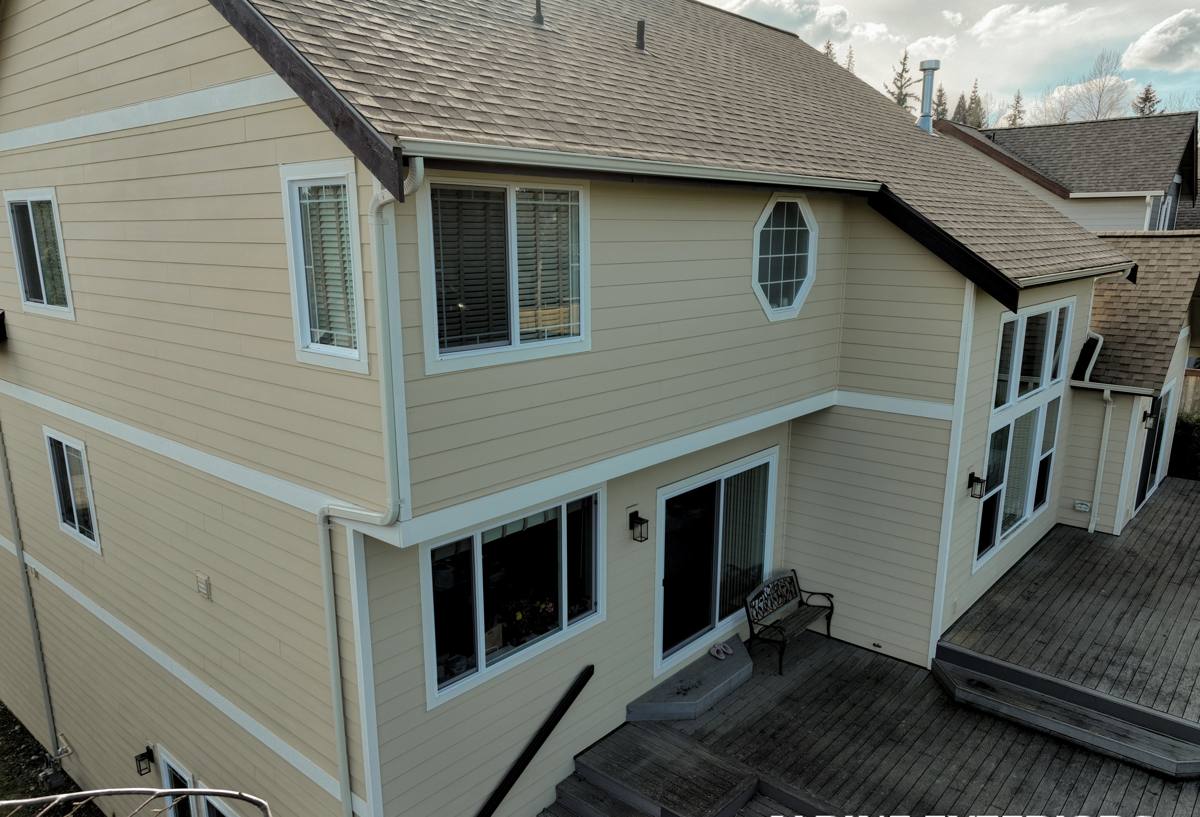
Signs an Edison Home's Windows Are Due for Replacement
Windows rarely fail all at once. They give warning signs first, and in a marine climate those signs tend to show up earlier than they would in a drier part of the state.
- Fogging or a permanent haze between the panes — the seal on the insulated glass unit has failed and moist air has gotten inside
- Soft or discolored wood at the sill or bottom corners of the frame, often the first sign of moisture getting behind the trim
- Drafts you can feel with a hand near the frame on a windy day, even with the window latched
- Windows that are difficult to open, close, or lock — frames can swell, warp, or settle out of square over time
- Visible moss or algae staining on the sill, casing, or exterior trim that keeps coming back no matter how often it's cleaned
- A noticeable jump in heating costs without any other explanation
Any one of these on its own might just mean a repair. Several together, especially on windows over 20 years old, usually means the window and its installation have reached the end of their useful life.
What a Correct Window Replacement Job Actually Involves
Swapping a window sounds simple, and a lot of the failures we see started with someone treating it that way. Done right, it's a sequence, and skipping a step is exactly what lets water in three winters later.
Removal and Inspection
The old window comes out carefully so we can inspect the rough opening — the framing, sheathing, and any existing flashing — before anything new goes in. This is where hidden rot or moisture damage from a prior bad install shows up. If the sheathing or framing has been compromised, it gets addressed before a new window ever goes in the opening. Installing a new window over damaged framing just hides a problem, it doesn't fix it.
Flashing and Weatherproofing
This is the step that matters most in a climate like ours. Proper flashing directs any water that gets past the exterior siding back out, rather than letting it pool at the sill or work its way into the wall cavity. That means a correctly lapped sill pan, side flashing, and head flashing integrated with the home's weather-resistive barrier — in that order, so water always sheds downward and outward. On a home taking regular driving rain and salt spray, this layer is what separates a window that lasts decades from one that causes a rot problem behind the wall in five years.
Setting, Shimming, and Sealing
The window gets set level, plumb, and square, shimmed at the manufacturer's specified points so the frame doesn't rack or bind, and fastened per the manufacturer's instructions — not just however it happens to fit the opening. Low-expansion foam and the correct exterior sealant go where they're specified, not everywhere, since over-sealing can trap moisture instead of letting it drain.
Interior and Exterior Finish
Interior trim gets reset or replaced, insulation gaps get filled correctly, and exterior casing and caulking get finished to shed water rather than collect it. We also check that the window operates smoothly and locks properly before we call the job done.
Choosing the Right Window Materials and Glass
There's no single "best" window for every home, but in a coastal-influenced, high-moisture climate like Edison's, some choices hold up better than others with less ongoing maintenance.
| Frame Material | How It Handles This Climate | Maintenance |
|---|---|---|
| Vinyl | Won't rot or corrode from salt air; performs well in wet, humid conditions | Low — occasional cleaning |
| Fiberglass | Very stable in temperature and moisture swings; strong resistance to warping | Low — occasional cleaning |
| Wood | Classic look but vulnerable to moisture and rot without diligent upkeep | High — regular painting or sealing |
| Wood-clad | Exterior cladding protects against weather; interior wood still needs some care | Moderate |
| Aluminum | Durable but conducts cold and can corrode faster near salt air without quality coatings | Moderate |
On glass, dual-pane with a Low-E coating and argon gas fill is the standard we recommend for most Edison homes — it balances energy performance with cost, and the Low-E coating helps cut down on both heat loss in winter and glare in summer. Triple-pane is worth discussing on homes with heavy road or wind noise exposure, or where a homeowner wants the maximum energy performance, but it comes at a higher cost and added weight that not every frame or opening is suited for.
We don't push a single brand for every job. The right manufacturer depends on the home's construction, the opening sizes, and the homeowner's budget and priorities — we'll walk through the honest trade-offs during the estimate rather than steering you toward whatever's easiest for us to install.
Our Process, Start to Finish
- On-site assessment — we look at every window being considered, check the surrounding trim and framing for existing moisture damage, and measure openings precisely
- Honest recommendation — we'll tell you which windows genuinely need replacing now, which can wait, and which materials fit your home and budget
- Written estimate — clear pricing with no vague allowances, so you know what's included before work starts
- Scheduling around the weather — we plan installs to avoid working openings during active storms whenever possible, since an open wall in driving rain is exactly what this climate punishes
- Installation — removal, inspection, flashing, setting, and finishing as outlined above, one window or the whole house
- Final walkthrough — every window gets tested for smooth operation and a proper seal before we consider the job complete
What Affects the Cost of Window Replacement
We don't publish flat pricing because window jobs vary too much from house to house, but these are the main factors that move the number up or down:
| Factor | Why It Matters |
|---|---|
| Number and size of windows | Larger openings and whole-house jobs change material and labor costs per unit |
| Frame material | Vinyl is typically the most budget-friendly; fiberglass and wood-clad cost more upfront |
| Glass package | Dual-pane Low-E versus triple-pane, tempered glass requirements, or specialty coatings |
| Condition of the existing opening | Rot repair or reframing adds labor beyond a straightforward swap |
| Full-frame vs. insert replacement | Insert replacement reuses the existing frame where it's sound; full-frame replaces everything down to the rough opening |
| Access and site conditions | Second-story windows or difficult access can add time and equipment needs |
We'll walk you through which of these apply to your home during the estimate, in plain terms, so there aren't surprises once work begins.
Why a Crew That Already Works in Edison Matters
Window replacement in this part of Skagit County isn't quite the same job as it is somewhere inland or in a drier climate. A crew that regularly works Anacortes and the surrounding area already knows how much rain exposure and salt air a given orientation on a house typically takes, what kind of moisture damage tends to show up behind older siding out here, and how to time installs so an open wall isn't sitting exposed when a front rolls in off the water. That local familiarity shows up in fewer surprises during the job and a finished install that's actually built for the conditions it has to survive, not just a generic install method applied everywhere.
It also matters for permitting and code compliance — requirements can vary by jurisdiction within the county, and a local crew already knows what's expected rather than learning it on your job.
Keeping New Windows Performing Through Skagit County's Seasons
A correct install is the foundation, but a little seasonal attention keeps new windows performing the way they should for the long haul, especially with moss season being an annual event out here.
- Rinse sills and tracks periodically to keep salt residue and grit from building up in the hardware
- Check exterior caulking once a year for cracking or gaps, particularly after a hard winter
- Keep gutters and downspouts clear so roof runoff isn't sheeting directly down onto window heads
- Remove moss or algae growth on nearby trim and siding promptly, since it holds moisture against the surface
- Operate locks and hardware a few times through the winter so they don't seize up from disuse
- Watch for condensation between panes — it's the earliest sign a seal has failed and worth addressing before it leads to bigger issues
None of this is complicated, but it's the kind of upkeep that determines whether a window install still looks and performs well fifteen years from now.
Get an Honest Look at Your Windows
If your Edison home's windows are drafty, fogged, hard to operate, or just original to a much older house, we're happy to come take a look. We'll give you a straight assessment of what's needed, what can wait, and what it'll cost — no pressure, no hard sell. Fill out the form below to schedule a free estimate.