 Anacortes Exterior
 Building a Deck That Holds Up in Edison
Edison sits close to the water, low to the ground, and squarely in the path of the weather that moves off Samish and Padilla Bay. That's a great setting for a deck — plenty of homeowners here want to actually use their yard and take in the surroundings — but it's a demanding setting for the deck itself. Salt-laden air, long stretches of driving rain, and a shade-and-moisture combination that grows moss on almost anything left untreated all shorten the life of a deck that wasn't built with this specific climate in mind. A deck built for a dry inland town does not automatically hold up here.
We build and repair decks throughout the Anacortes and Skagit County area, and Edison jobs get treated as a coastal build from day one — not a standard deck with a few tweaks after the fact. That distinction shows up in the fasteners we choose, the way we frame for drainage, and the finish schedule we recommend to owners once the work is done.
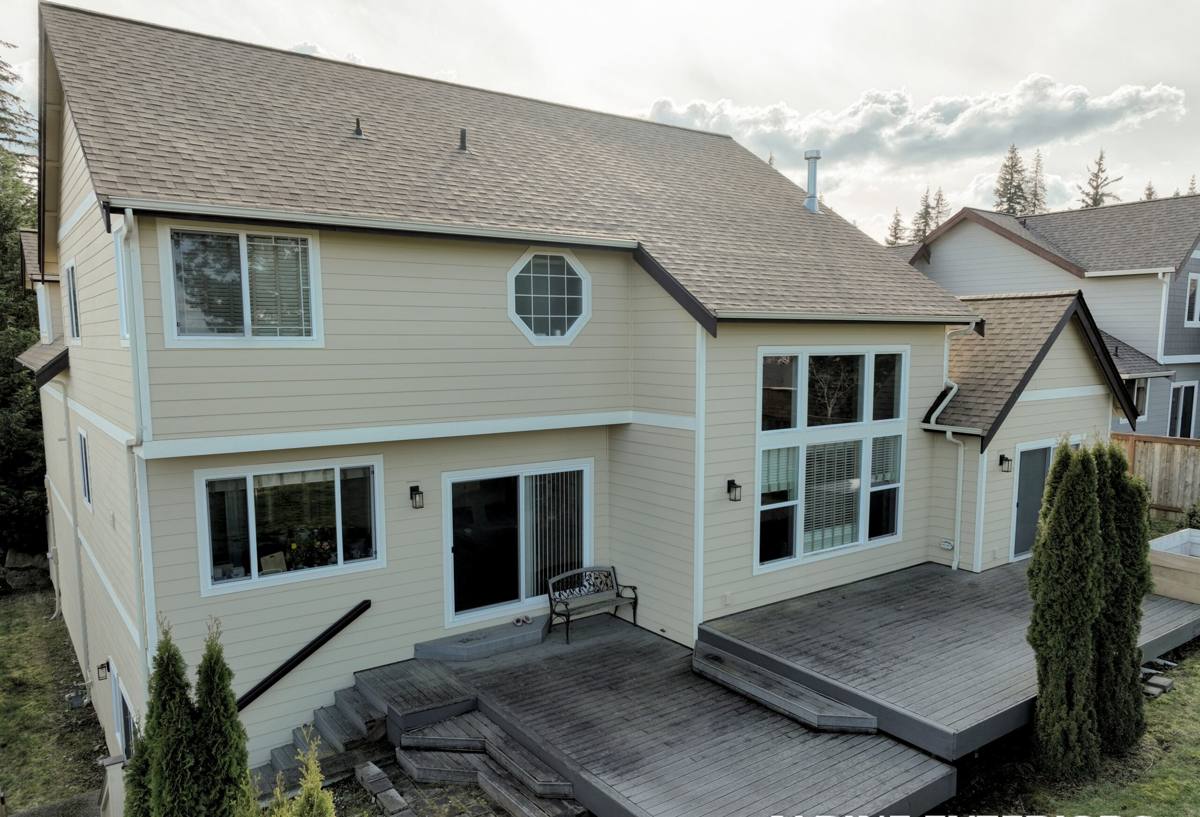
What Edison's Weather Actually Does to a Deck
Salt Air and Coastal Exposure
Even a few miles inland from open water, airborne salt accelerates corrosion on anything metal — nails, screws, joist hangers, bolts, and railing hardware. Standard hot-dip galvanized fasteners can start showing rust streaks within a couple of seasons in a salt-exposed setting like Edison. Once a fastener corrodes, it loses holding strength long before it looks obviously bad, which is part of why hardware failure is a common hidden problem on older coastal decks.
Driving Rain and Standing Moisture
Skagit County doesn't just get rain — it gets wind-driven rain that hits deck surfaces at an angle and finds its way into every gap, seam, and end-grain cut. Decking that isn't sealed on all six sides (including the cut ends) will wick water into the wood fibers, and that's where rot starts. Poor drainage underneath a deck — especially low decks built close to grade — traps moisture against framing members and footings long after a storm has passed.
Moss and Shade
A long, mild, wet season combined with tree cover or a north-facing yard is exactly what moss needs to establish itself. Moss on a deck surface isn't just cosmetic — it holds moisture against the boards, stays damp for days after everything else has dried, and makes the surface genuinely slippery. Left alone through a full winter, moss growth on wood decking can accelerate surface decay in exactly the boards that see the least sun.
Choosing the Right Decking Material for This Climate
There's no single "best" decking material for every Edison property — it depends on budget, how much sun and shade the site gets, and how much upkeep the homeowner actually wants to do. Here's how the common options compare under the conditions this area sees:
| Material | Moisture & Moss Behavior | Maintenance | Typical Lifespan Here |
|---|---|---|---|
| Pressure-treated wood | Absorbs water at cuts and fastener holes if not sealed; needs regular treatment to resist moss | Annual cleaning and re-sealing recommended | 15-20 years with upkeep |
| Cedar | Naturally rot- and insect-resistant, but still needs sealing to prevent graying and moss in shaded spots | Periodic cleaning and finish renewal | 15-25 years with upkeep |
| Composite decking | Doesn't absorb water like wood; moss can still grow on the surface film in shaded, damp areas and needs washing off | Low — occasional washing, no sealing | 25-30+ years, varies by product warranty |
| PVC decking | Fully moisture-resistant surface; moss gets less grip but can still form a film in constant shade | Low — occasional washing | 25-30+ years, varies by product warranty |
Composite and PVC products cost more up front but trade ongoing sealing and staining for occasional washing, which matters in a climate where moss and moisture are a year-round concern rather than a seasonal nuisance. Wood decking isn't wrong for Edison — plenty of owners prefer the look and are willing to keep up with maintenance — but we're upfront that it's a higher-maintenance choice here than it would be in a drier region, and we won't oversell a low-maintenance claim on a product that still needs seasonal attention.
What Happens Below the Surface Matters More Than the Boards
Framing and Fasteners
The decking boards are what you see, but the framing underneath is what determines whether the deck survives twenty years of this weather. In salt-exposed, high-moisture settings like Edison, we use fasteners and structural hardware rated for corrosion resistance beyond standard galvanized coating, and we avoid mixing incompatible metals that can accelerate corrosion where they touch.
Ledger Board Attachment
The ledger board — where the deck attaches to the house — is the single most common failure point on decks nationwide, and wet coastal climates make flashing and waterproofing at that connection even more critical. Correct flashing keeps water from running behind the ledger and into the house's rim joist, which is a slow, hidden rot problem that can go unnoticed for years.
Footings and Drainage
Footings need to be sized and set to local frost and soil conditions, and the ground underneath a low deck needs a way for water to move instead of pooling against posts and joists. On sites with poor natural drainage, we grade or add drainage measures under the deck so framing isn't sitting in standing water after every rain.
Our Deck Building Process
- Site assessment — we look at sun exposure, tree cover, drainage patterns, soil, and how close the site is to open water or prevailing wind, since all of that affects material and framing choices.
- Design and material selection — we walk through decking, railing, and fastener options honestly, including real maintenance trade-offs, rather than steering everyone toward the same product.
- Permitting — most new decks and many rebuilds in Skagit County and the City of Anacortes require a building permit; we handle that process as part of the job.
- Framing and structural work — footings, posts, beams, joists, ledger flashing, and hardware, built to hold up under the specific exposure of the site.
- Decking, railing, and finish work — installation, fastening, and sealing (for wood) done to shed water rather than trap it.
- Final walkthrough — we go over the finished deck and, for wood decking, the maintenance schedule that will actually keep it looking and performing well.
Permits and Code Requirements
Deck work in this area typically falls under Skagit County or City of Anacortes building codes, depending on exactly where the property sits. Requirements generally cover footing depth and size, railing height and baluster spacing, stair geometry, and ledger attachment method. Skipping the permit step on a new deck or a significant rebuild can create real problems later — at resale, with insurance, or if the work doesn't hold up to inspection. We pull the appropriate permits and build to the code that applies to the property rather than treating that step as optional.
Maintenance That Actually Matters Here
A deck in Edison needs a different maintenance rhythm than the same deck would need somewhere drier and less coastal. This is the baseline we recommend to owners after a build:
- Sweep debris and standing organic matter (leaves, needles) off the surface regularly, especially into fall and winter
- Wash off moss and algae as soon as it appears rather than letting it establish through a wet season
- Check and re-seal wood decking on the schedule the finish product calls for — don't wait for visible graying
- Inspect fasteners and hardware yearly for rust staining or looseness, particularly on railings and stair connections
- Confirm gaps between boards stay clear so water and debris keep draining instead of pooling
- Look underneath the deck occasionally for standing water, soft framing, or signs of moisture buildup near the ledger board
Why Hire a Crew That Already Works in Edison
A contractor who mostly builds decks in drier, more sheltered parts of the country can still frame a deck that looks right and passes inspection — and still hand a homeowner a deck that struggles here within a few years, because the failure points in this climate aren't always obvious until the salt air and rain have had time to work. Knowing which fasteners actually hold up near the water, how to detail a ledger board against driving rain, and which decking products handle a long moss season without becoming a maintenance burden comes from building in this specific area, not from a general deck-building background.
We also know the permitting process for both Skagit County and the City of Anacortes, so that part of the project doesn't become a delay or a surprise. And because we're a local crew, we're available for the follow-up questions and occasional maintenance visits that come with owning a deck in a climate that never fully lets up.
Get an Estimate
If you're planning a new deck, replacing an aging one, or want a second opinion on a deck that's showing rot, rust, or moss you can't keep up with, we're happy to take a look. Estimates are free and there's no pressure — just a straight assessment of what your Edison property needs and what it would take to build it right.